
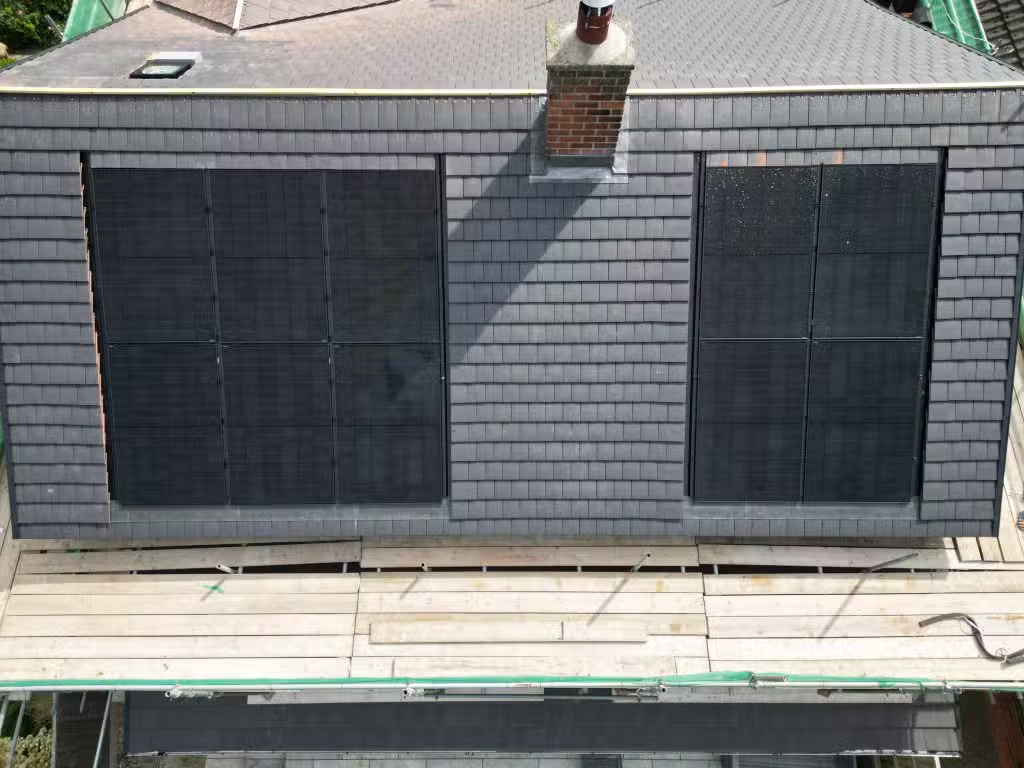
10 Reasons Businesses Prefer Solar-Powered Buildings
UK businesses are increasingly turning to solar energy as electricity costs rise and sustainability pressures grow. The benefits of solar powered buildings extend far beyond environmental credentials—they deliver measurable financial returns, operational advantages, and long-term energy security.
This guide examines why businesses install solar panels and explores the key reasons commercial solar installations have become a strategic priority for forward-thinking companies across every sector.
Contents
- Rising Energy Costs Are Driving Businesses Toward Solar
- The 10 Key Reasons Businesses Choose Solar
- 1. Lower Operating Costs
- 2. Strong Return on Investment
- 3. Corporate Sustainability Goals
- 4. Improved Brand Reputation
- 5. Energy Independence
- 6. Government Incentives and Financial Benefits
- 7. Increased Property Value
- 8. Minimal Maintenance Requirements
- 9. Scalable Energy Solutions
- 10. Long-Term Energy Strategy
- Frequently Asked Questions
- Solar-Powered Buildings: The Future of Business Energy
Rising Energy Costs Are Driving Businesses Toward Solar
UK electricity prices have increased significantly over recent years, placing considerable pressure on business operating budgets. Many companies now face unpredictable energy bills that make financial planning difficult. Commercial solar power benefits UK businesses by generating electricity on-site at a fixed cost per kilowatt-hour over the system's 25-30 year lifespan.
By reducing dependence on grid electricity, businesses gain protection against future price rises. Renewable energy for businesses UK-wide has become essential for cost control. Our complete business solar guide explains how companies can calculate potential savings based on their current consumption patterns.
Discover Your Solar Savings Potential
Our MCS-accredited team provides free commercial solar assessments across Nottinghamshire, Derbyshire, Leicestershire, and Lincolnshire
Get Your Free AssessmentThe 10 Key Reasons Businesses Choose Solar
1 Lower Operating Costs
Solar panels generate free electricity from sunlight, directly reducing the amount businesses pay to energy suppliers. The advantages of solar panels for businesses are clear—well-designed systems matched to daytime consumption patterns can offset 50-70% of electricity bills. For warehouses, factories, and office buildings with high daytime usage, the business solar energy savings UK companies achieve are particularly significant.
Peak demand charges—the premium rates applied during high-consumption periods—can also be reduced when solar generation coincides with peak business hours.
2 Strong Return on Investment
Commercial solar panel ROI UK businesses achieve typically includes payback within 5-8 years, depending on electricity prices and self-consumption rates. With panels generating electricity for 25-30+ years, companies benefit from 15-20+ years of virtually free energy after recovering their initial investment. As a solar energy investment for companies, few capital expenditures offer comparable long-term returns. Learn more about smart solar investment strategies for maximising commercial returns.

3 Corporate Sustainability Goals
Solar energy directly reduces carbon emissions, supporting net-zero commitments and environmental reporting requirements. Each kilowatt-hour of solar electricity generated typically avoids 130-180g of CO₂ compared to current UK grid electricity, with the exact figure varying by time of day and season. For businesses facing pressure from customers, investors, and regulators to demonstrate environmental responsibility, corporate sustainability solar energy programmes provide measurable, verifiable carbon reductions.
4 Improved Brand Reputation
Consumers increasingly prefer environmentally responsible companies. Visible solar installations signal genuine commitment to sustainability, differentiating businesses in competitive markets. From retail premises to car dealerships, solar panels enhance brand perception whilst delivering tangible financial benefits.
5 Energy Independence
Generating electricity on-site reduces reliance on the national grid and energy suppliers. Business energy independence solar systems deliver greater energy security, less exposure to supply disruptions, and protection against wholesale price volatility. Businesses with battery storage systems gain additional resilience through stored energy reserves.
6 Government Incentives and Financial Benefits
The Smart Export Guarantee (SEG) pays businesses for surplus electricity exported to the grid. Capital allowances allow companies to deduct solar installation costs from taxable profits, improving the financial case further. Our funding solutions guide explains available incentives and local decarbonisation grants.
7 Increased Property Value
Solar panels for commercial property UK-wide enhance building appeal by reducing operating costs for occupants. Energy-efficient buildings attract tenants seeking lower bills and sustainability credentials. Studies suggest solar can add 3-5% to commercial property values whilst improving Energy Performance Certificate (EPC) ratings.
Property Developer Insight: New commercial developments increasingly incorporate solar as standard. Explore our solar solutions for property developers to understand integration options during construction phases.
8 Minimal Maintenance Requirements
Solar panels have no moving parts and require little ongoing maintenance. Quality systems operate reliably for decades with periodic inspections and occasional cleaning. Professional solar maintenance services and digital monitoring systems track performance, identifying any issues before they affect generation.
9 Scalable Energy Solutions
Solar systems can expand as businesses grow. Starting with a system sized for current needs, additional panels can be added when electricity demand increases. Integration with commercial battery storage allows excess energy to be stored for evening use or peak demand periods, maximising self-consumption rates.
10 Long-Term Energy Strategy
Solar represents a stable, predictable energy investment over decades. As businesses electrify vehicle fleets and heating systems, on-site generation becomes increasingly valuable. Companies installing solar today position themselves for future energy demands, including commercial EV charging infrastructure.
Frequently Asked Questions
Solar-Powered Buildings: The Future of Business Energy
Solar energy has evolved from an environmental statement to a strategic business investment. The commercial solar PV benefits include lower operating costs, strong ROI, energy independence, and sustainability credentials that make solar-powered buildings increasingly attractive across every commercial sector.
With electricity prices showing no signs of returning to historic lows, businesses investing in solar today lock in long-term energy cost savings whilst future-proofing their operations for continued electrification trends. Whether you operate manufacturing facilities, public sector buildings, or commercial premises, solar provides a proven path to energy cost control and carbon reduction.
Book Your Commercial Solar Assessment
Discover how much your business could save with solar energy. Our MCS-accredited engineers provide comprehensive site assessments, system design, and ROI projections tailored to your specific requirements.
Get Your Free Quote Contact Our TeamAbout Spectrum Energy Systems: Established in 2011, we're MCS-accredited commercial solar installers serving Nottinghamshire, Derbyshire, Leicestershire, Lincolnshire and the wider UK. Our experienced team designs and installs tailored solar solutions for businesses of all sizes, from agricultural enterprises to large industrial facilities. Learn more about our expertise or explore our commercial solar case studies to see our work in action.