
Can You Add More Solar Panels and Keep Your Feed-in Tariff?
Yes. Adding panels does not affect the Feed-in Tariff (FIT) on your original panels: Ofgem says the original installation's tariff is unchanged. The new panels earn no FIT, because extensions commissioned since 15 January 2016 are not eligible. So either the new panels get their own generation meter, or your FIT readings are split by capacity. You must tell your FIT supplier, and you then choose whether to keep FIT export payments or move your export to the Smart Export Guarantee (SEG).
In This Guide
Why FIT homes run out of solar
A lot of FIT-era systems are small by today's standards, and many left part of the roof empty. Ten or fifteen years on, the same house might have an electric car, a heat pump or someone working from home, and the old array no longer covers the day. Panels have also moved on: we now fit 500W panels as standard, so a few extra panels add more than they would have in 2012.
Adding panels is a sensible answer, and your FIT income does not have to be the price of it.
What Ofgem says about extensions
Ofgem calls any increase in your solar capacity an extension, whether you add panels or swap existing ones for higher-wattage models. Its guidance for FIT generators sets four rules that matter to a home:
- Your original FIT carries onThe tariff on your original installation is not affected by the extension.
- The new panels earn no FITAny extension commissioned on or after 15 January 2016 gets neither generation nor export payments under FIT.
- Payments must reflect only the original panelsEither the new panels are metered separately, or meter readings are pro-rated by capacity.
- You must tell your FIT supplierOfgem says you must contact your FIT licensee if you extend your installation, and meter readings should be taken on the day of the extension.
Separate meter or split readings
A separate generation meter. The new panels get their own inverter and their own generation meter, and their output never passes through your FIT meter. Your FIT reading carries on exactly as before. This is how we normally design it.
Split readings. If old and new panels share one generation meter, the reading is pro-rated by capacity. Ofgem's example is a 40kW system extended by 10kW, which is then paid on 80% of what the meter records. On a home, a 4kW FIT system extended by 2kW on the same meter would be paid FIT on two thirds of the reading.
Splitting readings is allowed, but a separate meter keeps your FIT statements simple and avoids the old and new panels sharing an inverter. Mixing old and new panels on one string also drags the new ones down, as our guide to adding panels to an existing system explains.
Export: keep FIT export or move to SEG
The new panels cannot earn SEG on their own unless the two systems are completely separate, with their own import and export meters and their own supply numbers (MPANs). That is rare on a house with one electricity supply. For a shared supply, Ofgem gives two options:
Option 1: keep FIT export
- Claim no SEG on the new panels
- FIT export is pro-rated across the combined capacity
- The new panels pay their way through lower bills
Option 2: move export to SEG
- Opt out of FIT export payments
- Take an SEG tariff on all the export your smart meter records
- Keep your FIT generation payments on your original panels
Which is better depends on your FIT export rate, how much you actually export, and the SEG rates on offer. Our guide to Feed-in Tariff or SEG walks through that choice, and our SEG rates comparison has current rates. SEG needs an MCS certified installation (or an equivalent scheme) and an export reading from a smart meter.
Swapping old panels for bigger ones
Repairing or replacing panels does not cost you your FIT accreditation. Ofgem allows repairs and replacements as long as the installation still meets the scheme rules. A like-for-like swap leaves your payments as they were. Swap old panels for higher-wattage ones, though, and the extra capacity counts as an extension: it earns no FIT and your readings are pro-rated. Replace a 2kW array with 4kW of modern panels on the same meter and you would be paid FIT on half the reading. Sometimes that still makes sense; we show you the numbers both ways.
Our own example: 177kW on FIT, 100kW added
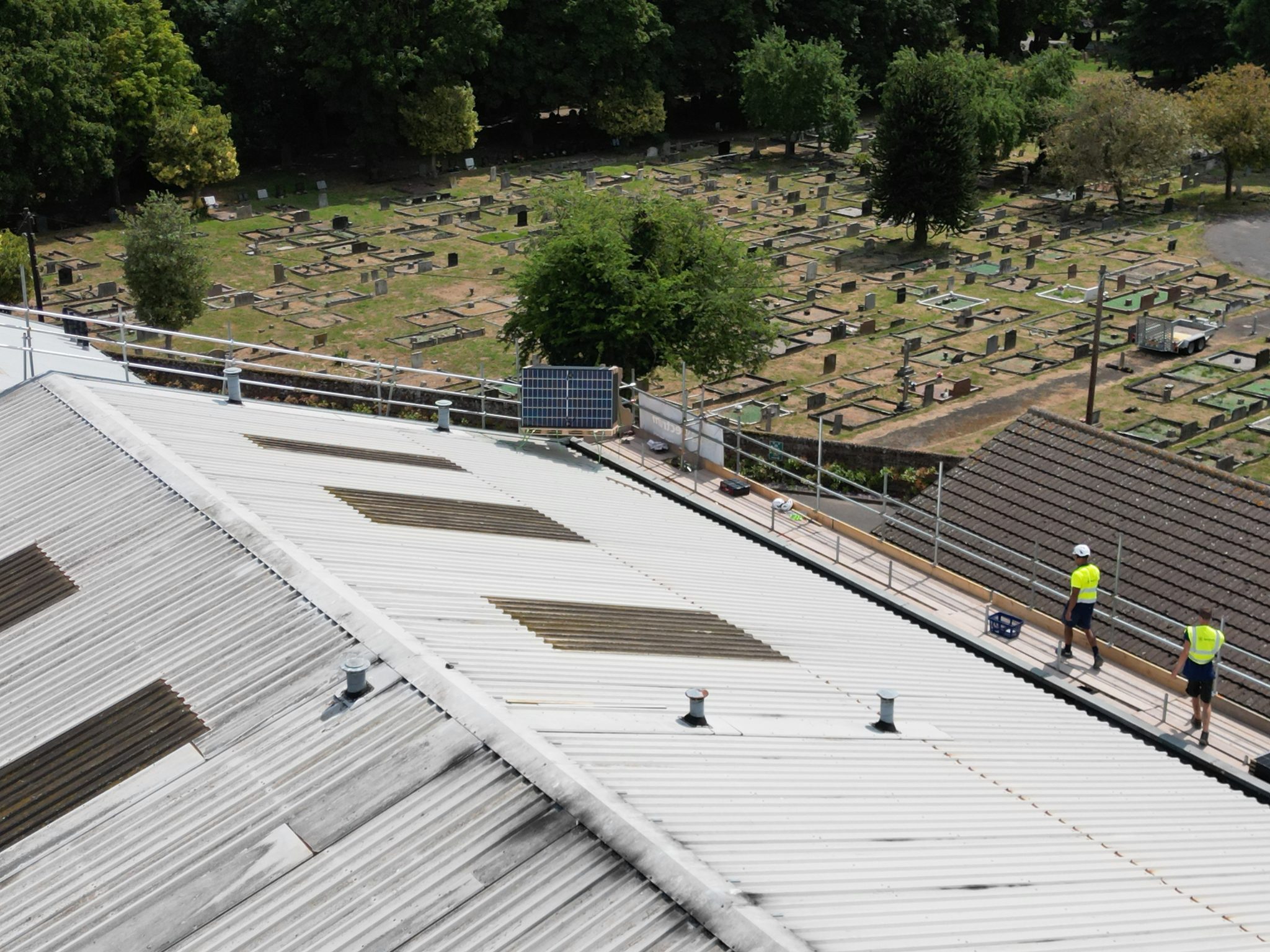
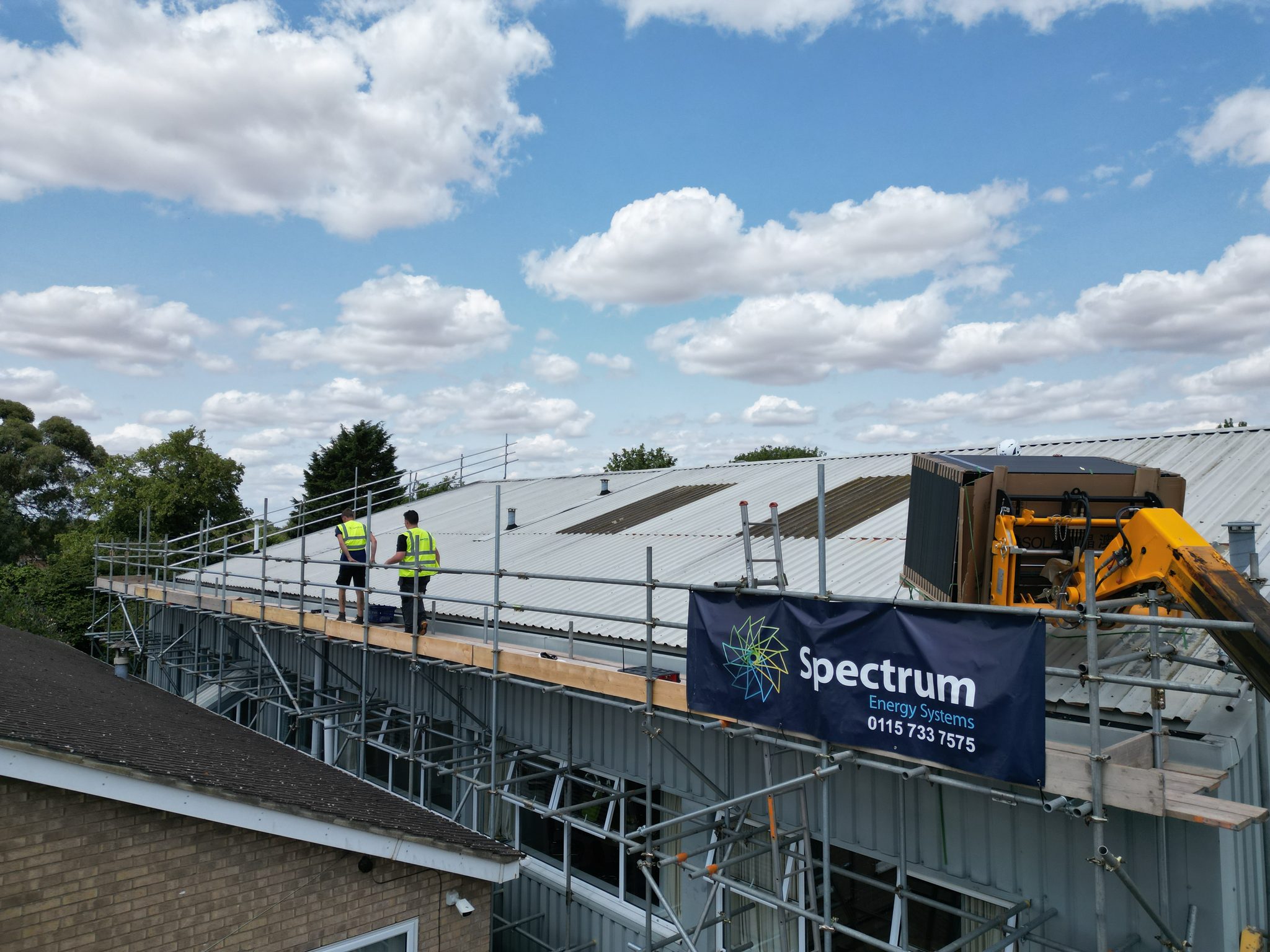
Elsoms Seeds in Spalding has a 177kW array we installed in 2013, earning FIT. In 2025 we added a 100kW array alongside it. The new array could not run through the original array's generation meter, so we kept the generation metering separate and used a Solis Export Power Manager so both arrays work together to cut the site's grid use. We also replaced the original inverters with six Solis 25kW units. The original array kept its FIT, and both arrays can now be monitored remotely. The full write-up is in our Elsoms Seeds case study.
A home extension is the same idea on a smaller scale: two systems, two generation meters, one roof.
How we run an extension job on a FIT home
1. Design and quote
We design the new panels from your roof and your usage and send an all-in quote. Every price is subject to a site survey once you accept.
2. Tell your FIT supplier
You tell your FIT supplier what is being added before the work, and we give you the system details they ask for.
3. Grid application
Old and new inverters add up at the network operator, so most extensions need a grid application before the new panels are switched on. We submit it.
4. Install and meter
New panels, new inverter, new generation meter. Readings are taken on the day so your FIT supplier has a clean starting point.
Want more solar without losing your FIT?
Tell us about your home on our property form and say your panels are on the Feed-in Tariff. We design the extra panels around your FIT meter and email an all-in quote, normally within 2 to 4 days.
Get an extension quoteFrequently asked questions
Will adding solar panels stop my Feed-in Tariff?
No. Ofgem's guidance says an extension does not affect the tariff on your original installation. Your payments are worked out on the original panels only, either through a separate meter for the new panels or by splitting the meter readings by capacity. You must tell your FIT supplier about the extension.
Do the extra panels get Feed-in Tariff payments?
No. Any extension commissioned on or after 15 January 2016 is not eligible for FIT generation or export payments. The extra panels pay their way by cutting what you buy from the grid, and their export can earn SEG if you opt out of FIT export.
Can I just add a few panels to my existing inverter?
You can, but your FIT readings are then split by capacity, and the old inverter rarely has spare room. New panels on the same string as old ones are also dragged down to the old panels' level. A separate inverter and generation meter is usually cleaner on a FIT home.
Can the new panels earn SEG while I keep my FIT export?
Only if the two systems are completely separate, with their own import and export meters and their own MPANs. On a home with one supply, Ofgem's options are to keep FIT export and claim no SEG on the new panels, or opt out of FIT export and take SEG on all your export while keeping FIT generation payments.
Will replacing my old panels with new ones end my FIT?
No. Ofgem allows repairs and replacements without affecting accreditation. Like-for-like panels keep your payments as they were. Higher-wattage panels count as an extension, so the extra capacity earns no FIT and your readings are pro-rated by capacity.
Sources: Ofgem, Feed-in Tariffs guidance for generators (version 19, April 2026), chapters 3 and 6; Ofgem, Smart Export Guarantee guidance for generators.
Related reading
- Adding a battery on the Feed-in Tariff
- Adding solar panels to an existing system
- G99 applications explained
- Inverter replacement on Feed-in Tariff systems
Extensions and FIT systems across the East Midlands
We are Spectrum Energy Systems, MCS certified (NIC200223), installing and extending solar across Nottinghamshire, Derbyshire, Leicestershire and Lincolnshire since 2011 with our own crews and a 5-year workmanship guarantee. Call 0115 773 7575, 8am to 8pm, Monday to Friday.
Tell us about your home