
Commercial EPCs and MEES: Where Solar Fits in Compliance
Commercial landlords in England and Wales cannot let a property rated below EPC E under the Minimum Energy Efficiency Standards, with penalties reaching six figures for sustained breaches. The direction of travel tightened in June 2026: under the government's revised targets, larger commercial buildings, those over 1,000 square metres, must reach EPC B from 2031, while smaller buildings stay at the E floor for now. Rooftop solar is one of the most effective single measures for improving a commercial EPC, because on-site generation directly offsets the building's modelled energy demand, but the honest advice is that E-to-B journeys usually need solar alongside lighting and heating upgrades, not instead of them.
In This Guide
The rules today
MEES has had teeth for commercial property since April 2023: a landlord cannot lawfully let non-domestic premises rated F or G, and the prohibition covers continuing to let under existing leases, not just signing new ones. Enforcement sits with local authorities, and penalties scale with rateable value and breach duration, reaching up to £150,000 for the worst cases, alongside the quieter commercial damage: lenders, insurers and institutional tenants increasingly treat sub-standard EPCs as a red flag in their own right. An F-rated unit is becoming progressively harder to let, finance or sell regardless of enforcement, which is why the market has largely moved ahead of the regulation.
The 2031 target for larger buildings
The future trajectory firmed up in June 2026, when the government published its long-awaited interim response to the MEES consultations. The headlines:
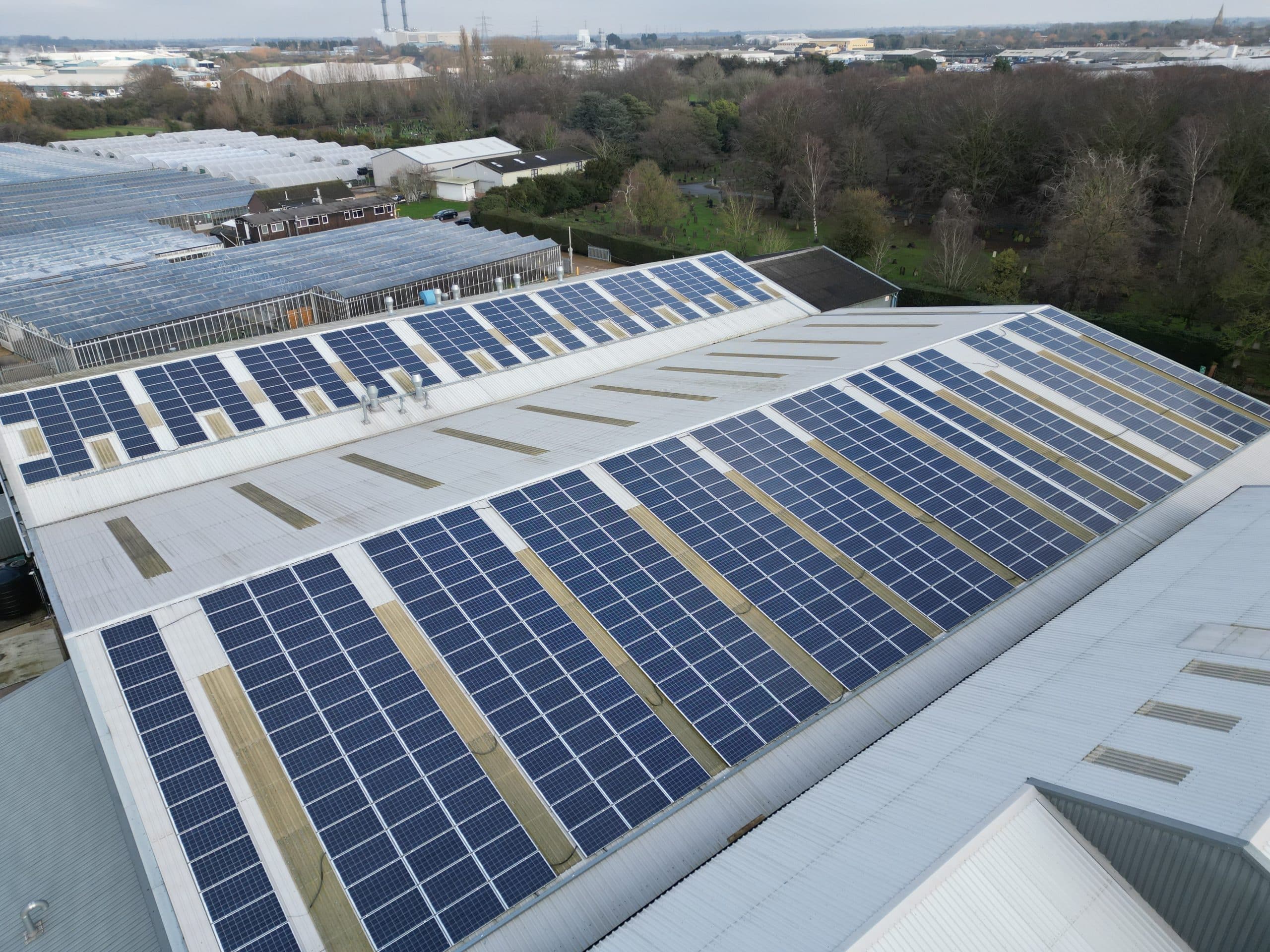
- Buildings over 1,000 square metresMust achieve EPC B from 2031, subject to exemptions. That is warehouses like the one pictured, factories, larger offices and retail.
- The old interim C-by-2027 targetDropped; the single 2031 B milestone replaces the two-step plan.
- Buildings under 1,000 square metresRemain at the EPC E floor, with no further deadline set yet, though the direction of travel is unambiguous.
For owners of larger stock, 2031 is close enough that upgrade planning belongs in this asset cycle, not the next one.
What solar does to a commercial EPC
Commercial EPCs are modelled through the national calculation methodology, which scores the building's expected energy demand and carbon emissions. On-site solar generation feeds directly into that model, offsetting the building's grid demand, which is why a substantial rooftop array is consistently among the highest-impact single measures a commercial building can add, particularly on big-roofed, energy-hungry stock where the array-to-floor-area ratio is generous. The same install is simultaneously cutting the actual bills, with payback in circa 4 years on well-matched buildings, sheltered by capital allowances and exempt from business rates until 2035. Compliance measures that also pay for themselves are rare; this is the standing exception.
Building a compliance plan
The honest sequence for a building with an EPC problem:
- Commission a fresh assessment firstOld EPCs often understate buildings that have already had lighting or heating work; the cheapest points are sometimes just re-scoring reality.
- Take the modelled recommendations seriouslyThe EPC's own recommendation report ranks measures by impact; LED lighting and heating controls are usually the cheap early points.
- Size solar to the load, not the certificateAn array designed around your actual daytime consumption maximises both the EPC gain and the financial return; a token array bought purely for points does neither well.
- Sequence for 2031, not for panicLarger buildings have a defined deadline and a defined gap; a staged plan across lease events beats an eleventh-hour scramble in 2030.
The landlord's economics
For landlords the calculation has a wrinkle: the tenant usually pays the energy bills, so the generation savings land on the other side of the lease. The workable structures are established, service-charge recovery where leases allow, green lease provisions on renewal, rents that reflect a B-rated building's lower occupancy costs, or a PPA structure where a funder carries the capital. And the asset-value argument increasingly stands on its own: the spread between compliant and non-compliant stock, in yield, in lending terms, in tenant demand, is doing more to fund EPC work than any regulation. The finance routes guide covers how the capital side can be structured whichever way the lease politics fall.
Got a building with an EPC gap?
Free commercial design and quote: we model what a properly sized array does for your building's rating and its bills, with real numbers for your advisers. Call 0115 773 7575, 8am to 8pm, Monday to Friday.
Get EstimateFrequently asked questions
What EPC rating does a commercial property need?
A minimum of E to be lawfully let in England and Wales under MEES, covering existing leases as well as new ones. Under the revised targets announced in June 2026, buildings over 1,000 square metres must reach EPC B from 2031, while smaller buildings stay at the E floor for now.
Do solar panels improve a commercial EPC rating?
Yes, materially: on-site generation offsets the building's modelled energy demand in the EPC calculation, making a well-sized rooftop array one of the highest-impact single measures available. For big E-to-B jumps it typically works alongside lighting and heating upgrades rather than replacing them.
What are the penalties for breaching MEES?
Local-authority penalties scale with rateable value and breach duration, up to £150,000 for sustained breaches on larger properties, plus publication of the breach. The commercial penalties often bite first: sub-standard stock is harder to let, finance and sell whatever the enforcement picture.
Can solar alone get a building from E to B?
Occasionally, on buildings with generous roofs relative to their floor area and modest heating demand, but usually not alone. The realistic route pairs a properly sized array with the EPC report's other recommendations, LED lighting and heating controls being the usual companions, sequenced across the asset plan toward 2031.
Who pays for EPC improvements, landlord or tenant?
The obligation sits with the landlord, while the bill savings usually land with the tenant, which is why green lease provisions, service-charge structures and PPA funding exist to share the economics. Increasingly the asset-value spread between compliant and non-compliant stock funds the work on its own logic.
Related reading
- Commercial solar payback: real numbers
- Solar and business rates
- Commercial solar finance: the four routes
- Do solar panels improve your EPC? (domestic)
- Solar panels for warehouses
Compliance that pays for itself
We are Spectrum Energy Systems, MCS certified (NIC200223), installing commercial solar across the East Midlands, 10+ MW connected, with EPC impact modelled into every commercial design. Call 0115 773 7575, 8am to 8pm, Monday to Friday.
Get in touch