Can Solar Panels Catch Fire? The Honest Safety Facts
Solar panel fires are rare. When UK incidents have been studied, most traced back to installation faults, particularly poorly fitted DC isolators and connectors, rather than the panels themselves. The risk is real but small, it is overwhelmingly a workmanship issue, and it is exactly what proper certification and quality kit exist to control.
In This Guide
How rare is rare?
Let us not dodge the question the way sales pages do. Any electrical system carries some fire risk: your consumer unit, your oven, your EV charger, and yes, your solar panels. The honest framing is proportion. The UK has well over a million solar installations, and recorded fire incidents involving them number in the low hundreds across many years of records. When BRE, the UK's building research body, investigated photovoltaic fire incidents for the government, the striking finding was not the count but the pattern: most incidents traced to specific installation faults rather than to panels spontaneously failing.
That pattern is good news, because installation quality is the one variable you fully control when you choose who fits your system.
What actually causes solar fires
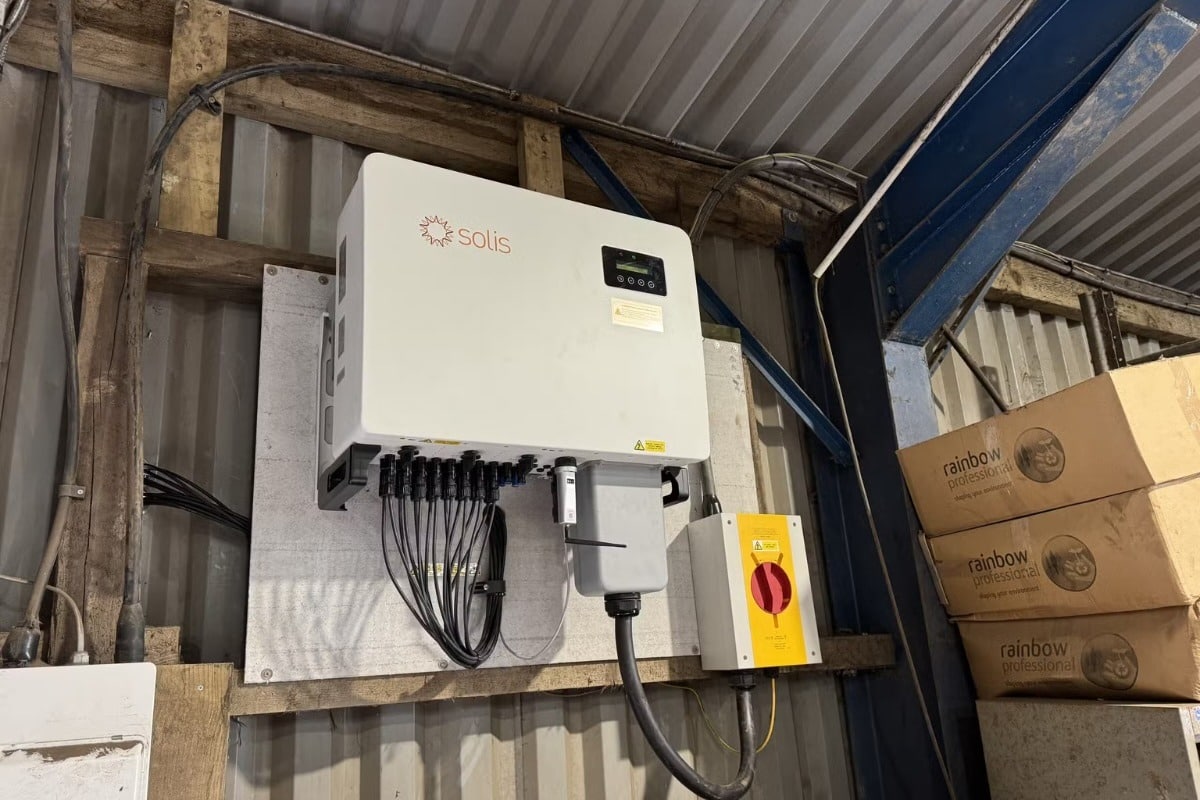
The recurring culprits in investigated incidents, in rough order of notoriety:
- DC isolators, badly specified or badly fittedThe BRE work singled these out. DC arcs do not extinguish themselves the way AC arcs do, so a cheap or poorly terminated isolator is the classic failure point. The isolator in the photo is the kind of component where quality matters most.
- Connector faultsMismatched or badly crimped connectors between panels create resistance, heat, and eventually trouble.
- Rodent or bird damage to cablingChewed insulation under an unprotected array, one more argument for bird proofing.
- Cut-price kitUncertified components from the bottom of the market, doing what the bottom of the market does.
Notice what is missing from that list: quality panels themselves. Modern certified panels are remarkably benign, solid-state glass and silicon with no moving parts. The risk concentrates in the connections and switches, which is to say, in the workmanship.
The protections built into a proper install
| Protection | What it does |
|---|---|
| Certified components throughout | Panels, connectors, isolators and inverters tested to recognised standards, matched rather than mixed |
| Correct DC design and termination | Strings, cable sizing and terminations done to the wiring regulations, the area where corners must never be cut |
| Arc fault and anti-islanding protection | Modern inverters detect dangerous DC arcs and shut down, and disconnect instantly in a power cut |
| RCD protection and correct earthing | The system integrates with your consumer unit's protection rather than bypassing it |
| MCS certified installation | The standard and the sign-off that ties all of the above together, by a firm accountable for it |
What owners should do
The sensible owner's list
- Use monitoringA healthy system generates predictably. Unexplained drops are your early warning for most faults, covered in our problems guide.
- Get a periodic health checkTerminations, isolators and connectors inspected before they become stories.
- Take burning smells seriouslyAny burning smell near the inverter or isolators: switch off at the isolators if safe, and call an installer that day.
- Never DIY the DC sideThe DC circuit is not a place for a competent amateur. It stays live in daylight whatever you switch off.
Solar and the fire brigade
A common worry: will firefighters refuse to tackle a house fire if there are panels on the roof? No. UK fire services train for photovoltaic systems and have procedures for them; panels change how a crew works a roof, not whether they attend. What genuinely helps is labelling, which a proper install includes as standard: clear marking of the DC isolators, the inverter location and the presence of a battery, so a crew can make the system safe quickly. If your system has no such labelling, that is a tell about the original installer, and worth fixing at your next service.
Want your system's safety checked properly?
Our health check inspects the exact points where fires start: isolators, terminations and connectors, on our installs or anyone else's. Call 0115 773 7575, 8am to 8pm, 7 days.
See our servicing optionsFrequently asked questions
How often do solar panels catch fire?
Rarely. Against well over a million UK installations, recorded solar-related fire incidents number in the low hundreds across many years. Studied incidents mostly trace to installation faults, particularly DC isolators and connectors, rather than panels failing. The risk profile is that of any professionally installed electrical system: small, and workmanship dependent.
Can solar panels catch fire in hot weather?
Heatwaves do not set healthy systems alight. Panels are tested far beyond UK temperatures, and hot weather mainly costs a little efficiency rather than creating danger. Heat does stress already-faulty connections, which is why a system with a marginal termination shows symptoms in summer first, and why inspections matter.
Are solar batteries a fire risk?
Home batteries have their own safety story: the LFP chemistry we fit is notably stable, and current installation guidance covers where batteries should be located in a home. Professionally installed, sensibly placed storage is routine. The battery side deserves its own answer, which our battery guides cover in detail.
What should I do if my inverter smells of burning?
Treat it as urgent. If safe to do so, switch the system off at the AC and DC isolators, keep clear, and call an installer the same day; call 999 if there is any sign of smoke or fire. Never open the inverter or investigate the DC side yourself: those circuits stay live in daylight.
Will firefighters deal with a fire in a house with solar panels?
Yes. UK fire services train for photovoltaic systems and attend as normal, with procedures for working around live DC. Clear labelling of isolators, the inverter and any battery, standard on a proper install, helps a crew make the system safe faster.
Does insurance cover solar panel fires?
Declared panels are covered against fire under buildings insurance like the rest of the structure. The practical protection, though, is prevention: certified installation and periodic inspection of the connection points where incidents start. Our insurance guide covers the declaration and claims side properly.
Related reading
- Common solar panel problems and fixes
- Solar panels and home insurance
- How to choose a solar installer
- LFP vs NMC solar batteries
- How to test a solar panel safely
Installed like it matters, because it does
We are an MCS certified installer (NIC200223) and NICEIC Approved Contractor (3182878) based in Bulwell, Nottingham. Certified kit, proper DC work, labelled systems. Call 0115 773 7575, 8am to 8pm, 7 days.
Book a feasibility assessment