SFI Funding for Agricultural Solar: 2026 Guide
The Sustainable Farming Incentive (SFI) doesn’t fund solar PV install costs - it pays annual rates for farm-management actions, not capital kit. There is no UK grant that pays for a rooftop solar install on a working farm: the Farming Equipment and Technology Fund (FETF) funds specific listed equipment (slurry, productivity and animal-welfare items), not general solar PV. So the real levers for agricultural solar in 2026 are the Annual Investment Allowance (AIA, up to a ~25% effective discount via corporation tax) and Smart Export Guarantee (SEG) income on exported generation, with the install self-funded. Solar carports, refrigeration-paired solar and irrigation-paired solar are the strongest project types.
UK farms spend serious money on electricity - milking parlours, refrigeration, irrigation pumps, grain dryers, packing sheds, on-farm offices. Most farms run high daytime load that aligns neatly with solar generation, and where there are large barn roofs the technical case is straightforward. The honest position on funding: there isn’t a direct grant for the solar install itself, so the case is built on tax relief, export income and the displaced electricity bill.
What SFI actually pays for
SFI pays per-hectare or per-action rates for farming practices that deliver public benefit - it has never funded the capital cost of renewable-energy kit, and direct solar PV installation isn’t an SFI action. It’s also in transition: the previous SFI24 offer closed to new applications in March 2025, and the reformed SFI for 2026 (SFI26) reopens in two windows - the first from June 2026 for smaller farms (under 50ha), the second from September 2026 for everyone else - with 71 actions and a £100,000-a-year agreement cap. What SFI does do for a solar project is improve overall farm cashflow, which strengthens the business case for self-funding solar via AIA.
Where the money for the install actually comes from
For the solar capital cost itself, the realistic UK routes are:
- Annual Investment Allowance (AIA). Most agricultural solar installs by a trading farm business qualify for AIA. The full install cost reduces taxable profits in year one. For a profitable farm taxed at 25% corporation tax (limited company structure) the saving is around 25% of system cost; unincorporated farms relieve it against income tax instead. See our capital allowances article.
- Smart Export Guarantee (SEG). Ongoing income on exported electricity - not a grant, but it materially improves payback. Open-market rates in 2026 sit around 12-15p/kWh on the better tariffs (re-check before committing, as suppliers can change rates with 30 days’ notice).
- Self-funding from capital budget. With no direct solar grant available, most farm installs are paid from the business, with AIA and SEG doing the heavy lifting on the return.
A note on Defra capital grants. The Farming Equipment and Technology Fund (FETF) and Countryside Stewardship Capital Grants fund specific listed items- slurry stores, weed wipers, rainwater harvesting, water-quality measures - not general rooftop solar PV. If a future window were to list a solar-related item it would be narrow and equipment-specific, so always check the live eligible-items list on gov.uk rather than assume solar qualifies. Treat these as a possible bonus on adjacent kit, not the funding route for the array itself.
The strongest agricultural solar project types in 2026
1. Dairy - milking parlours and refrigeration. Daytime milking and 24/7 refrigeration load align with solar generation. Battery storage smooths overnight refrigeration. See our solar for dairy farms article.
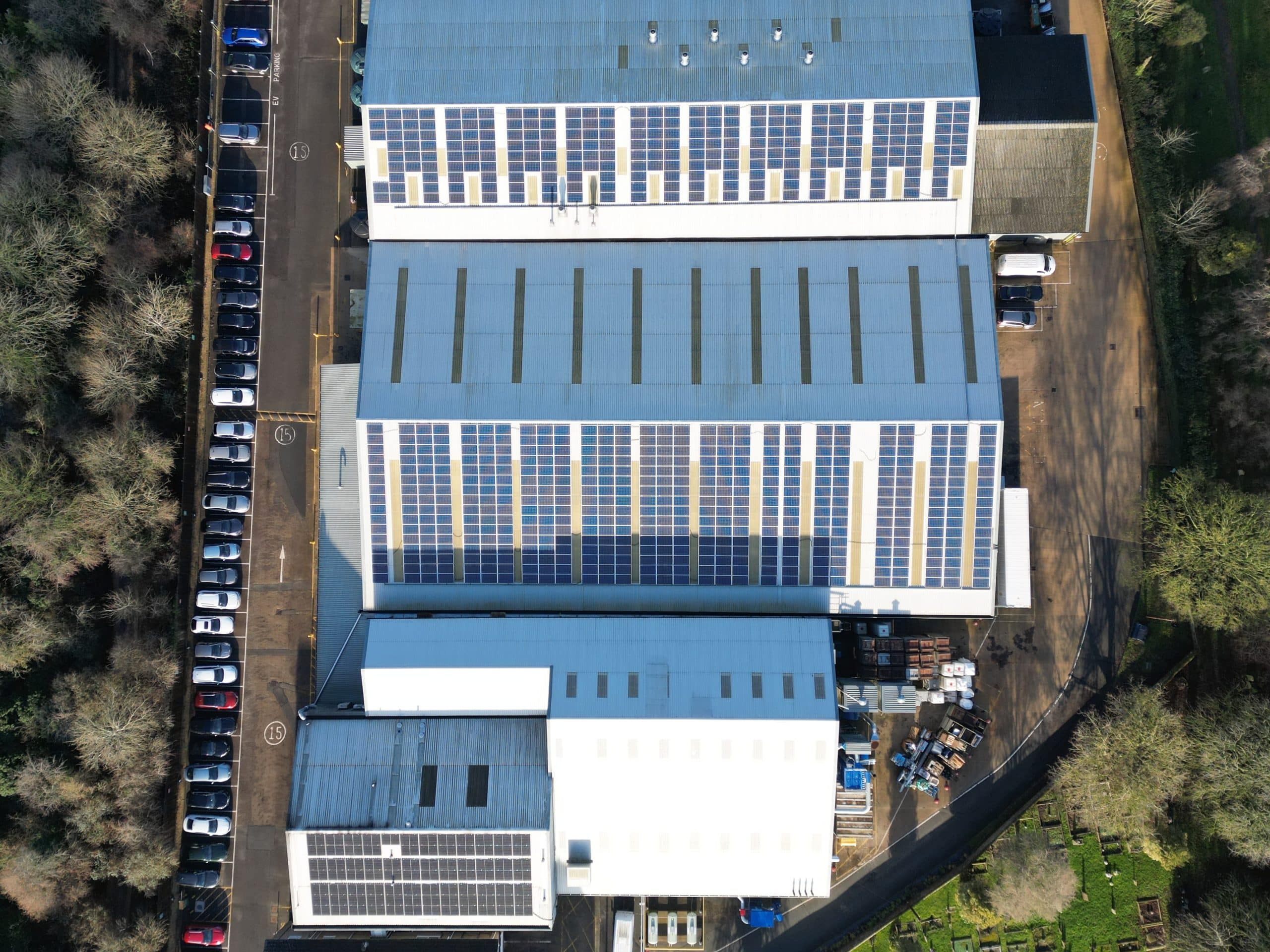
2. Horticulture - nurseries, polytunnels, packing. Daytime pumping, heating and packing-shed power. The 56kW Jacksons Nurseries install at Bagnall is a representative example in our portfolio.
3. Arable - grain dryers and irrigation. Seasonal peak load (August/September drying, summer irrigation) aligns with peak solar months. Storage less central for these projects.
4. Livestock - intensive housing and feed systems. Ventilation, feed augers, lighting. Steady year-round daytime load.
5. Solar carports over yards or hardstanding. Where roof orientation is wrong or roofs are unsuitable, ground-based or structural carports on yard areas work. Higher per-kWp cost but no displaced agricultural land.
Looking at solar for your farm?
We’ll quote against your real consumption pattern and walk through AIA and SEG together. MCS NIC200223.
Request a QuoteThe agricultural payback maths
| Farm type | Typical install size | Indicative cost | Payback range |
|---|---|---|---|
| Dairy farm (200 head) | 50-100kWp + 30kWh battery | £45,000 - £85,000 | 4-6 years |
| Mid-size horticulture | 50-150kWp | £45,000 - £120,000 | 4-6 years |
| Arable with grain drying | 30-80kWp | £28,000 - £70,000 | 5-7 years |
| Livestock unit | 30-60kWp | £28,000 - £55,000 | 5-7 years |
| Solar carport (50kWp) | 50kWp on carport structure | £70,000 - £90,000 | 6-8 years |
Payback assumes the install is cash-funded and AIA-claimed in the year of install. The figures already reflect AIA tax relief and SEG export income - there’s no direct solar grant to factor in on top.
What we install on agricultural sites
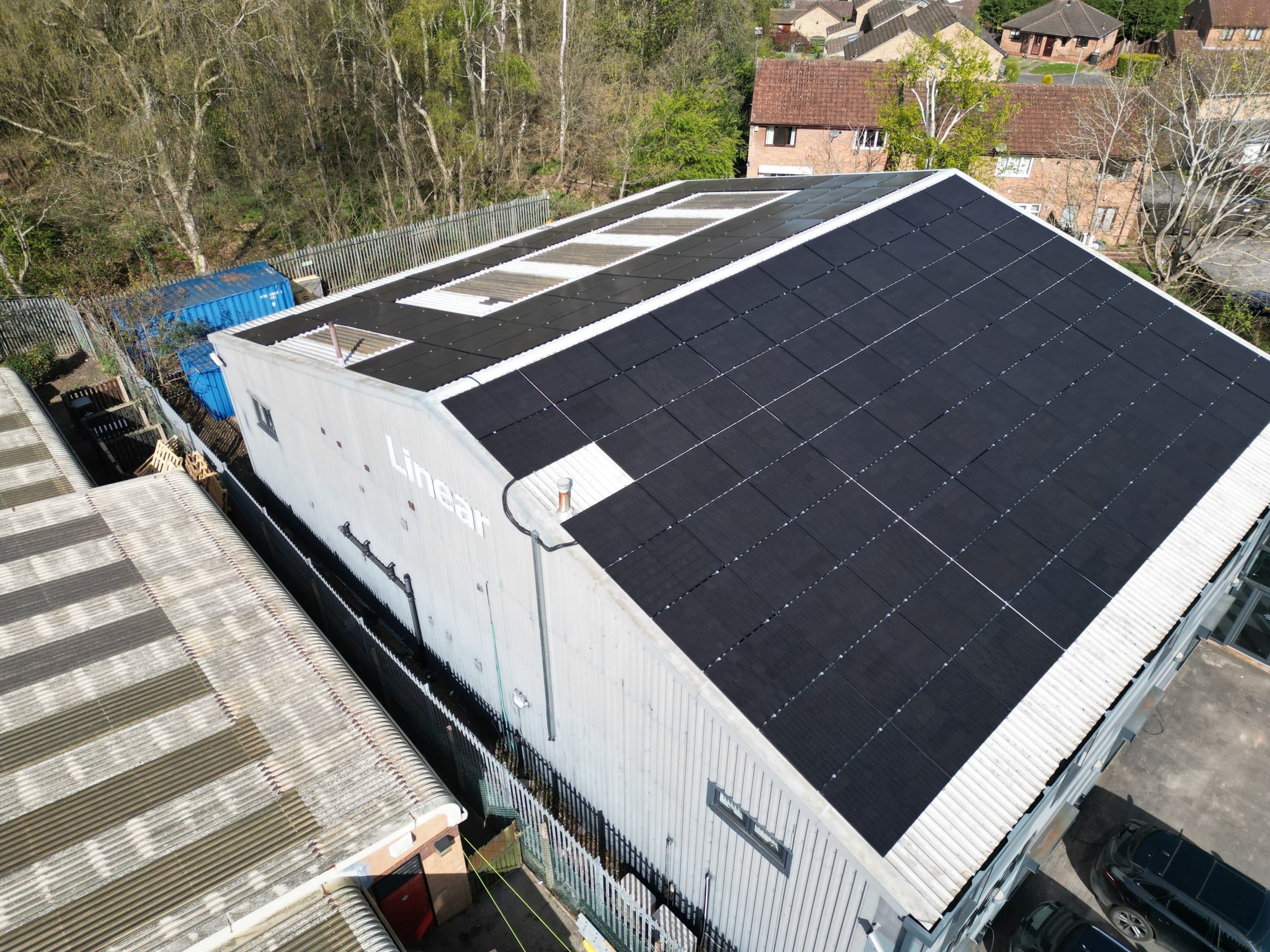
Spectrum’s default agricultural specification is JA Solar or Aiko panels (455W - 505W class) on Renusol MetaSol trapezoidal-roof mounting kit (or alternative for corrugated metal), Solis HV three-phase inverter for 25kWp+ systems, and Pylontech Force H3 battery stack where battery is part of the spec. The 67kW Linear Insulation install in Nottingham is a comparable commercial/industrial roof setup.
DNO approval for farm installs
Farm sites are often on three-phase rural feeders with limited grid headroom. A G99 DNO application is needed for any install exporting over 16A per phase (3.68kW single-phase, or around 11kW three-phase). National Grid Electricity Distribution covers most East Midlands rural feeders. Spectrum handles G99 applications as part of the install. For standalone DNO checks before committing to a full install, we offer a £500 refundable DNO application service - details on our contact page.
FAQs
Does SFI directly fund solar panels on my farm?
No - SFI actions pay annual per-hectare rates for farming practices, not the capital cost of renewable-energy kit, and that hasn’t changed under the reformed SFI26. Solar PV install costs are funded through Annual Investment Allowance tax relief, self-funding, and SEG export income - there is no direct grant for the array itself.
Can a farm claim AIA on solar?
Yes - trading farm businesses claim Annual Investment Allowance on solar PV the same way other businesses do, deducting the full install cost from taxable profits up to £1m per year. For a farm in the 25% corporation tax band, that’s a 25% effective discount on system cost.
Is there a grant that pays for the solar PV install?
No direct one. The Farming Equipment and Technology Fund (FETF) funds specific listed equipment - slurry, productivity and animal-welfare items - not general rooftop solar PV, and Countryside Stewardship capital grants fund environmental measures rather than arrays. The funding for a farm solar install in 2026 comes from AIA tax relief, SEG export income and self-funding. Always check the live FETF eligible-items list on gov.uk rather than assume solar qualifies.
What size solar PV do I need for a 200-head dairy farm?
A 200-head dairy with milking parlour and refrigeration typically uses 80,000-120,000 kWh/year. A 50-100kWp solar PV system with 30kWh battery storage covers a meaningful share of daytime consumption with surplus exported via SEG. Site survey confirms based on the real bill pattern.
Do solar panels affect Single Farm Payment or BPS?
Rooftop solar doesn’t affect Basic Payment Scheme entitlement (BPS has been replaced by SFI in England). Ground-mount solar on agricultural land does remove that land from agricultural use for BPS/SFI calculations. Most farm solar installs are rooftop precisely to avoid this trade-off.
Can I install solar on listed farm buildings?
Listed building consent is required, and approval varies by listing grade. Less-prominent roofs (back of barn, lean-to outbuildings) are more likely to be approved than principal elevations. Spectrum’s design process includes pre-app consultation with conservation officers where listed buildings are involved.
Is there grant funding for farm battery storage?
Standalone battery grants are rare in 2026, but battery installed alongside solar PV qualifies for AIA. FIF windows occasionally include battery items. The strongest case for farm battery storage is currently self-funding alongside solar, supported by the cumulative tax and export-income effects.
Much of our agricultural work sits in Lincolnshire - our solar panel installers in Lincoln can advise on funding alongside the design.
Related reading
- Solar for dairy farms UK: sizing for milking and refrigeration
- Solar PV capital allowances: 25% tax relief for businesses
- G99 application solar: how DNO approval works
For the full Spectrum service overview see agricultural solar.
Speak to Spectrum Energy Systems
MCS NIC200223. Agricultural and commercial solar installs across the East Midlands. We’ll quote against your real on-farm consumption and walk through AIA and SEG.
Request a Quote