Solar Panels in Conservation Areas: What You Can Actually Do
Living in a conservation area does not mean solar panels are off the table. Whilst additional planning considerations apply, thousands of UK homeowners in designated areas have successfully installed solar systems—often without needing full planning permission at all.
This guide explains the actual rules governing solar panel installation in conservation areas, the products most likely to gain approval, and what you need to know before approaching your local planning authority. Whether you own a period property or a commercial building in a heritage setting, the right approach makes solar achievable.
In This Guide
Own a Property in a Conservation Area?
Our MCS-accredited team has experience navigating conservation area planning requirements across the East Midlands
Book Your Free Assessment Speak to a SpecialistThe Myth That Stops People in Conservation Areas Going Solar
The most common assumption we encounter is that conservation area status automatically prohibits solar panels. This belief prevents countless property owners from even enquiring about their options—yet it is simply not accurate.
Conservation areas exist to preserve the character and appearance of places with special architectural or historic interest, as defined under the Planning (Listed Buildings and Conservation Areas) Act 1990. They do not exist to prevent all change or development. Solar installations can and do proceed in conservation areas across the UK, provided they meet certain conditions or obtain appropriate permissions.
The confusion often arises from conflating conservation area rules with listed building consent—two separate regulatory frameworks. Whilst listed buildings face stricter controls requiring consent for any works affecting their character, properties that are merely within a conservation area (but not themselves listed) retain many permitted development rights for solar installation.
Key Distinction: A conservation area protects the character of a neighbourhood or streetscape. Listed building status protects an individual building's architectural or historic significance. The two can overlap—a listed building may also be in a conservation area—but they impose different requirements. Understanding which applies to your property is the essential first step.
Getting accurate information early prevents unnecessary delays and avoidable mistakes. Too many homeowners either abandon solar plans based on incorrect assumptions or proceed without understanding the rules, only to face enforcement action or refused retrospective applications. Our complete guide to solar PV installation covers the technical fundamentals, whilst this article focuses specifically on the planning landscape for conservation areas.
Understanding Conservation Area Rules for Solar Panels
What Is a Conservation Area and Who Regulates It?
A conservation area is a designated zone where the local planning authority has determined that special attention should be paid to preserving or enhancing the area's character and appearance. There are over 11,000 conservation areas across England, protecting everything from historic town centres to Victorian suburbs and rural villages.
Local planning authorities (typically district, borough, or unitary councils) are responsible for designating conservation areas and enforcing solar panels conservation area rules in the UK. This means rules and their interpretation can vary significantly between different authorities. What one council considers acceptable may prompt concerns from another—making local knowledge invaluable when planning a solar installation.
Conservation areas should not be confused with other designated landscapes, although similar considerations may apply:
- Solar panels in an AONB (UK) — Areas of Outstanding Natural Beauty are protected for landscape quality; solar panels are generally permitted but visual impact is carefully considered by planners
- Solar panels in a National Park (UK) — similar to AONBs with additional planning scrutiny for any development affecting landscape character
- Solar panels near a World Heritage Site (UK) — UNESCO-designated areas with heightened sensitivity; buffer zones may have additional planning controls
If your property falls within multiple designations (for example, a conservation area within an AONB), the most restrictive rules typically apply. Our homeowner's guide to solar panels provides broader context on planning considerations for domestic installations.
Permitted Development Rights in Conservation Areas
Most residential solar panel installations in England fall under Class A permitted development rights, which allow certain works without requiring a formal planning application. These rights are set out in the Town and Country Planning (General Permitted Development) (England) Order 2015 (as amended).
For properties in conservation areas, permitted development rights for solar panels remain in place but with additional conditions. The critical restriction is:
The Visibility Test
Solar panels must not be installed on a wall or roof slope which fronts a highway.
This means panels on rear roof slopes, or on roof slopes facing away from public roads, typically fall under permitted development—even in conservation areas. The restriction aims to protect the visual character of streetscapes, not to prevent solar installation entirely.
Additional conditions for permitted development include:
- Panels must not protrude more than 200mm from the roof slope (or 600mm above flat roofs)
- Panels must not be higher than the highest part of the roof (excluding chimneys)
- Equipment must be removed when no longer needed for microgeneration
- Panels must be sited to minimise effect on the external appearance of the building and amenity of the area
For flat roof solar panels in a conservation area, the same visibility rules apply—panels on flat roofs not visible from a highway typically qualify as permitted development.
If your installation meets these conditions, you may proceed without planning permission. However, many homeowners choose to obtain a Lawful Development Certificate from their local authority—formal confirmation that the proposed works are permitted development. This provides certainty and protects against future disputes.
Article 4 Directions
In some cases, local planning authorities remove permitted development rights through an Article 4 Direction. These are area-specific orders that require planning permission for works that would otherwise be permitted development. There are no blanket conservation area solar panel exemptions in the UK—each case depends on your specific property location and any directions in force.
Article 4 Directions are relatively rare and must be formally adopted and publicised. They are typically used in the most sensitive conservation areas where the authority considers even rear or non-visible installations could affect the area's character. To check whether an Article 4 Direction applies to your property, contact your local planning authority's planning department or search their online planning portal.
When Planning Permission Is Required
Planning permission for solar panels in a conservation area is required when:
- The installation does not meet permitted development conditions (e.g., panels visible from a highway)
- An Article 4 Direction has removed permitted development rights
- The property is a flat or maisonette (permitted development does not apply)
- The building is listed (listed building consent is also required)
- Ground-mounted panels exceed permitted development limits
When assessing planning applications for solar panels in conservation areas, local planning authorities consider whether the installation would preserve or enhance the character and appearance of the area. They typically evaluate panel positioning and visibility, the type and colour of panels proposed, how the system integrates with existing roofline and materials, and the cumulative impact if other properties installed similar systems.
Common reasons applications are refused include prominent positioning on principal elevations, highly reflective or visually jarring panel designs, installations that disrupt established rooflines or architectural features, and inadequate consideration of the conservation area's character in the application. Working with an experienced solar installer who understands these considerations significantly improves approval prospects.
Solar Panel Options Best Suited to Conservation Areas
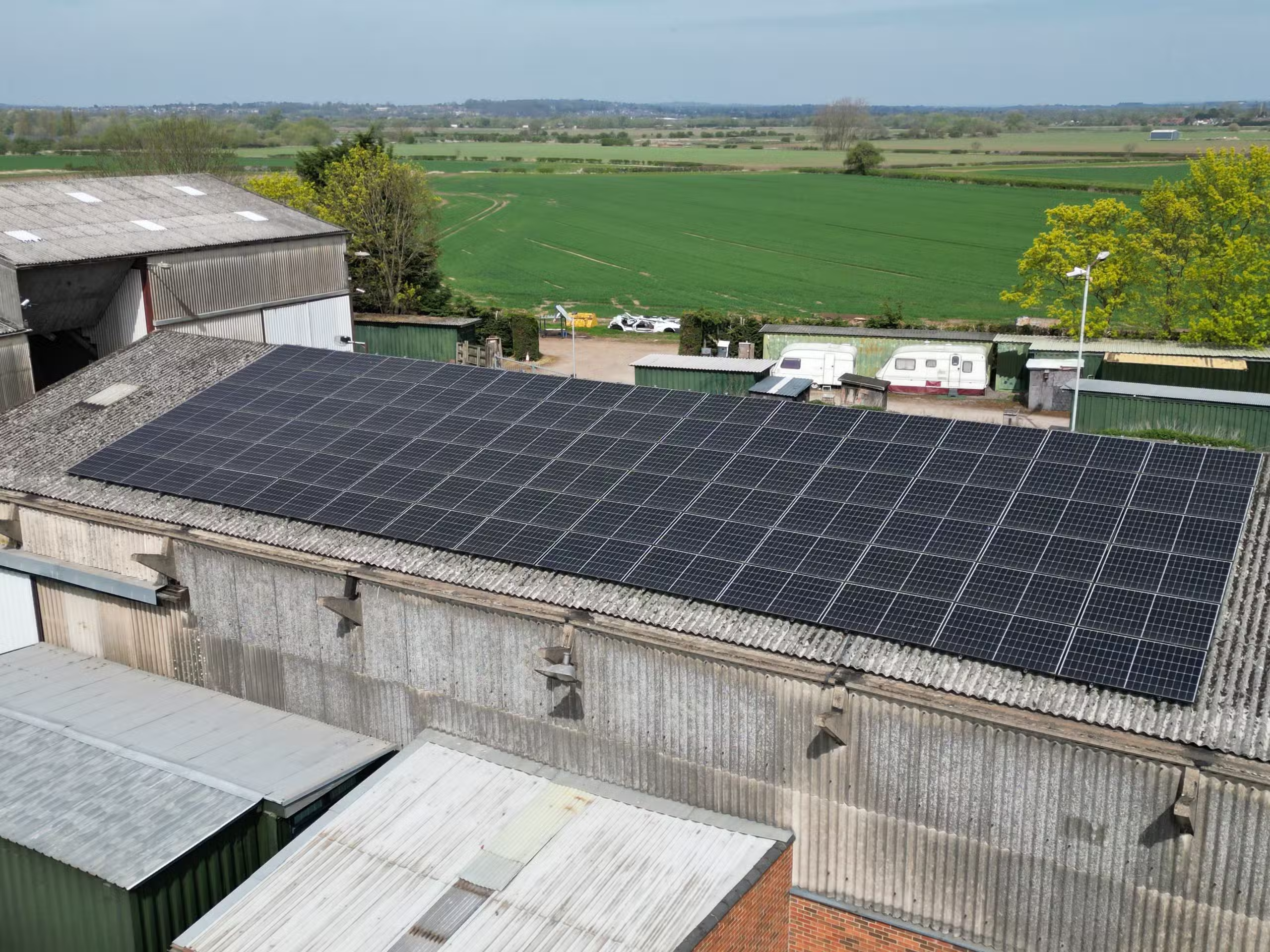
Choosing the right product is often the difference between approval and refusal in conservation area applications. The solar industry now offers options specifically designed to minimise visual impact whilst delivering strong performance. Understanding these alternatives helps you identify the most appropriate solution for your property and planning context. Our guide to solar panel types covers the full range of technologies available.
In-Roof Solar Panel Systems
In-roof systems (sometimes called integrated or building-integrated photovoltaics) replace conventional roof tiles in the installation area rather than sitting on top of them. The panels sit flush with the surrounding roofline, creating a more streamlined appearance that conservation officers typically view more favourably.
Key advantages for conservation area applications include reduced visual prominence compared to standard on-roof systems, a cleaner roofline without protruding mounting frames, and compatibility with a range of roof types including slate and clay tile surrounds. Modern in-roof systems offer comparable efficiency to standard panels, typically achieving 19-22% conversion rates.
In-roof installations involve additional complexity for weatherproofing and integration with existing roof materials compared to standard on-roof mounting. For many conservation area properties, this approach is justified by the improved approval prospects and aesthetic outcome. Contact us for a detailed assessment of options for your property.
Solar Roof Tiles and Integrated Systems
Solar tiles take integration further by replacing conventional roof materials entirely with photovoltaic tiles designed to mimic the appearance of traditional roofing. These products are virtually indistinguishable from standard tiles when viewed from ground level, making them the most visually sympathetic option for highly sensitive contexts.
Solar tiles suit period and heritage properties where any visible modern technology would be problematic. They represent the most appropriate product for listed building applications and situations where other options have been refused on visual grounds. Solar tiles require a higher level of investment than other solar options, reflecting their advanced integration technology.
This investment may be worthwhile where visual integration is paramount, but for many properties—particularly those where panels would be installed on non-visible roof slopes—in-roof or even standard systems may achieve approval whilst meeting your requirements. Professional assessment of your specific property determines which option offers the best balance of planning prospects and suitability.
Ground-Mounted Solar in Conservation Areas
Where roof installation presents insurmountable planning challenges, ground-mounted systems offer an alternative route. By siting panels away from the principal building, ground-mounted arrays can avoid the visual impact concerns that affect roof installations.
Permitted development allows ground-mounted solar on domestic properties subject to limits: systems must not exceed 9 square metres or 4 metres in height, panels must not be installed within 5 metres of a boundary, and equipment must not be within the curtilage of a listed building or on designated land (including conservation areas) if visible from a highway.
For installations exceeding these limits or visible from public areas, planning permission is required. Successful applications typically demonstrate thoughtful siting away from principal views, appropriate screening using existing vegetation or new planting, and minimal visual impact on the conservation area's character.
Ground-mounted systems require suitable land area with minimal shading and practical cable routing to the property. Our agricultural solar solutions include ground-mounted options for properties with larger grounds.
Solar Panel Options Comparison for Conservation Areas
The table below compares the main solar panel options for conservation area properties, helping you identify which solution best suits your situation and planning context.
| Feature | Standard On-Roof | In-Roof Systems | Solar Tiles | Ground-Mounted |
|---|---|---|---|---|
| Visual Impact | Higher — panels sit above existing roof | Lower — flush with roofline | Minimal — mimics traditional tiles | Variable — depends on siting |
| Planning Approval Prospects | Good for rear/non-visible slopes | Better — preferred by conservation officers | Best — suitable for sensitive contexts | Good if screened from views |
| Investment Level | Standard | Moderate | Higher | Moderate |
| Panel Efficiency | 19-22% | 19-22% | 15-20% | 19-22% |
| Best Suited For | Rear roof slopes not visible from highway | Properties needing improved aesthetics | Listed buildings, highly sensitive areas | Properties with suitable garden space |
| Permitted Development | Yes, if conditions met | Yes, if conditions met | Yes, if conditions met | Yes, within size limits |
| Installation Complexity | Standard | Moderate — requires weatherproofing | Higher — full roof integration | Moderate — groundworks required |
The right choice depends on your property's specific circumstances, including roof orientation, visibility from public areas, and local planning authority expectations. Our guide to choosing solar panels provides further detail on selecting the appropriate technology for your needs.
The Planning Application Process for Solar in Conservation Areas
If you need to understand how to get planning permission for solar panels in a conservation area, this section covers the key steps. The process is more straightforward than many homeowners expect, particularly when you engage with your local authority early.
Pre-Application Advice and Conservation Officer Engagement
Engaging with your local planning authority before submitting a formal application is strongly recommended for conservation area installations. Most authorities offer a pre-application advice service that allows you to discuss proposals informally and receive officer guidance on likely acceptability.
Pre-application advice involves submitting basic details of your proposed installation for officer review. The response identifies any concerns with your proposal and suggests modifications that might improve prospects. This dialogue can reveal whether an application is likely to succeed, which product types the authority considers acceptable, and specific conditions or information requirements for formal applications. Contact your local planning authority for details of their pre-application service.
The conservation officer plays a key role in assessing applications affecting conservation areas. These specialist officers evaluate proposals against the area's established character and the authority's conservation area appraisal (if one exists). Understanding their priorities and concerns—typically visual impact, materials, and precedent—helps shape applications that address relevant considerations.
What a Strong Application Includes
Applications for solar panels in conservation areas benefit from comprehensive supporting documentation that demonstrates awareness of the conservation context. Key elements include:
- Design and access statement: Explaining the design approach and how it respects the conservation area's character
- Heritage impact assessment: Required for some applications; evaluates the installation's effect on heritage significance
- Photographs and drawings: Showing existing conditions, proposed panel positions, and likely visual impact from key viewpoints
- Product specifications: Technical details demonstrating visual compatibility (colour, reflectivity, profile)
Applications that demonstrate the applicant understands and has considered the conservation context are more likely to receive sympathetic assessment. Generic applications that ignore the property's setting or the area's character invite closer scrutiny and potential refusal.
Timelines and What to Expect
Standard planning applications are determined within 8 weeks, though applications in conservation areas may take longer if consultation with the conservation officer reveals concerns or requests for additional information. Pre-application advice adds time upfront but typically reduces overall timescales by identifying issues before formal submission.
If an application is refused, applicants can appeal to the Planning Inspectorate. However, appeals are time-consuming (typically 6-12 months) and uncertain. Before appealing, consider whether the reasons for refusal could be addressed through a revised application—perhaps specifying different products or repositioning panels to a less sensitive location.
Working with an installer experienced in conservation area applications reduces the risk of refusal by ensuring proposals are well-conceived and appropriately documented from the outset. Our complete business solar guide covers commercial planning considerations in detail.
Need Help with Conservation Area Planning?
Our team provides guidance on permitted development, product selection, and planning applications for properties in designated areas
Request Your Free AssessmentSolar Panels on Listed Buildings
Installing solar panels on a historic building in the UK requires careful consideration of heritage controls. Listed buildings have the strictest requirements, but the principles also apply to locally listed buildings and other structures of historic significance.
How Listed Building Consent Differs from Conservation Area Rules
Listed building consent operates separately from both planning permission and conservation area controls. It is required for any works affecting the character of a listed building—including internal alterations, not just external changes. For solar installations, this means listed building consent is needed regardless of whether panels would be visible from public areas.
The level of listing affects approval prospects. Grade I buildings (around 2.5% of listed buildings) are of exceptional interest, and solar installations face significant obstacles. Grade II* buildings (around 5.8%) are particularly important buildings of more than special interest. Grade II buildings (around 91.7%, the vast majority) are of special interest, and carefully designed solar installations have reasonable prospects of approval.
Cable routing, mounting fixings, and any associated internal works also require consent on listed buildings—considerations that do not apply to unlisted properties in conservation areas. This comprehensive scope makes professional advice essential before proceeding.
Realistic Prospects for Solar on Listed Buildings
Solar installations on listed buildings are challenging but not impossible. Successful applications typically involve installations on rear or secondary roof slopes away from principal elevations, solar tiles or highly integrated systems that preserve roof character, hidden mounting systems with minimal physical intervention, and comprehensive heritage impact assessments demonstrating minimal harm.
Historic England provides guidance on solar panels and listed buildings that informs how local authorities assess applications. The guidance acknowledges that climate change mitigation is a legitimate consideration and that well-designed installations can be acceptable where harm to significance is minimised.
Grade I and Grade II* applications typically require engagement with a heritage specialist and often involve pre-application discussion with both the local authority and Historic England. For these most sensitive buildings, solar tiles on hidden roof slopes may represent the only viable approach—if any installation is appropriate at all.
Professional advice before any commitment prevents wasted time and effort. Some listed buildings simply cannot accommodate solar without unacceptable harm to their significance, and honest assessment of prospects is preferable to refused applications.
Benefits for Conservation Area Properties
The Same Benefits Apply
Conservation area status affects the planning process but does not reduce the benefits of solar once installed. System output and energy generation are determined by panel efficiency, roof orientation, and local irradiance—not by heritage designation.
Regarding solar panels conservation area cost in the UK, the installation itself is typically comparable to standard properties—any additional expense relates to product selection (in-roof systems or solar tiles versus standard panels) and potentially the planning application process. These factors vary by property and local authority requirements.
All the benefits of solar panels available to standard properties apply equally to conservation area homes. The Smart Export Guarantee (SEG) allows you to export surplus electricity to the grid, with rates varying between suppliers and tariff types. The 0% VAT rate on residential solar installations (in place since April 2022 until March 2027) applies regardless of property designation. Our guide to solar incentives details current support available.
In-roof systems and solar tiles generate comparable output to standard on-roof installations when properly specified. Choosing visually sympathetic products does not reduce long-term energy generation—it simply reflects the requirements of your planning context.
EPC Ratings and Conservation Area Properties
Period and heritage properties typically have lower EPC ratings due to solid wall construction, original windows, and limitations on conventional insulation. This makes solar particularly valuable as one of the few measures that significantly improves energy performance without altering the building fabric that conservation and listing controls seek to protect.
Solar installation can improve an EPC rating by 1-2 bands depending on system size and property characteristics. With minimum EPC requirements for rental properties set to tighten (currently Band E, with Band C required for all tenancies from October 2030), landlords of conservation area properties face a particular challenge. Solar offers a compliant improvement route that respects the building's character.
Improved EPC ratings also enhance property value and rental appeal—particularly in desirable conservation area locations where buyers and tenants expect period character combined with modern comfort and efficiency. Our smart solar investment guide explores the benefits in detail.
Choosing the Right Installer for a Conservation Area Installation
Why Specialist Experience Matters
Conservation area and listed building installations require more than standard technical competence. Installers need understanding of planning frameworks, product knowledge across the full range of integrated systems, and experience engaging with local authority officers and conservation specialists.
When evaluating prospective installers, ask about their track record with conservation area projects, their familiarity with your local planning authority's approach, their product range (particularly in-roof systems and solar tiles), and their willingness to support or lead planning applications.
The risk of using an installer unfamiliar with these requirements is significant: poorly conceived proposals may be refused, retrospective applications for non-compliant installations can face enforcement action, and inappropriate products may create ongoing maintenance issues. A site visit before any application is submitted is non-negotiable for complex cases—proposals cannot be properly developed from photographs alone.
What a Good Specialist Will Do
A qualified conservation area installer will assess your property and identify the most appropriate product and installation approach for your specific context. They will confirm whether permitted development applies or whether planning permission is required, and engage with the local planning authority on your behalf if needed.
They will prepare or advise on supporting documentation for any planning or consent application and provide written confirmation of the regulatory position before any contract is signed. This professional approach protects both parties and ensures expectations are realistic before work proceeds.
Spectrum Energy Systems has served homeowners and businesses across Nottinghamshire, Derbyshire, Leicestershire, and Lincolnshire since 2011. Our MCS-accredited team includes experience with heritage and conservation area installations, and we provide honest advice on what is achievable for your specific property. Explore our case studies to see examples of completed projects.
Frequently Asked Questions
Conclusion: Conservation Area Status Is a Hurdle, Not a Barrier
The evidence is clear: most conservation area properties can install solar panels with the right product choice and proper approach to planning. Permitted development rights remain in place for many installations, and where planning permission is required, well-prepared applications with appropriate products routinely succeed.
The key is understanding which rules apply to your specific property, selecting products that satisfy conservation concerns, and working with installers who have relevant experience. The energy generation, EPC improvements, and Smart Export Guarantee benefits available to standard properties are equally available to conservation area homes—the route to achieving them simply requires more care.
Period properties in desirable conservation areas deserve energy solutions that respect their character whilst delivering modern efficiency. With proper guidance, solar installation need not compromise the qualities that make these properties special.
Find Out What's Achievable for Your Property
Book a free solar assessment with our conservation area specialists. We'll evaluate your property, confirm the planning position, and recommend the most appropriate installation approach for your specific situation.
Book Your Free Assessment Contact Our TeamAbout Spectrum Energy Systems: Established in 2011, we're MCS-accredited solar installers serving Nottinghamshire, Derbyshire, Leicestershire, Lincolnshire, and the wider East Midlands. Our experienced team designs and installs tailored solar solutions for homes and businesses, including properties in conservation areas and heritage settings. Learn more about our expertise or explore our homeowner resources for comprehensive solar guidance. We also provide battery storage solutions, EV charging installation, and ongoing maintenance support.