
Is a Solar PV System Right for Your Property? Here's How to Find Out
Whether you're asking "is solar right for my home" or exploring solar PV system UK options for a commercial building, understanding solar panel eligibility UK requirements is essential before investing. Solar PV presents an opportunity to reduce energy costs, protect against rising electricity prices, and generate long-term returns—but it isn't a one-size-fits-all solution. Home solar panel suitability UK depends on your specific property characteristics, energy consumption patterns, and financial objectives.
This guide walks you through the key factors that determine whether solar panels are suitable for your property, helping you make an informed decision before committing to an installation. For detailed information on the installation process itself, see our ultimate guide to installing solar PV systems.
Get Your Free Solar Suitability Assessment
Our MCS-accredited engineers will evaluate your property and provide a detailed feasibility report—completely free with no obligation
Book Your Free AssessmentIn This Guide
- What Does "Right for Your Property" Mean?
- Physical Property Suitability
- Is Your Energy Consumption Right for Solar?
- Financial Suitability: Will the Numbers Work?
- Regulatory and Planning Considerations
- Property Types and Suitability at a Glance
- Signs Solar PV Is a Strong Fit
- When Solar May Not Be the Best Option
- Get a Professional Suitability Assessment
- Frequently Asked Questions
- Conclusion
What Does "Right for Your Property" Actually Mean?
When people ask whether solar is suitable for their property, they're really asking several questions at once. It's not simply about whether panels can physically fit on your roof—it's about whether the investment makes financial sense given your specific circumstances.
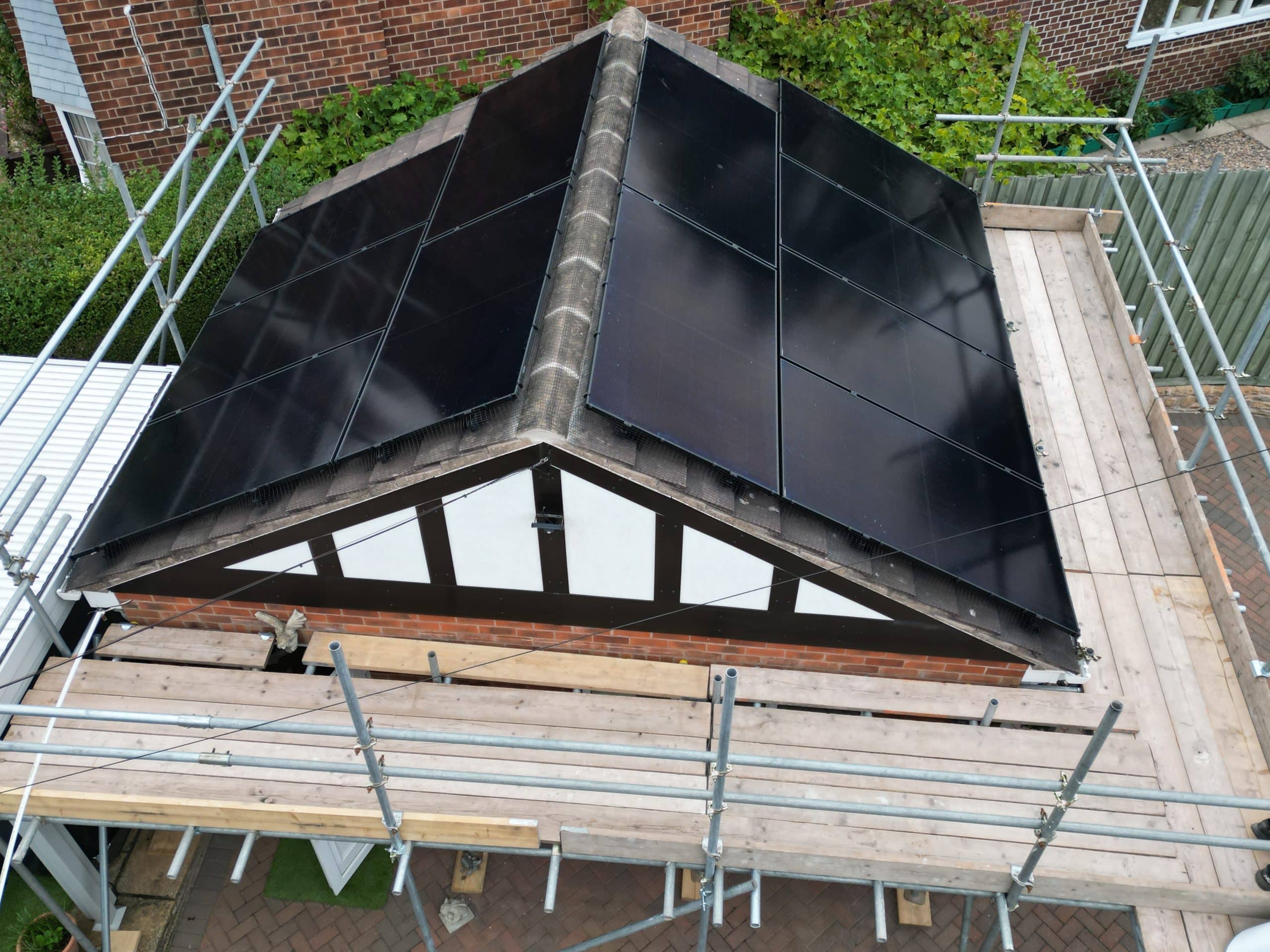
Solar PV suitability depends on four key factors working together: physical characteristics (your roof or available land), financial viability (payback period and long-term returns), regulatory requirements (planning permission and grid connection), and operational fit (how well solar generation matches your energy consumption). A thorough solar PV feasibility UK assessment considers all these elements together to determine whether installation makes sense for your situation.
Online solar calculators provide rough estimates, but they can't account for the specific details that determine real-world performance—actual shading patterns, roof condition, structural capacity, local grid constraints, and your precise energy usage profile. That's why a professional solar suitability assessment UK delivers far more accurate projections than any online tool. Learn more about the key benefits of solar panels for homes and businesses to understand what you might gain from a suitable installation.
Physical Property Suitability
The physical characteristics of your property form the foundation of solar suitability. Even the most attractive financial case falls apart if your roof can't safely support panels or receives inadequate sunlight. Here's what matters most.
Roof Orientation and Tilt
Wondering "is my roof suitable for solar panels"? Orientation is one of the first factors to consider. South-facing roof solar UK installations at 30-35° pitch provide optimal conditions, capturing maximum sunlight throughout the year. However, optimal isn't essential—east and west-facing roofs typically generate around 80% of south-facing output, which still delivers strong returns. Many properties successfully use split east-west arrays, generating morning and afternoon peaks that often align better with actual consumption patterns.
Solar panels on flat roof UK buildings are increasingly common, particularly on commercial buildings, factories, and office buildings. Flat roofs offer excellent solar potential—panels mount on angled frames, allowing installers to optimise orientation regardless of the building's alignment. This flexibility makes flat roofs particularly attractive for commercial installations.
North-facing roofs present challenges. Generation drops significantly—often to 50-60% of south-facing equivalents—and rarely justifies investment unless combined with other more favourable roof sections. Our guide to choosing the right solar panel covers how panel selection interacts with roof orientation.
Roof Size and Available Space
Modern solar panels typically produce 400-450W each and measure approximately 1.7m × 1.0m. A typical UK home installation (3-4kW) requires 12-20 square metres of suitable roof space. Commercial installations scale accordingly—a 50kW system might need 250-300 square metres, whilst larger commercial solar installations on warehouses can exceed 100kW using available roof area.
Properties with limited roof space can still benefit from solar, but may need to prioritise high-efficiency panels to maximise output per square metre. Our article on solar panel efficiency explains how different panel types affect generation from limited space.
For properties with extensive land, ground-mounted systems offer an alternative when roof space is insufficient or unsuitable. This is particularly relevant for agricultural properties and rural sites where land availability exceeds roof constraints.
Roof Condition and Structural Integrity
Solar panels typically remain in place for 25-30+ years, so your roof needs to be in good condition before installation. If your roof requires replacement within the next 10-15 years, it's generally more cost-effective to complete roofing work first—removing and reinstalling panels later adds unnecessary expense.
Structural capacity matters particularly for commercial buildings and older properties. Most domestic roofs comfortably support solar panels (adding roughly 10-15kg per square metre), but larger commercial installations require structural assessments to confirm load-bearing capacity. Our expert solar fitting services include comprehensive structural evaluation.
Shading Analysis
Shading significantly impacts solar output—even partial shading from a chimney, tree, or neighbouring building can reduce generation substantially. Modern systems use optimisers or microinverters to minimise shading losses, but prevention through careful system design remains the best approach.
A professional shading analysis examines your property throughout the day and across seasons, identifying potential obstructions and their impact on generation. This analysis forms a core part of any thorough site survey and directly influences system design decisions. Understanding common solar panel problems helps you appreciate why proper shading assessment matters.
Roof Orientation Comparison
| Roof Orientation | Output vs South-Facing | Best Suited For | Suitability Rating |
|---|---|---|---|
| South-Facing | 100% (optimal) | All property types; maximum generation | Excellent |
| South-East / South-West | ~95% | Properties with morning or afternoon peak usage | Excellent |
| East-Facing | ~80% | Morning usage; split arrays; work-from-home | Good |
| West-Facing | ~80% | Afternoon/evening usage; families home after school | Good |
| East-West Split | ~80-85% combined | Extended generation hours; flat roofs | Good |
| Flat Roof (Mounted) | ~90-95% | Commercial buildings; flexible orientation | Excellent |
| North-Facing | ~50-60% | Generally unsuitable; rarely recommended | Poor |
← Scroll horizontally to see full table →
Is Your Energy Consumption the Right Profile for Solar?
Solar panels generate electricity during daylight hours, with peak production typically occurring between 10am and 3pm. How well your consumption aligns with this generation window significantly affects the financial return from your investment.
Daytime Energy Usage
Is solar good for business property? Properties with high daytime consumption—offices, warehouses, retail premises, schools, and manufacturing facilities—present ideal solar candidates. Commercial solar PV suitability depends on how well consumption aligns with generation, maximising self-consumption and avoiding export at lower rates.
Residential solar suitability UK also depends on usage patterns. Homes with occupants present during the day, or those with high-consumption appliances that can be scheduled (dishwashers, washing machines, EV charging), benefit significantly. Properties with minimal daytime usage can still achieve good returns, particularly when combined with battery storage to shift generation to evening consumption.
Understanding Your Energy Bills
Your current electricity consumption and costs directly influence solar payback periods. Higher energy users—whether residential households with substantial annual electricity bills or commercial premises with significant energy spend—typically achieve faster payback and stronger returns.
Review your electricity bills to understand both your annual consumption (in kWh) and your unit rate. These figures help calculate potential savings and determine appropriate system sizing. Properties on higher tariffs benefit more from each unit of self-consumed solar generation. Our business solar investment guide covers commercial energy analysis in detail.
Battery Storage: Extending Solar's Value
Battery storage transforms solar economics for properties with evening-heavy consumption. By storing excess daytime generation, batteries enable self-consumption rates of 70-80% or higher—compared to 30-50% without storage. This significantly improves returns, particularly for households where occupants are away during peak generation hours.
Commercial properties can use battery storage to reduce peak demand charges, providing additional savings beyond simple energy cost reduction. Learn more about commercial battery storage solutions and the benefits of solar panel battery storage.
Financial Suitability: Will the Numbers Work for You?
Are solar panels worth it UK homeowners and businesses often ask? Understanding the financial aspects helps determine whether solar represents a sound investment for your specific situation. Whilst individual returns vary based on consumption patterns and system sizing, general benchmarks provide useful guidance.
Typical Payback Periods in the UK
Residential solar systems typically achieve payback within 6-12 years, depending on consumption patterns, system size, and self-consumption rates. Commercial installations often achieve faster payback—typically 5-8 years—due to higher daytime consumption, larger systems, and available tax benefits.
Factors affecting payback include system size relative to consumption, electricity tariff rates, self-consumption percentage, and export income. A professional assessment models these variables using your specific data to provide realistic projections. Our complete business solar guide explores commercial financial considerations thoroughly.
Return on Investment
Solar panels return on investment UK calculations extend well beyond the initial payback period. After payback, solar systems continue generating essentially free electricity for another 15-20+ years. This ongoing value often represents the majority of lifetime returns. A well-designed system provides long-term protection against electricity price increases whilst delivering predictable energy costs.
Solar also adds property value—properties with solar installations typically attract buyer interest and can command premium prices. For commercial properties, solar contributes to sustainability credentials increasingly valued by tenants, customers, and investors.
Financing Options If Upfront Cost Is a Concern
Capital constraints needn't prevent solar adoption. Several financing mechanisms make solar accessible without significant upfront investment:
- Power Purchase Agreements (PPAs): A third party installs and owns the system; you purchase the electricity generated at a fixed rate—typically below grid prices—with no capital outlay
- Asset finance and solar loans: Spread the cost over 5-15 years whilst benefiting from savings immediately
- Operating leases: Particularly suitable for commercial properties, keeping the asset off-balance sheet
- Capital allowances: Businesses can claim 100% first-year tax relief on qualifying solar equipment, reducing effective costs significantly
Explore our funding solutions for solar energy to understand which financing approach suits your situation.
Export Revenue via the Smart Export Guarantee (SEG)
The Smart Export Guarantee requires energy suppliers to pay for electricity you export to the grid. Whilst export rates are typically lower than import rates, this revenue stream improves overall returns—particularly for systems generating more than you consume.
SEG tariffs vary between suppliers, so shopping around for the best rate is worthwhile. Some suppliers offer time-of-use export rates, paying more for electricity exported during peak demand periods. Combining SEG income with maximised self-consumption optimises overall system economics. Visit our solar incentives for homeowners page for current information on available schemes.
Residential vs Commercial Solar: Key Differences
| Factor | Residential | Commercial |
|---|---|---|
| Typical System Size | 3-6 kW | 20-500+ kW |
| Typical Payback Period | 6-12 years | 5-8 years |
| Self-Consumption Rate | 30-50% (without battery) | 60-80% (daytime usage) |
| Grid Connection | G98 notification (under 3.68kW) | G99 application required |
| Planning Permission | Usually not required | May be required for larger systems |
| Tax Benefits | 0% VAT (until 2027) | 100% capital allowances |
| Finance Options | Loans, personal savings | PPA, asset finance, lease |
← Scroll horizontally to see full table →
Regulatory and Planning Considerations
Permitted Development for Homes
Most residential solar installations fall under permitted development rights, meaning no planning permission is required. This applies when panels don't protrude more than 200mm from the roof surface and don't extend above the highest part of the roof (excluding chimneys).
Exceptions exist for listed buildings, properties in conservation areas, World Heritage Sites, and certain areas of outstanding natural beauty. Flats and maisonettes may also require permission. If your property falls into these categories, your installer should advise on the planning process during initial assessment.
Commercial Planning Requirements
Commercial installations may require planning permission depending on size, location, and visual impact. Ground-mounted systems over 9 square metres typically require permission, as do roof installations on listed buildings or in conservation areas.
Experienced installers manage planning applications as part of their service, understanding local authority requirements and how to present applications effectively. Our commercial solar installation services include full planning support where required.
Grid Connection and DNO Applications
All solar installations must notify or apply to the local Distribution Network Operator (DNO). Systems up to 3.68kW (single phase) or 11.04kW (three phase) typically proceed under G98 notification—a straightforward process handled by your installer.
Larger systems require G99 applications, involving more detailed assessment and potentially longer timescales. In some areas, grid constraints may require export limitation agreements, capping the amount of electricity you can send to the grid. This primarily affects larger commercial installations and is factored into system design during the assessment process.
Landlord and Leasehold Considerations
Solar PV for landlords UK offers unique opportunities and considerations. Landlords can install solar on rental properties but should consider tenant arrangements. Options include passing electricity savings to tenants (improving the property's attractiveness), installing sub-metering, or retaining generation benefits through appropriate lease clauses. Solar panels for investment properties UK can improve EPC ratings and property values whilst generating ongoing returns.
Leaseholders typically require freeholder consent before installation. This is usually granted for straightforward installations but may involve negotiations over maintenance responsibilities and end-of-lease arrangements. Our experience with property developers includes navigating these complexities.
Property Types and Suitability at a Glance
Detached and Semi-Detached Homes
Solar energy for homeowners UK starts with these typically straightforward installations. Good roof access, often with multiple orientations available, and flexibility for battery storage and EV charging integration. Explore our residential solar solutions.
Flats and Apartments
More complex due to shared roofs and freeholder consent requirements. Community energy schemes and shared ownership models can work, but individual installations are challenging. Worth exploring if you own the freehold.
Commercial and Industrial Buildings
Often ideal candidates—large flat roofs, high daytime consumption, and tax benefits combine to deliver excellent returns. Warehouses, factories, and car dealerships are particularly well-suited.
Rental and Investment Properties
Solar improves EPC ratings (increasingly important for rental compliance), attracts quality tenants seeking lower bills, and adds asset value. Consider how benefits are shared between landlord and tenant.
Agricultural and Rural Properties
Large land areas suit ground-mounted systems. Horticultural operations with high electricity demands often achieve excellent payback. Grant funding may be available for agricultural businesses.
Schools and Public Sector
Strong daytime consumption profiles match generation perfectly. Public sector buildings benefit from sustainability credentials and long-term cost certainty. Potential for educational engagement with students.
Signs Solar PV Is a Strong Fit for Your Property
Solar PV system benefits UK property owners through reduced energy bills, protection against price rises, and improved environmental credentials. The following indicators suggest your property is well-suited for installation:
Solar Is Likely Right for You If:
- You have a south, east, or west-facing roof with minimal shading
- You have a substantial annual electricity bill (the higher your bill, the faster the payback)
- You use significant energy during daylight hours
- You want cost certainty and protection from rising energy prices
- You have sustainability, ESG, or Net Zero targets to meet
- You're planning a roof replacement or new build in the near future
- You own the property outright or have a long-term lease
- You're interested in EV charging or future electrification
When Solar PV May Not Be the Best Option Right Now
Consider Waiting or Alternative Approaches If:
- Your roof requires replacement within the next 5-10 years—better to re-roof first
- Severe, unavoidable shading affects most of your available roof space
- Your electricity consumption is very low (reducing the payback incentive)
- Planning restrictions in conservation areas prevent installation (though approval is often still possible)
- You're planning to sell the property within 3-5 years (though solar often adds value)
- Structural issues require resolution before adding roof loads
Important: Many of these concerns can be addressed or may not apply to your specific situation. A professional assessment will clarify whether these factors genuinely prevent installation or whether solutions exist.
The Next Step: Get a Professional Suitability Assessment
Online calculators and general guidance provide useful starting points, but they cannot account for the specific factors that determine your property's solar potential. A professional solar panel property assessment UK provides accurate projections based on real measurements, shading analysis, structural evaluation, and your actual energy consumption data.
What a Professional Assessment Covers
- Roof survey: Orientation, tilt, condition, structural capacity, and available area
- Shading analysis: Detailed assessment of obstructions throughout the day and year
- Energy consumption review: Analysis of your bills to determine optimal system sizing
- Grid connection assessment: DNO requirements and any local constraints
- Financial modelling: Realistic payback projections based on your specific circumstances
- System design recommendations: Panel selection, inverter choice, and optional battery storage
A thorough assessment takes approximately 1-2 hours on-site for residential properties (longer for commercial), followed by a detailed feasibility report. This report gives you everything needed to make an informed decision—with no obligation to proceed.
Preparing for Your Assessment: Have recent electricity bills available (ideally 12 months), note any planned property changes, and consider your objectives—whether primarily financial savings, environmental benefits, or energy independence. The more information you provide, the more accurate your feasibility report will be.
Frequently Asked Questions
Conclusion: Find Out for Certain with a Free Assessment
Solar PV suitability is property-specific—what works brilliantly for one building may not suit another. General guides provide useful orientation, but only a professional assessment delivers the accurate projections needed for confident decision-making.
The good news? Most properties are better suited to solar than owners initially assume. Modern panel technology, flexible mounting solutions, and battery storage options mean that even challenging sites often achieve worthwhile returns. The key is getting accurate data about your specific property rather than relying on assumptions or generic calculators.
Spectrum Energy Systems has helped hundreds of homeowners and businesses across the East Midlands assess solar suitability and make informed decisions since 2011. Our MCS-accredited engineers provide thorough, impartial assessments—we'll tell you honestly if solar isn't right for your property, because recommending unsuitable installations serves no one's interests.
Book Your Free Solar Suitability Assessment
Remove the guesswork with a professional property assessment. We'll evaluate your roof, analyse your consumption, and provide a detailed feasibility report showing realistic projections for your specific situation—completely free with no obligation.
Get Your Free Assessment Contact Our TeamAbout Spectrum Energy Systems: Established in 2011, we're MCS-accredited and NICEIC-approved solar installers serving Nottingham, Derby, Leicester, Lincoln and the wider East Midlands. Our experienced team designs and installs tailored solar solutions for homes and businesses, providing honest assessments and quality installations. Learn more about our expertise, explore our completed projects, or browse our homeowner resources and business resources for comprehensive solar guidance.