How to Install Solar Panels on the Ground in the UK: Complete Guide
Ground-mounted solar panels offer an excellent alternative when roof installation isn't suitable—whether due to shading, orientation, structural concerns, or simply wanting to maximise system size beyond roof capacity. With the right planning, ground-mounted systems can achieve 5-10% higher efficiency than roof installations through optimal positioning and improved cooling.
This solar panel ground installation guide covers everything UK property owners need to know about residential ground solar installation, from planning permission and UK ground solar regulations to installation steps and ongoing maintenance.
In This Guide
- What Are Ground-Mounted Solar Panels?
- Advantages of Ground-Mounted Solar
- Disadvantages and Challenges
- UK Planning Permission Requirements
- Building Regulations and Compliance
- Site Assessment: Is Your Garden Suitable?
- Step-by-Step Installation Process
- DIY vs Professional Installation
- Ground Solar vs Roof Solar
- Grid Connection and Smart Export Guarantee
- Maintenance Requirements
- Common Mistakes to Avoid
- Frequently Asked Questions
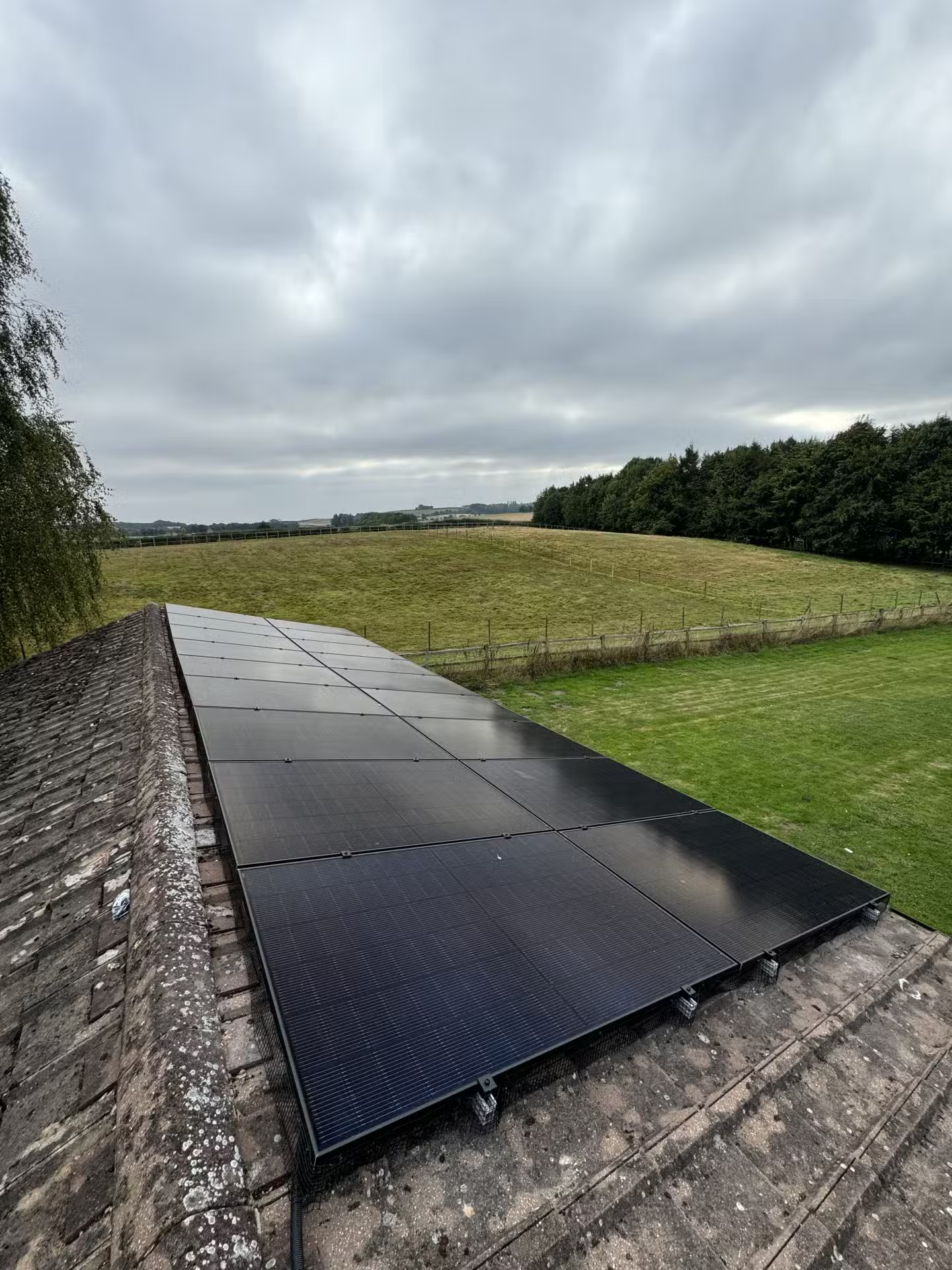
At Spectrum Energy Systems, established in 2011, we've designed and installed ground-mounted solar systems across Nottinghamshire, Derbyshire, Leicestershire, and Lincolnshire for properties ranging from rural homes with large gardens to agricultural holdings seeking energy independence. Whether you need a garden solar panel installation or a ground mounted solar farm for your home, our MCS-accredited engineers ensure every installation meets UK regulations whilst maximising energy generation.
Whether you're exploring ground solar because your roof is unsuitable, you want to preserve your roof's appearance, or you simply have the land available, this guide will help you understand whether ground-mounted solar is right for your property and what the installation process involves.
Considering Ground-Mounted Solar?
Our MCS-accredited team provides free site assessments to determine if ground installation suits your property
Get Your Free Assessment Speak to Our TeamWhat Are Ground-Mounted Solar Panels?
Ground-mounted solar panels are photovoltaic systems installed on frames secured to the ground rather than attached to building roofs. They use the same solar panel technology as roof installations but are positioned on dedicated mounting structures anchored to foundations in your garden, field, or other suitable land.
A solar panel ground array typically consists of metal frames (usually aluminium or galvanised steel) supported by concrete foundations, ground screws, or ballasted bases. The panels are arranged in rows at optimal angles for UK solar generation, with spacing calculated to prevent self-shading throughout the year.
How Ground-Mounted Systems Differ from Roof Installations
Unlike roof-mounted solar installations, ground systems aren't constrained by existing roof pitch, orientation, or structural limitations. This freedom allows precise optimisation of panel angle and direction for maximum energy generation. Understanding the factors affecting solar panel efficiency helps appreciate why ground mounting can outperform roof installation in suitable locations.
Ground-mounted systems also offer practical advantages: easier access for cleaning and maintenance, no roof penetrations or potential leak points, and the ability to expand the system as energy needs grow. However, they require available land and may need planning permission.
Types of Ground Mounting Systems
Three main solar panel ground mounting systems are used for UK installations:
- Fixed-tilt ground mounts: Panels set at a fixed angle (typically 30-40 degrees), the most common and practical option for UK installations
- Adjustable-tilt mounts: Allow seasonal angle adjustment to optimise generation throughout the year, typically adding 3-5% annual output
- Solar trackers: Motorised systems that follow the sun's path, increasing generation by 25-35% but with greater complexity and maintenance requirements
For most UK residential and commercial installations, fixed-tilt systems offer the best balance of performance, reliability, and simplicity.
Advantages of Ground-Mounted Solar Panels in the UK
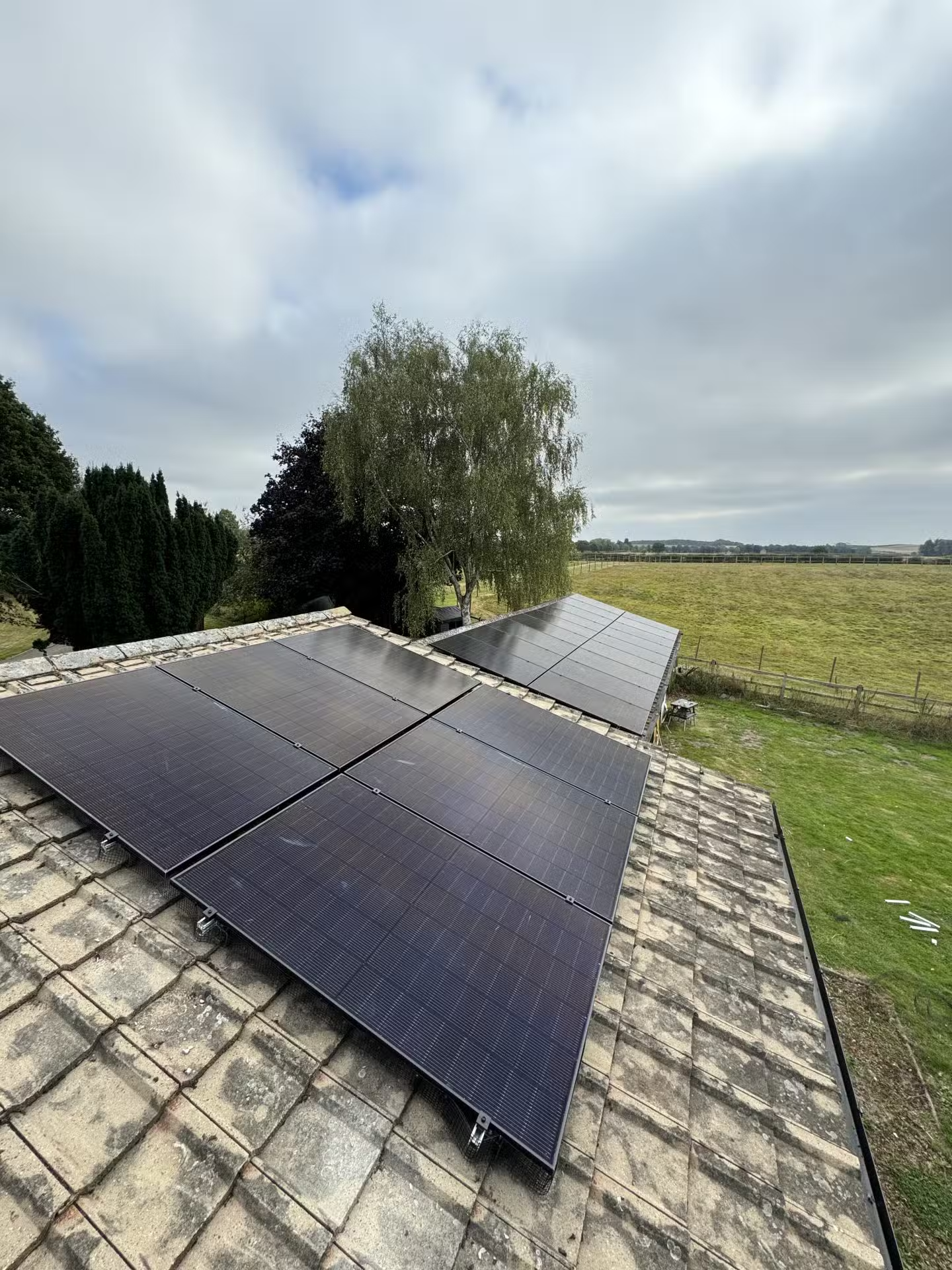
Ground-mounted solar offers several compelling advantages that make it the preferred choice for many UK properties, particularly those with unsuitable roofs or ample land.
Optimal Panel Positioning
The greatest advantage of ground mounting is complete control over panel orientation and ground solar panel angle. For UK installations, the ideal angle is 35 degrees facing south. Whilst roof installations must work within existing roof geometry, ground systems can be positioned precisely for maximum generation. This optimisation can increase annual output by 10-15% compared to poorly-oriented roof installations. Our guide on choosing the right solar panel explains how panel selection complements proper positioning.
Enhanced Cooling and Efficiency
Solar panels lose efficiency as they heat up—typically 0.3-0.5% per degree above 25°C. Ground-mounted panels benefit from natural air circulation underneath, keeping them cooler than roof-mounted panels that trap heat against the roof surface. This cooling effect can improve real-world efficiency by 2-5% during summer months when generation is highest.
Easier Maintenance Access
Ground-level access eliminates the need for ladders, scaffolding, or working at height for routine maintenance. Cleaning panels, inspecting connections, and addressing any issues becomes straightforward. Regular solar panel maintenance ensures optimal long-term performance.
No Roof Concerns
Ground mounting eliminates all roof-related considerations: no structural assessments, no risk of roof leaks, no aesthetic impact on your home, and no concerns about roof condition or remaining lifespan. Properties with older roofs, listed buildings, or complex roof geometries often find ground mounting the only viable option.
System Expandability
Adding panels to a ground-mounted system is typically straightforward—simply extend the mounting array. Roof installations are limited by available roof space, but ground systems can grow with your energy needs, particularly valuable if you're planning future additions like EV charging or battery storage.
Disadvantages and Challenges
Ground-mounted solar isn't suitable for every property. Understanding the challenges helps determine whether ground installation makes sense for your situation.
✓ Ground Mount Advantages
- Optimal angle and orientation control
- Better cooling improves efficiency
- Easy maintenance access
- No roof structural concerns
- Expandable system size
- No impact on home aesthetics
- Suitable for unsuitable roofs
✗ Ground Mount Challenges
- Requires significant land area
- Planning permission often needed
- Ground preparation required
- Potential shading from vegetation
- Visual impact on garden/land
- Security considerations
The most significant barrier for many properties is simply land availability. Ground-mounted systems require unshaded, south-facing land that you're willing to dedicate to solar generation. For properties with limited outdoor space, roof-mounted solar typically remains the better option.
UK Planning Permission Requirements for Ground Solar Panels
Planning permission is one of the most important considerations for ground-mounted solar. Unlike roof installations that usually fall under permitted development, ground-mounted systems have specific criteria that determine whether planning approval is needed.
Permitted Development Rights
Ground-mounted solar panels can be installed without planning permission if ALL of the following conditions are met:
- Size limit: Total array area must not exceed 9 square metres
- Height limit: No part of the installation higher than 4 metres
- Boundary distance: Must be at least 5 metres from any property boundary
- Location: Must not be in front of the principal elevation (front of the house)
- Property type: Not within the curtilage of a listed building or in a conservation area
- Designated land: Not in a World Heritage Site, National Park, Area of Outstanding Natural Beauty, or the Broads
Important: 9m² Limit
The 9 square metre permitted development limit is relatively small—approximately 5 standard panels. Most practical ground-mounted systems exceed this threshold, meaning planning permission is typically required. The 9m² refers to the total array area, not individual panel sizes.
When You Need Planning Permission
You must apply for planning permission if:
- Your array exceeds 9 square metres in area
- Any panel stands higher than 4 metres from ground level
- The installation is closer than 5 metres to a boundary
- Your property is in a conservation area, National Park, AONB, or World Heritage Site
- Your home is a listed building or within listed building curtilage
How to Apply for Planning Permission
The planning application process for ground-mounted solar typically involves:
- Pre-application advice: Optional but recommended—contact your local planning authority for informal guidance
- Application submission: Complete forms via the Planning Portal with site plans, elevation drawings, and design statement
- Consultation period: Neighbours and relevant bodies consulted (typically 21 days)
- Decision timeline: Most applications determined within 8 weeks
Planning approval rates for domestic ground-mounted solar are generally high where visual impact is reasonable and the installation doesn't affect neighbours significantly. Our team can assist with planning requirements as part of our installation service.
UK Building Regulations and Compliance
Beyond planning permission, ground-mounted solar installations must comply with various ground solar panel requirements UK regulations and standards. Understanding these requirements is essential whether you're considering DIY installation or hiring professionals.
Electrical Safety Standards
All electrical work must comply with BS 7671 (IET Wiring Regulations) and Part P of the Building Regulations. This includes:
- Proper cable sizing and protection
- Appropriate earthing and bonding
- Correct isolation and switching arrangements
- Protection against electric shock and fire
Electrical installation work connecting to your home's supply must be carried out by a competent person—either a registered electrician or someone certified under a competent person scheme.
Grid Connection Requirements
For grid-connected systems, you must notify your Distribution Network Operator (DNO):
- G98 notification: Required for systems up to 3.68kW per phase (16A). This is a notification process, not an approval—you inform the DNO within 28 days of installation
- G99 application: Required for larger systems. This requires approval before installation and may involve grid impact studies
Understanding the difference between grid-tied and off-grid solar systems helps clarify which regulations apply to your installation.
MCS Certification Importance
MCS (Microgeneration Certification Scheme) certification isn't legally required but is essential for:
- Eligibility for the Smart Export Guarantee (SEG) payments
- Compliance with manufacturer warranty requirements
- Quality assurance and consumer protection
- Potential future incentive schemes
MCS certification requires installation by an MCS-accredited installer using MCS-certified products. DIY installations cannot be MCS-certified, which significantly impacts their financial returns through lost SEG income.
Site Assessment: Is Your Garden Suitable?
Before committing to ground-mounted solar, a thorough site assessment determines whether your land is suitable and what system size is achievable. Professional installers conduct detailed assessments, but understanding the key factors helps you make an initial evaluation.
Space Requirements
Ground-mounted systems require more space than you might expect, accounting for panel area, row spacing, and access paths:
| System Size | Number of Panels | Approximate Land Required | Typical Annual Generation |
|---|---|---|---|
| 3kW | 7-8 panels | 20-25m² | 2,500-3,000 kWh |
| 4kW | 9-10 panels | 25-35m² | 3,400-4,000 kWh |
| 6kW | 14-15 panels | 40-55m² | 5,100-6,000 kWh |
| 8kW | 18-20 panels | 55-75m² | 6,800-8,000 kWh |
| 10kW | 23-25 panels | 70-95m² | 8,500-10,000 kWh |
These figures account for standard ground solar panel spacing of 2-3 metres between panel rows to prevent self-shading. Actual requirements vary based on panel efficiency, mounting system design, and site-specific factors.
Sun Exposure Analysis
Your site needs clear, unshaded sun exposure for the majority of daylight hours. Key considerations include:
- Orientation: South-facing is optimal; south-east or south-west typically achieves 95% of optimal output
- Shading: Assess shadows from buildings, trees, fences, and other structures throughout the day and across seasons
- Future shading: Consider tree growth and potential neighbouring developments
Understanding common solar panel problems including shading impacts helps appreciate why proper site assessment is crucial.
Ground Conditions
Soil type and ground conditions affect ground solar panel foundations and their requirements:
- Stable soil: Clay, chalk, or compacted soil suits most foundation types
- Rocky ground: May require adapted foundations but provides excellent stability
- Sandy/loose soil: May need deeper foundations or ground screws
- Waterlogged areas: Drainage must be addressed; may require elevated mounting
- Sloped terrain: Achievable but adds complexity to installation
Site Assessment Checklist
- Sufficient unshaded land area available
- South-facing or near-south orientation possible
- Reasonable distance from property for cable runs
- Ground conditions suitable for foundations
- No underground services (check before digging)
- Access for installation equipment
- Planning permission likely achievable
- Visual impact acceptable to you and neighbours
Step-by-Step Ground Solar Panel Installation Process
Understanding the installation process helps set expectations whether you're managing a DIY project or working with professional installers. Ground-mounted installation typically takes 2-5 days depending on system size and ground conditions.
Step 1: Site Preparation
What's Involved
Mark out the installation area, clear vegetation, and level the ground if necessary. Underground service checks are essential—contact utility providers before any excavation. The area should be cleared of debris and any topsoil removed where foundations will be installed.
Step 2: Installing Foundations
Foundation Options
Concrete footings: Most common method. Holes are dug (typically 600mm deep), concrete poured, and mounting posts set in place. Requires 2-7 days curing time before frame installation.
Ground screws: Large helical screws driven into the ground. Faster installation, no concrete curing time, minimal ground disturbance. Suitable for most UK soil conditions.
Ballasted systems: Concrete blocks provide weight-based stability without ground penetration. Useful where ground conditions are problematic or removability is required.
Step 3: Mounting Frame Installation
Frame Assembly
Aluminium or steel mounting rails are secured to the foundation posts, creating the framework that holds the panels. Precise levelling and alignment ensures optimal panel positioning. All connections use stainless steel fasteners to prevent corrosion.
Step 4: Solar Panel Installation
Panel Mounting
Panels are secured to the mounting rails using manufacturer-specified clamps. Proper spacing ensures airflow for cooling. Panel positioning must account for access during future maintenance. Each panel's MC4 connectors are checked before electrical connection.
Step 5: Electrical Wiring
DC Wiring
Panels are wired in series and/or parallel configurations depending on inverter requirements. Understanding the difference between micro inverters and string inverters is important here, as wiring differs significantly. All DC wiring must be properly rated and protected.
Step 6: Cable Runs to Property
Underground Cabling
Cables typically run underground from the array to your property in protective conduit buried at least 450mm deep (or 600mm under driveways). The cable route should avoid areas of future excavation and be marked with warning tape.
Step 7: Inverter and System Setup
System Integration
The inverter is installed in a suitable location—typically a garage, utility room, or weatherproof outdoor enclosure. AC connection to your consumer unit completes the grid integration. System monitoring equipment is configured for performance tracking.
Step 8: Testing and Commissioning
Final Checks
Comprehensive electrical testing verifies safe operation. System performance is checked against design expectations. Documentation is completed including electrical certificates, DNO notification, and MCS certification where applicable.
DIY vs Professional Installation
The question of DIY ground solar panels UK versus professional installation requires careful consideration of regulations, safety, and long-term value.
What You Can Do Yourself
With appropriate skills, you can undertake:
- Site preparation and ground clearing
- Foundation installation (if competent with concrete work)
- Mounting frame assembly
- Physical panel installation
- DC wiring between panels
What Requires Professional Involvement
The following must be completed by qualified professionals:
- All AC electrical work: Connection to your home's electrical system requires a Part P registered electrician
- Grid connection: DNO notification and compliance requires professional sign-off
- MCS certification: Only achievable through MCS-accredited installers
The MCS Trade-Off
DIY installation saves on labour but forfeits MCS certification. Without MCS, you cannot claim Smart Export Guarantee payments for excess electricity exported to the grid. Over a 25-year system life, lost SEG income can be substantial, potentially exceeding any installation savings.
For most homeowners, professional installation offers better value when SEG income, warranty protection, and peace of mind are considered.
Ground Solar vs Roof Solar: Which Is Better?
When comparing ground solar vs roof solar UK installations, the choice depends on your specific circumstances rather than one being universally superior.
| Factor | Ground-Mounted | Roof-Mounted |
|---|---|---|
| Efficiency | 5-10% higher (optimal positioning) | Constrained by roof geometry |
| Space Required | Dedicated land area needed | Utilises unused roof space |
| Maintenance | Easy ground-level access | Requires roof access |
| Planning Permission | Often required (>9m²) | Usually permitted development |
| Visual Impact | Visible in garden/land | Less visible from ground |
| Expandability | Easy to add panels | Limited by roof area |
Ground mounting makes most sense when: your roof is unsuitable (shading, orientation, condition, or structural concerns), you have ample suitable land, you want to maximise system size beyond roof capacity, or you prefer not to modify your roof. For comprehensive guidance on all installation types, consult our ultimate guide to installing solar PV.
Connecting to the Grid and Smart Export Guarantee
Grid connection allows you to export excess electricity and earn payments through the Smart Export Guarantee (SEG).
Grid Connection Process
Your installer handles DNO notification as part of professional installation. For systems under 3.68kW per phase, G98 notification is straightforward. Larger systems require G99 application with potential grid impact assessment.
Smart Export Guarantee
The SEG pays for electricity you export to the grid. Current rates range from 4-15p per kWh depending on supplier. To qualify, your installation must be:
- MCS-certified (excludes DIY installations)
- Under 5MW capacity
- Fitted with an export meter
Understanding solar incentives for UK homeowners helps maximise your installation's financial returns.
Maintenance Requirements
Ground-mounted systems require regular maintenance to ensure optimal performance throughout their 25+ year lifespan.
- Panel cleaning: Every 6-12 months, or more frequently in dusty/agricultural areas
- Vegetation management: Regular grass cutting and weed control around the array
- Visual inspections: Quarterly checks for damage, loose connections, or wildlife interference
- Professional servicing: Annual inspection by qualified technicians
- Inverter monitoring: Regular review of system performance data
Our solar panel maintenance services keep ground-mounted systems performing optimally. Regular system health checks identify issues before they impact generation.
Common Mistakes to Avoid
Learning from others' mistakes helps ensure your ground-mounted installation succeeds:
- Underestimating shading: Trees grow, neighbours build—consider future shading not just current conditions
- Inadequate foundations: Skipping proper foundations risks system stability and long-term performance
- Skipping planning permission: Enforcement action can require removal of non-compliant installations
- Poor cable management: Underground cables must be properly protected and documented
- Incorrect panel spacing: Rows too close together cause self-shading, reducing annual generation
- DIY electrical work: Illegal, dangerous, and voids insurance and incentive eligibility
- Ignoring drainage: Waterlogging around foundations can cause long-term structural issues
Frequently Asked Questions
Professional Ground-Mounted Solar Installation
Ground solar panel installation UK offers excellent opportunities for properties with suitable land, delivering optimal panel positioning and easier long-term maintenance. However, the technical requirements—planning permission, foundations, electrical compliance, and grid connection—make professional installation the sensible choice for most homeowners.
At Spectrum Energy Systems, established in 2011, our MCS-accredited team has extensive experience designing and installing ground-mounted solar systems across the East Midlands. From initial site assessment through planning support to professional installation and ongoing maintenance, we ensure your ground-mounted system delivers maximum returns safely and compliantly.
Whether you're exploring ground mounting because your roof is unsuitable, you want to maximise system size, or you simply prefer keeping panels off your home, we'll help determine the best ground mount solar panels UK solution for your property and energy goals.
Ready to Explore Ground-Mounted Solar?
Get expert advice on whether ground installation suits your property with a free, no-obligation site assessment
Request Your Free Quote Contact Our TeamFor more information on solar installation options, explore our homeowner's guide to solar panels, learn about battery storage benefits, or discover how long solar panels last in the UK. For agricultural properties, our farm solar solutions include ground-mounted options designed for rural settings.