Household Solar Panels: A Complete Guide for UK Homeowners
Household solar panels have become one of the most practical ways for UK homeowners to reduce electricity bills, protect against rising energy prices, and lower their carbon footprint. With proven technology and government incentives now firmly established, solar energy for residential properties UK represents a smart choice for the majority of British homes.
This guide explains how residential solar systems work, what makes a property suitable, available incentives, and what the installation process involves—giving you the confidence to take the next step.
What This Guide Covers
Ready to Explore Solar for Your Home?
Book a free home solar survey and receive a tailored system design with no obligation
Get Your Free Survey Speak to Our TeamHow Do Household Solar Panels Work?
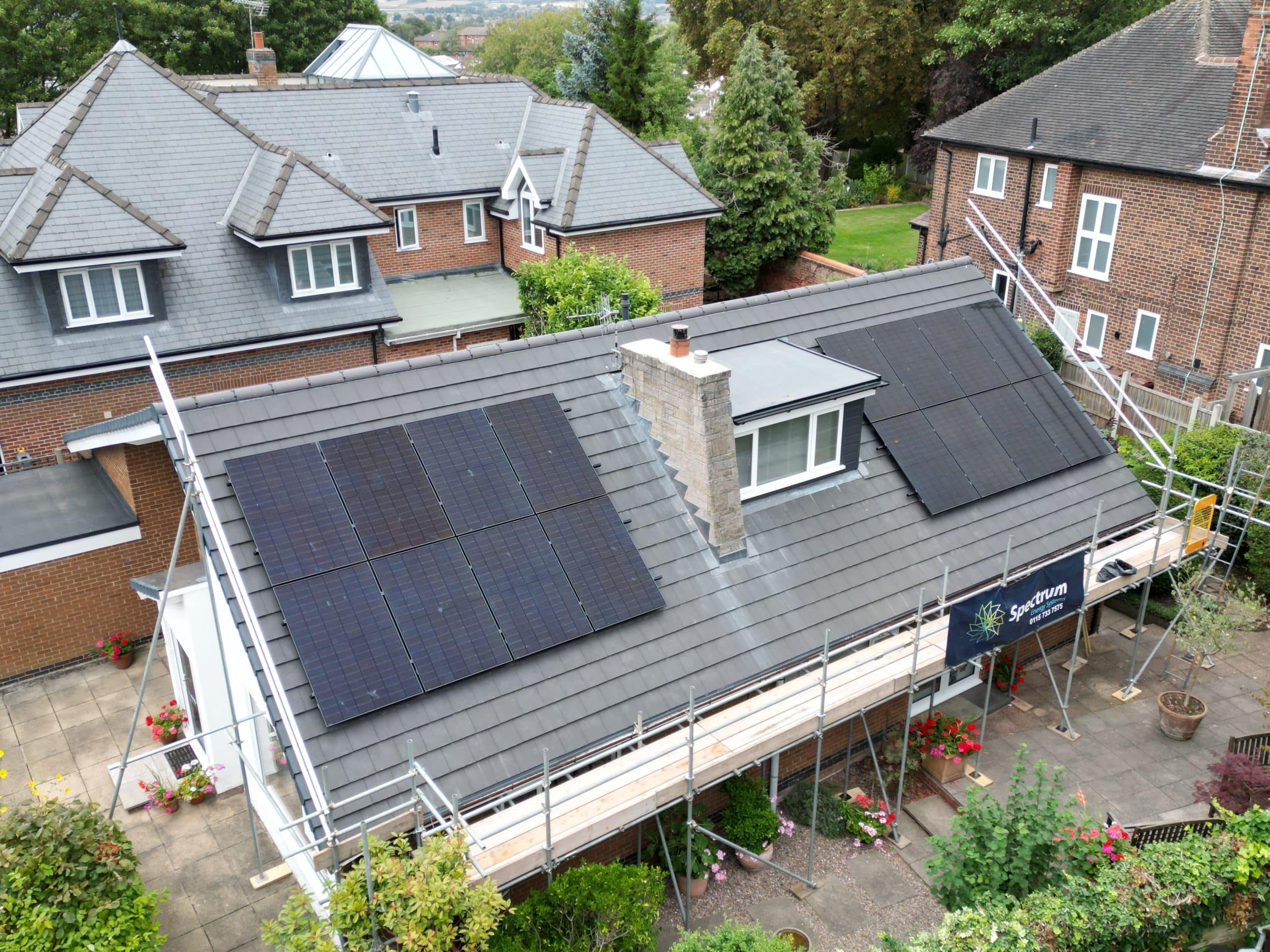
Understanding how home solar systems generate electricity helps you appreciate their value and set realistic expectations. The technology is remarkably straightforward and has been refined over decades to deliver reliable performance.
Converting Sunlight into Electricity
Solar panels contain photovoltaic (PV) cells made from semiconductor materials, typically silicon. When sunlight strikes these cells, it dislodges electrons from atoms, creating an electrical current. This process, known as the photovoltaic effect, converts light directly into electricity without moving parts, noise, or emissions.
The panels produce direct current (DC) electricity, which an inverter converts to alternating current (AC)—the type your home appliances use. Your home automatically uses this solar-generated electricity first, drawing from the grid only when solar output falls short of demand. Surplus generation during sunny periods either charges a battery or exports to the grid.
The Main Components of a Home Solar System
A typical domestic solar installation includes several key components working together:
- Solar panels: The monocrystalline panels used in modern installations convert sunlight to electricity with efficiencies of 19-23%
- Inverter: Converts DC electricity to usable AC power—options include string inverters, microinverters, and hybrid inverters
- Generation meter: Records how much electricity your panels produce
- Export meter: Measures surplus electricity sent to the grid (often integrated with smart meters)
- Battery storage (optional): Home battery systems store surplus energy for evening use
- Monitoring system: Smart energy apps track generation and consumption in real time
Does Solar Work on Cloudy Days in the UK?
Yes—and this is one of the most common misconceptions about household solar panels. While bright sunshine produces maximum output, panels still generate electricity from diffuse light on overcast days. The UK climate, with its moderate temperatures and long summer days, actually suits solar technology well.
Understanding how efficient solar panels are in real-world conditions helps set realistic expectations for household solar panel output UK. A typical UK home system generates around 850-1,000 kWh per kWp installed annually. This means a 4kWp system produces approximately 3,400-4,000 kWh per year—enough to cover 50-70% of an average household's electricity consumption.
Seasonal Variation: Generation peaks in May-July when days are longest, with summer months producing 4-5 times more electricity than December-January. However, even winter generation contributes meaningfully to your energy needs, and the annual total delivers consistent long-term value.
Is My Home Suitable for Solar Panels?
Most UK homes can accommodate solar panels effectively, though certain factors influence how much electricity you'll generate. A professional survey provides definitive answers, but understanding the key considerations helps you assess your property's potential.
Roof Orientation and Pitch
South-facing roofs receive the most direct sunlight and deliver optimal output. However, east and west-facing roofs remain highly viable, typically generating 80-85% of south-facing equivalents according to industry data. Many homes successfully install panels across multiple roof sections to maximise capacity.
| Roof Orientation | Output vs South-Facing | Best Generation Time | Suitability |
|---|---|---|---|
| South | 100% (optimal) | Mid-morning to mid-afternoon | Ideal for maximum annual generation |
| South-East / South-West | 95-97% | Morning (SE) or afternoon (SW) | Excellent—minimal output reduction |
| East | 80-85% | Morning peak generation | Good—suits morning energy users |
| West | 80-85% | Afternoon/evening generation | Good—suits afternoon/evening users |
| North | 50-60% | Limited direct sunlight | Generally not recommended |
The ideal roof pitch for UK conditions falls between 30 and 40 degrees—conveniently, this matches most British roof designs. Flatter or steeper pitches work perfectly well, with mounting systems adjusting panel angles where beneficial. Flat roofs on garages, extensions, or outbuildings can accommodate angled mounting frames for efficient generation.
Roof Size and Available Space
Each solar panel requires approximately 2 square metres of roof space. A typical 4kWp home system needs around 20 square metres—roughly the area of a standard UK semi-detached house's south-facing roof slope. Smaller systems of 2-3kWp suit properties with limited space, while larger roofs can accommodate 5-6kWp or more.
Explore our guide to choosing the right solar panel for detailed advice on panel selection for different roof sizes.
Roof Condition and Age
Solar panels typically remain in place for 25-30 years, so your roof should be in good condition before installation. If your roof needs replacing within the next 10-15 years, addressing this first avoids the disruption of removing and reinstalling panels later.
Most roofing materials—tiles, slate, and flat roof membranes—accommodate solar mounting systems. Installers assess structural integrity to ensure your roof can support the additional weight (typically 15-20kg per square metre). This structural check forms part of any thorough professional installation survey.
Shading Considerations
Shading significantly impacts solar panel output. Trees, chimneys, neighbouring buildings, and even TV aerials can cast shadows that reduce generation. Importantly, shading affects not just the covered panel but can impact the entire string in traditional systems.
Modern solutions mitigate shading losses effectively. Power optimisers and microinverters allow each panel to operate independently, preventing one shaded panel from dragging down others. A professional shading analysis—using specialist software to model sun paths throughout the year—identifies potential issues and informs system design. Learn more about common solar panel problems and how to address them.
Benefits of Household Solar Panels
The benefits of household solar panels come from two sources: reduced electricity bills through self-consumption and payments for exported surplus. Understanding both helps you appreciate what solar can deliver for your home.
Reducing Your Electricity Bill
Every kilowatt-hour your panels generate and you consume directly is a kilowatt-hour you don't buy from the grid. A well-designed 4kWp system generating 3,600 kWh annually, with 40% self-consumption, reduces grid purchases by approximately 1,440 kWh each year.
Your actual benefit depends on your consumption patterns. Homes with daytime occupancy—whether through working from home, retirement, or running appliances on timers—achieve higher self-consumption rates. Smart home energy systems optimise consumption automatically, running dishwashers, washing machines, and EV chargers during peak solar generation.
Earning from the Smart Export Guarantee
The Smart Export Guarantee (SEG) requires licensed energy suppliers to offer tariffs for exported solar electricity. Tariff rates vary between suppliers, with premium options available for customers with battery storage. This provides ongoing income from surplus generation you'd otherwise give away free.
To access SEG payments, you need an MCS-certified installation and a smart meter. You can choose any participating supplier regardless of who supplies your electricity, so comparing SEG tariffs maximises your returns.
Comparing System Sizes for UK Homes
Understanding household solar panel system size UK options helps you plan effectively. The table below compares typical system sizes for different household types, showing expected annual generation and the roof space required:
| System Size | Typical Panels | Roof Space Required | Annual Generation | Best Suited For |
|---|---|---|---|---|
| 2-3 kWp | 5-8 panels | 10-15 m² | 1,700-2,700 kWh | Flats, small terraced houses |
| 3-4 kWp | 8-10 panels | 15-20 m² | 2,550-3,600 kWh | Semi-detached, average households |
| 4-5 kWp | 10-13 panels | 20-26 m² | 3,400-4,500 kWh | Larger semis, detached homes |
| 5-6 kWp | 13-16 panels | 26-32 m² | 4,250-5,400 kWh | Large detached, high consumption |
| 6+ kWp | 16+ panels | 32+ m² | 5,100+ kWh | Large properties, EV charging, heat pumps |
Note: Generation figures based on typical UK conditions (850-900 kWh per kWp). Actual output varies by location, orientation, and shading.
Impact of Battery Storage on Self-Consumption
Combining solar panels and battery storage home UK installations dramatically increases the electricity you use directly. Without batteries, typical self-consumption rates reach 25-40% of generation, depending on household occupancy patterns. Battery storage increases this to 70-80%, capturing surplus daytime generation for evening use when household demand typically peaks.
Batteries also enable time-of-use tariff optimisation—charging from cheap overnight rates and discharging during expensive peak periods. This stacking of benefits makes battery storage increasingly attractive as smart tariffs proliferate. Learn more about the benefits of solar panel battery storage.
Discover What Solar Could Do for Your Home
Every home is different. Get a personalised assessment and tailored system design for your property
Request Your Free QuoteGrants and Incentives for Household Solar Panels in the UK
Several schemes support homeowners installing solar panels, from tax relief to funding programmes and ongoing export payments. Understanding household solar panel grants UK options helps you take advantage of available support.
0% VAT on Residential Solar Installations
Since April 2022, residential solar panel and battery storage installations have qualified for zero-rate VAT in the UK. This relief applies until 31 March 2027, after which the rate is scheduled to return to 5%. It covers both equipment and installation labour.
ECO4 and Government Funded Schemes
The Energy Company Obligation (ECO4) scheme can fund solar panels for eligible households, particularly those on benefits or with low incomes. Eligibility depends on your circumstances and property type. The Nottingham City Council decarbonisation grants and similar local authority schemes provide additional funding opportunities.
Local Authority and Regional Grants
Various local councils and combined authorities offer solar grants or low-interest loans. These schemes change frequently, so checking your local authority's website or enquiring during your solar survey identifies current opportunities. Some areas offer enhanced support for specific property types or household circumstances.
Smart Export Guarantee as Ongoing Income
The SEG provides an income stream for the lifetime of your system. Earnings depend on your chosen tariff and export volume. Rates vary significantly between suppliers, so comparing options when you register maximises your returns.
What Does the Installation Process Involve?
Knowing what to expect from solar panel installation home UK helps you prepare and ensures a smooth experience. Professional installers manage the entire journey from initial survey to final handover.
The Initial Survey and System Design
Every quality installation begins with a thorough property survey. An experienced surveyor assesses your roof orientation, condition, and available space; analyses shading patterns; checks electrical infrastructure; and discusses your energy consumption and goals.
Following the survey, you receive a tailored system design with generation estimates based on your specific property. This includes panel layout, inverter specification, and—if you're interested—battery storage recommendations. Your quote details exactly what's included, making comparison between installers straightforward. Read our homeowner's guide to solar panels for detailed advice on evaluating quotes.
Planning Permission for Home Solar Panels
Most residential rooftop solar installations fall under permitted development rights and don't require planning permission. However, restrictions apply in certain circumstances:
- Listed buildings: Require listed building consent
- Conservation areas: May have additional restrictions
- Panels protruding more than 200mm: May need permission
- Ground-mounted systems over 9 square metres: Require planning consent
Your installer advises on planning requirements during the survey and can assist with applications if needed.
The Installation Day
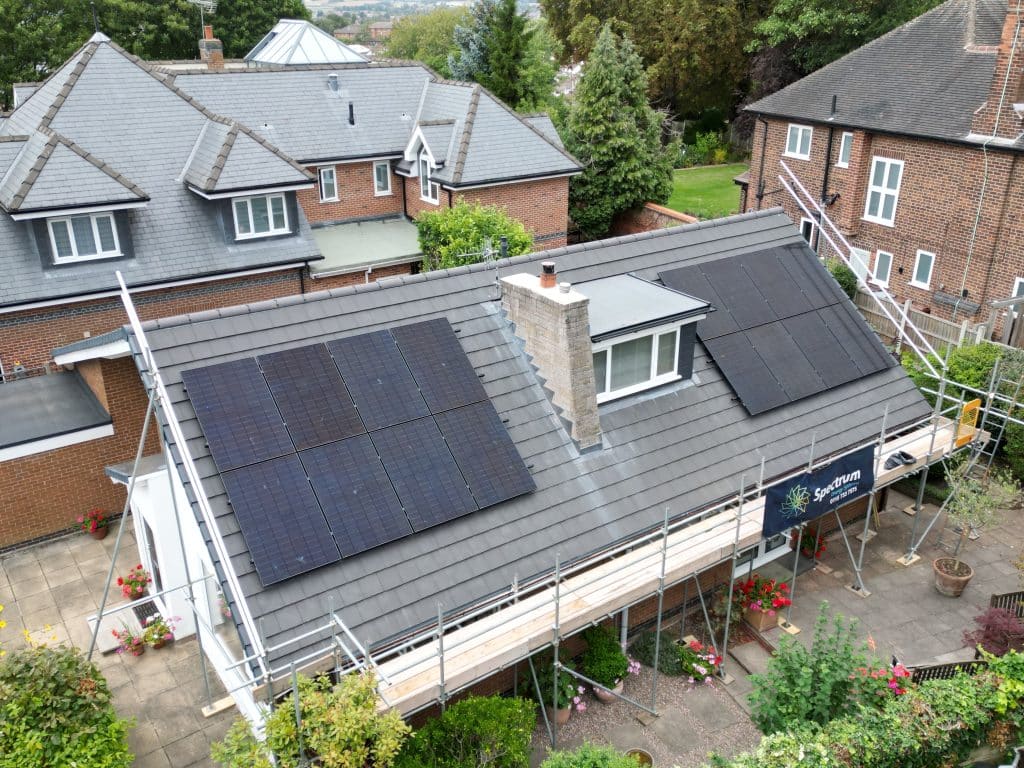
A typical residential solar installation takes 1-2 days, depending on system size and complexity. The process involves erecting scaffolding, mounting the panel framework, installing panels, fitting the inverter (usually in the loft or garage), and connecting the system to your consumer unit.
Disruption is minimal—you'll have access to your home throughout, though the electricity may be briefly switched off during the final connection. Installers work to leave your property tidy, removing all packaging and debris.
Commissioning and Handover
Once installed, your system undergoes thorough testing to verify safe operation and expected performance. You'll receive training on your monitoring system, plus comprehensive documentation including your MCS certificate—essential for accessing SEG payments and any applicable warranties.
Ongoing support should include technical assistance and warranty handling. Check what aftercare your installer provides before committing. Learn more about solar panel maintenance and support services.
Maintaining Household Solar Panels
One of solar's most attractive features is minimal ongoing maintenance. Properly installed panels operate reliably for decades with little intervention required.
How Little Maintenance Solar Actually Needs
Solar panels have no moving parts and are built to withstand decades of weather exposure. UK rainfall generally keeps panels clean enough for efficient operation. Annual visual inspections—checking for physical damage, debris accumulation, or vegetation growth causing shading—are typically sufficient.
A professional service check every 3-5 years verifies electrical connections, inverter operation, and overall system health. This preventive maintenance extends system life and catches minor issues before they affect generation. Our comprehensive solar panel maintenance guide provides detailed advice.
Keeping Panels Clean
While rain handles most cleaning needs, panels can benefit from occasional washing in certain circumstances—properties near busy roads, under trees dropping debris, or in areas with heavy bird activity may accumulate soiling that reduces output by 5-10%.
If cleaning is needed, use plain water and a soft brush or squeegee. Avoid abrasive materials, pressure washers, or cleaning chemicals that could damage panel surfaces. For inaccessible or large installations, professional cleaning services offer safe, effective solutions. Read our complete UK guide to cleaning solar panels for detailed instructions.
Monitoring Performance
Your monitoring system tracks generation in real time, alerting you to any unexpected drops in output. Understanding normal seasonal variation—summer days producing 5-6 times winter output—helps distinguish natural fluctuation from genuine faults.
If generation falls significantly below expected levels, contact your installer. Most issues are easily resolved, and panel and inverter warranties cover manufacturing defects and premature degradation. Regular system health checks maintain optimal performance throughout your system's life.
Household Solar Panels for Different Home Types
Solar suits most UK homes, though installation approach and expected output vary by property type. Understanding how solar applies to your home helps set appropriate expectations.
Detached and Semi-Detached Houses
Solar panels for detached house UK installations typically offer the most straightforward approach. Good roof access, ample space for meaningful system sizes, and often multiple roof orientations provide flexibility. Most detached homes can accommodate 4-6kWp systems, while semi-detached house solar panels UK installations typically suit 3-5kWp.
Explore our home solar transformations for real examples of residential installations.
Terraced Houses
Smaller roof areas may limit system size, but high-efficiency panels maximise generation from available space. End-of-terrace properties often offer additional options on side-facing roofs. A 2-3kWp system on a terraced house still delivers meaningful electricity generation, especially for households with lower consumption.
Bungalows
Bungalows often prove ideal for solar—large roof areas relative to floor space accommodate generous system sizes. Lower roof heights simplify installation and access. The demographic profile of many bungalow residents—often retired with high daytime occupancy—naturally achieves excellent self-consumption rates.
New Build Homes
Many new developments now include solar as standard, integrating panels with modern construction methods. If your new build doesn't include solar, adding it early allows seamless integration with heat pumps, EV charging, and smart energy systems. The Future Homes Standard will require even higher energy efficiency from new builds, making solar increasingly standard.
Properties Owned by Landlords
Landlords face upcoming minimum EPC requirements—currently E for new tenancies, with proposals to raise this to C. Solar panels improve EPC ratings whilst reducing tenant energy bills, potentially increasing rental appeal and property value. Energy arrangements can be structured with tenants benefiting from reduced bills or landlords receiving generation income. Explore solar energy solutions for every home including rental properties.
Common Questions and Concerns Answered
Understandably, homeowners have questions before committing to solar installation. Here we address the concerns we hear most frequently.
Will Solar Panels Damage My Roof?
Professional installation protects your roof rather than compromising it. Mounting systems distribute weight evenly, and waterproof fixings prevent leaks. Quality installers use methods that maintain existing roof warranties and can even extend roof life by protecting tiles from weather exposure.
Any reputable installer assesses roof condition before proceeding and recommends repairs if needed. The small number of fixing points (typically 4-6 per panel) use proven methods refined over millions of installations worldwide.
What Happens on Cloudy or Winter Days?
Solar panels generate electricity from daylight, not direct sunshine. Cloudy days produce reduced but meaningful output—typically 10-25% of peak capacity. Winter months deliver lower generation due to shorter days and lower sun angles, but the technology works year-round.
Battery storage helps bridge generation gaps. Storing surplus summer generation isn't practical for winter use, but batteries capture daily surplus for overnight consumption. The annual total generation provides reliable electricity throughout the year regardless of day-to-day variation. Understand more about how long solar panels last in the UK and their long-term performance.
What If I Move House?
Solar panels typically add value to properties—buyers increasingly value energy efficiency and lower running costs. Your installation becomes part of the property, with warranties and documentation transferring to new owners. Studies consistently show solar-equipped homes sell faster and are more attractive to buyers.
The improved EPC rating from solar installation benefits property marketing and can affect mortgage options for buyers. Rather than a reason to delay, potential future moves make solar a beneficial addition to your property.
Are Solar Panels Worth It Right Now?
Many homeowners ask whether solar panels worth it for homes UK—and current conditions make household solar panels more compelling than ever. Solar technology has matured significantly, with improved efficiency and reliability. Zero-rate VAT, the Smart Export Guarantee, and various grant schemes provide additional support for homeowners.
The technology is proven over decades, with modern panels reliably delivering 25+ years of generation. Waiting rarely improves the outcome—you simply delay the point at which your benefits begin. Discover more about the top benefits of solar panels for homes and businesses.
Frequently Asked Questions
Conclusion: Household Solar Panels Are a Smart Choice for UK Homes
Household solar panels represent one of the most practical steps UK homeowners can take to reduce electricity bills, protect against rising energy prices, and lower their environmental impact. The technology is proven, the benefits are substantial, and the installation process is straightforward with the right professional support.
Key points to remember:
- Proven technology: 25-30+ year lifespans with minimal maintenance requirements
- Reduced grid dependence: Generate your own clean electricity and reduce reliance on the grid
- Suitable for most homes: South, east, and west-facing roofs all deliver worthwhile generation
- Available incentives: 0% VAT (until March 2027), Smart Export Guarantee, and various grant schemes
- Property benefits: Improved EPC ratings and enhanced property appeal
The best way to understand what solar could deliver for your specific property is a professional survey. Questions about household solar panel cost UK, home solar panel savings UK, and home solar panel payback period UK all depend on your individual circumstances—a tailored assessment provides the accurate information you need to make an informed decision.
Take the Next Step
Book your free home solar survey and receive a tailored system design with accurate generation estimates—no obligation
Book Your Free Survey Speak to Our TeamAbout Spectrum Energy Systems: Established in 2011, we're MCS-accredited solar installers serving Nottingham, Derby, Leicester, Lincoln and the wider East Midlands. Our experienced engineers design and install tailored solar solutions for homes and businesses, ensuring maximum performance and reliability. Learn more about our expertise or explore our homeowner resources for comprehensive solar guidance.
We also provide commercial solar installations for businesses, including commercial buildings, agricultural properties, schools and colleges, and retail premises. Contact us on 0115 773 7575 or email sales@spectrumenergysystems.co.uk.