
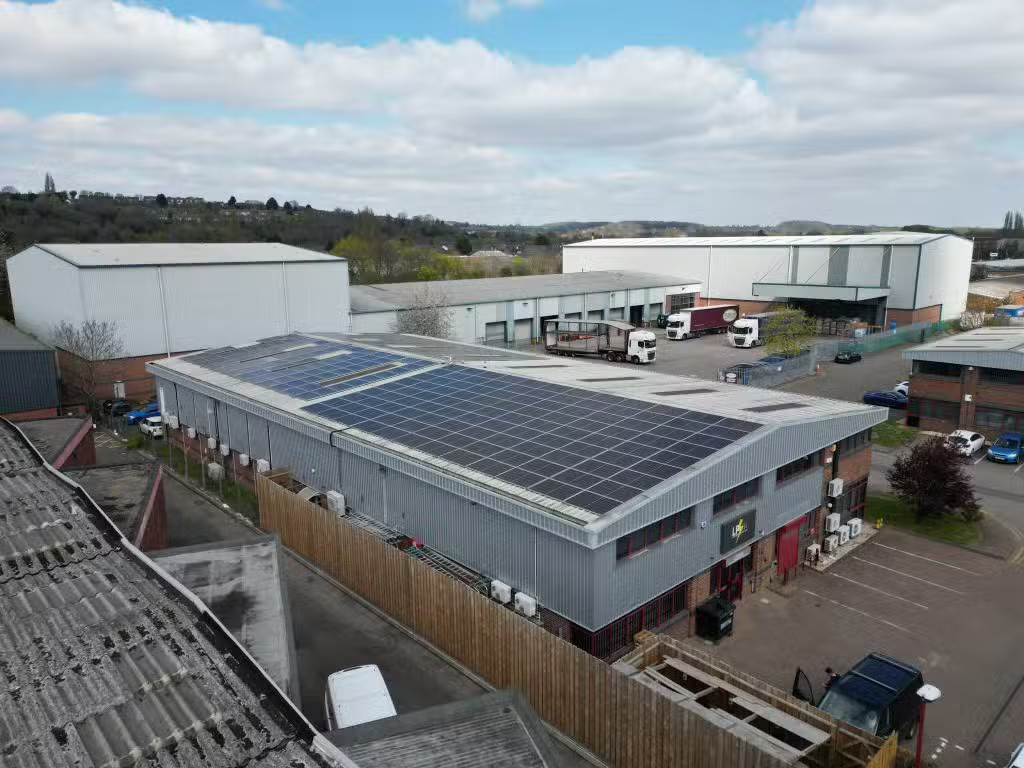
Flat Roof Solar Panel Mounting: Everything You Need to Know
Flat roofs are often overlooked for solar installations, yet they frequently offer advantages that pitched roofs cannot match. With flexible panel orientation, substantial usable space, and proven mounting system technology, flat roof solar panel mounting systems UK-wide have become the preferred choice for commercial properties and an increasingly popular option for residential extensions and garages.
This guide explains how solar panels on flat roof UK installations work, which approach suits different roof types, and what structural and waterproofing considerations matter most. Whether you're exploring commercial solar installation for a warehouse or considering flat roof solar installation residential UK properties, understanding your mounting options is the foundation of a successful project.
In This Guide
Book Your Free Flat Roof Solar Survey
Our MCS-accredited engineers assess structural capacity, roof condition, and optimal system design tailored to your property
Get Your Free Assessment Contact Our TeamCan You Actually Mount Solar Panels on a Flat Roof?
Flat Roofs and Solar: A Better Match Than Most People Think
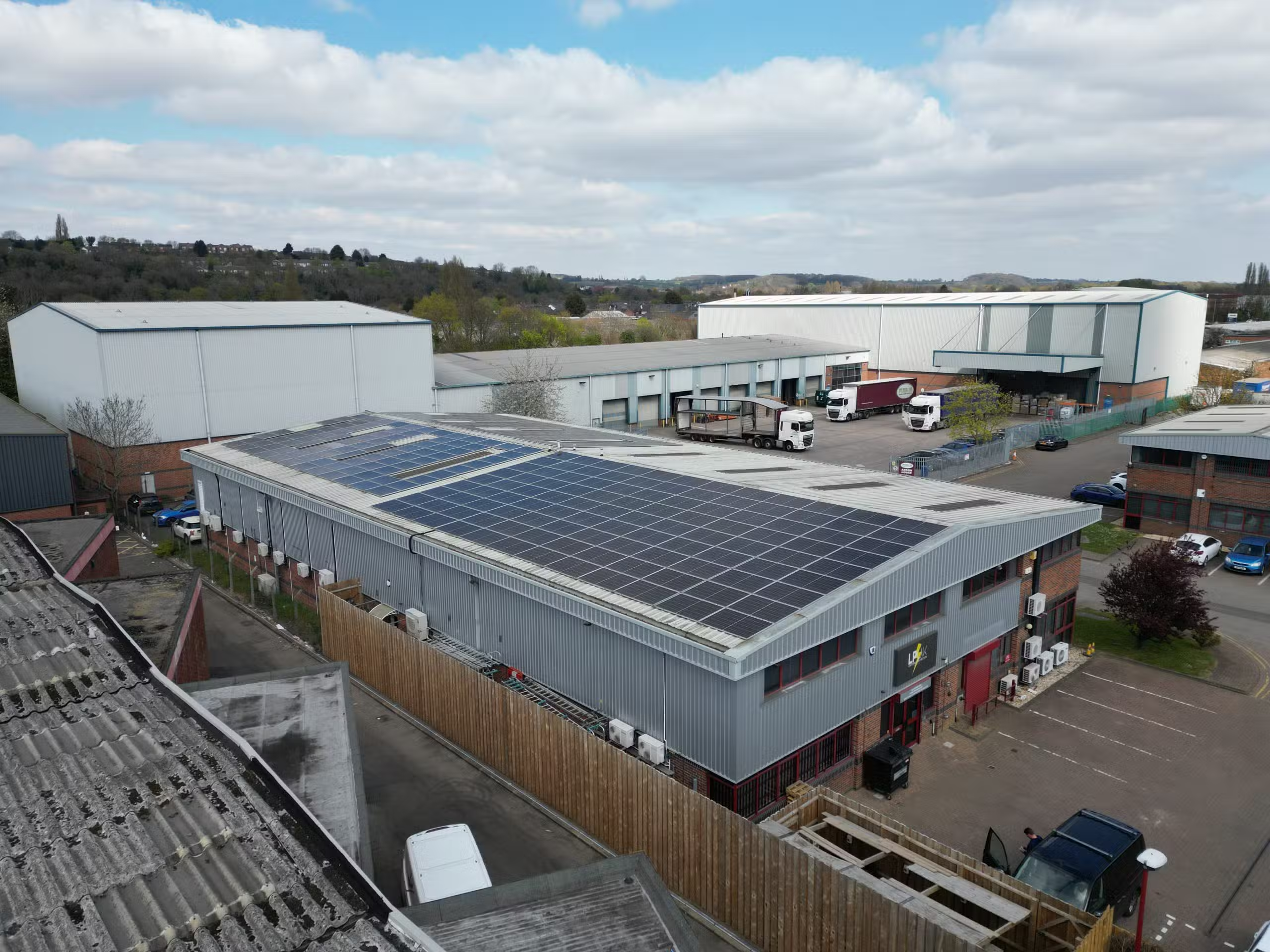
Contrary to common assumptions, flat roofs often present ideal conditions for solar panel installation. Unlike pitched roofs where orientation is fixed by building design, flat roofs allow panels to face any compass direction—south for maximum annual output, or east-west for better self-consumption matching. This flexibility proves particularly valuable for business solar installations where energy demand patterns vary throughout the day.
Commercial warehouses, factories, and retail units typically feature extensive flat roof areas that can accommodate substantial solar arrays. The absence of roof valleys, dormers, and complex geometries common on residential pitched roofs often means more usable space per square metre and simpler installation logistics. Our commercial building solar installations regularly demonstrate how flat roofs maximise generation potential.
Properties Suited to Flat Roof Solar
Flat roof solar mounting works effectively across diverse property types:
- Commercial warehouses and logistics facilities: Large roof areas ideal for significant generation capacity—see our manufacturing solar solutions
- Office buildings and mixed-use developments: Our office solar installations lower energy consumption whilst improving sustainability credentials
- Retail units and supermarkets: Explore retail solar solutions for high-consumption properties
- Agricultural buildings: Farm buildings often feature flat-roofed sections suited to solar—see our agricultural solar projects
- Residential flat roof extensions and garages: Generate useful energy from otherwise unused roof space
- New build properties: Property developers increasingly incorporate flat roof solar into designs
How Flat Roof Solar Panel Mounting Systems Work
The Basic Principles
Flat roof mounting systems serve two essential functions: tilting panels to optimise energy generation and securing them against wind uplift without compromising the roof membrane. Unlike pitched roof installations where panels follow the existing roof angle, flat roof systems must create the required tilt whilst spreading loads evenly across the roof structure. Understanding solar panel efficiency factors helps explain why proper tilt angles matter so much for UK installations.
Three main mounting approaches address these requirements, each suited to different roof conditions, structural capacities, and project specifications.
Ballasted Mounting Systems
A ballasted solar mounting system UK installers commonly recommend secures solar panels using concrete blocks or rubber ballast rather than roof penetrations. This non-penetrating solar mounting flat roof approach—sometimes called solar panel mounting without drilling flat roof—is the most common choice for commercial flat roof solar UK installations because it preserves waterproofing integrity and avoids voiding roof warranties.
The system works by calculating wind uplift forces based on building height, location, and panel configuration, then specifying sufficient ballast weight to counteract these forces. Wind loading calculations must comply with British Standards and Eurocode requirements—cutting corners here carries serious structural and safety risks.
Typical flat roof solar panel weight UK: 24-34 kg per square metre including panels, frames, and ballast blocks under normal wind conditions. High wind exposure locations may require 40-80 kg/m² or more. Exact requirements depend on wind exposure, panel tilt angle, and roof edge proximity. A structural survey determines whether your roof can safely support this additional load.
Mechanically Fixed Mounting Systems
When ballast weight would exceed structural capacity, mechanically fixed systems using solar panel flat roof fixings UK standards provide an alternative. These use penetrating fixings secured into the roof structure, with specialist sealing to maintain waterproofing. Flat roof solar mounting brackets UK installers use must be compatible with your specific roof build-up and reach the structural deck for secure attachment.
Mechanically fixed systems suit roofs where structural load limits preclude sufficient ballast, or where wind exposure requires additional security beyond what ballast alone can provide. Industrial flat roof solar mounting UK projects often use this approach on metal-deck roofs. Our experienced team specifies the appropriate approach based on detailed site assessment.
Hybrid Mounting Systems
Hybrid systems combine ballast and mechanical fixings for complex situations. By using some penetrating fixings at strategic points, overall ballast weight reduces whilst maintaining structural security. This approach suits older roofs with lower load tolerance or challenging configurations where neither pure ballast nor pure mechanical fixing provides the optimal solution. Professional flat roof solar racking UK suppliers offer systems designed for these hybrid applications.
Choosing the best solar mounting system flat roof installations require depends on your specific roof conditions. The comparison below summarises when each flat roof solar PV mounting UK approach works best:
| Mounting System | Best Suited For | Key Considerations |
|---|---|---|
| Ballasted | Most commercial flat roofs with adequate structural capacity | No roof penetrations; requires load capacity for ballast weight |
| Mechanically Fixed | Roofs where ballast weight exceeds structural limits | Requires professional waterproofing; suitable for lightweight structures |
| Hybrid | Older roofs with limited load capacity; high wind exposure sites | Combines advantages of both approaches; bespoke engineering required |
Swipe left/right to view full table
Tilt Angle and Panel Orientation on Flat Roofs
Why Tilt Angle Matters for Solar Output
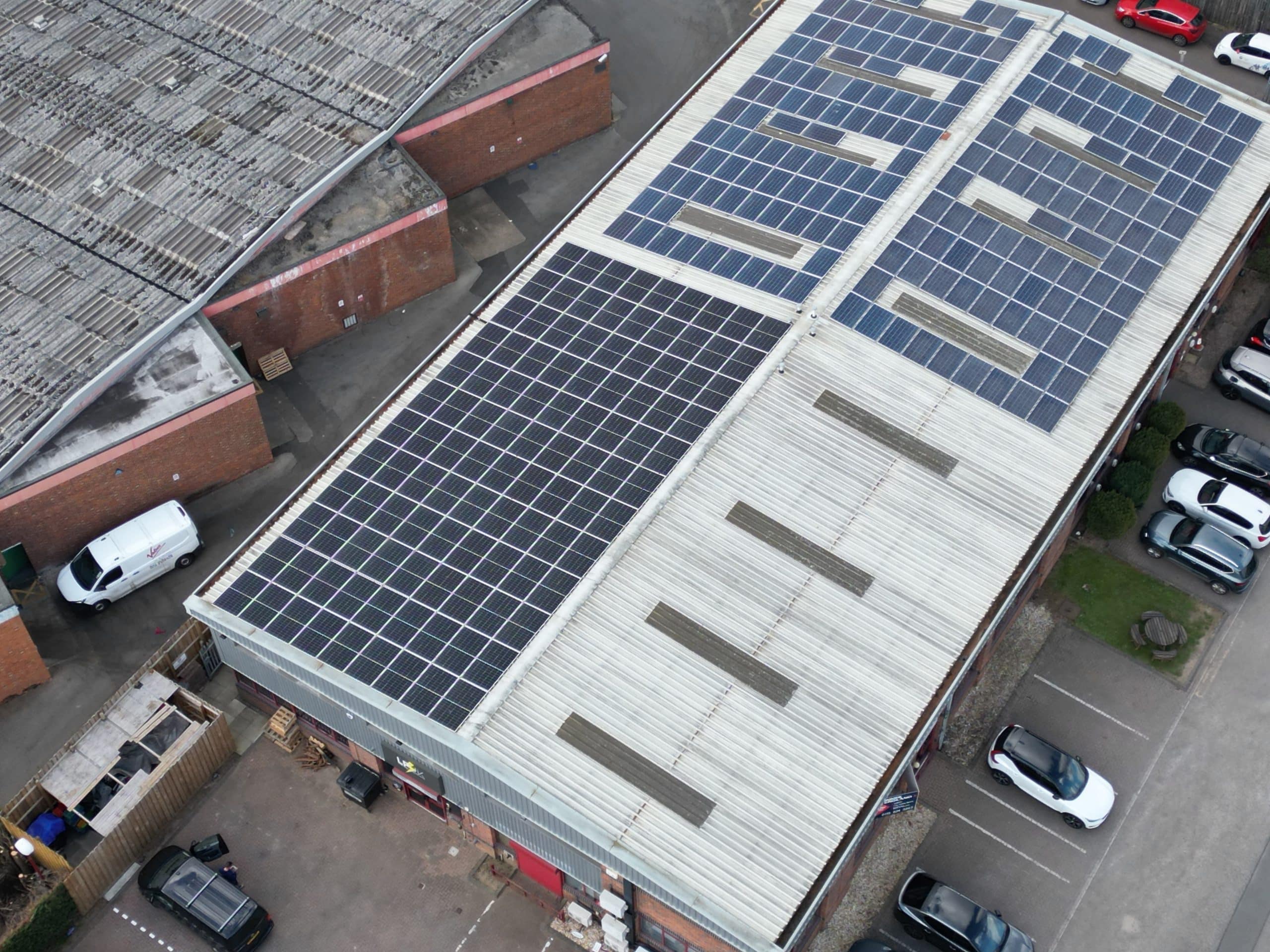
Panels mounted completely flat generate significantly less electricity than tilted arrays. The UK's latitude means optimal sun angles require panels tilted at 30-40 degrees for maximum annual generation. However, the flat roof solar panel tilt angle UK installers typically recommend is 10-15 degrees as a practical compromise—this delivers strong output whilst reducing ballast requirements and minimising inter-row shading.
Understanding solar panels flat roof angle UK requirements helps you balance output against practical constraints. Lower tilt angles reduce wind loading, meaning less ballast weight and lower structural demands. The trade-off involves slightly reduced winter generation and increased soiling from dirt and debris that rain doesn't wash away as effectively. Regular solar panel maintenance addresses the soiling issue through scheduled cleaning.
South-Facing Arrays
South-facing tilted panels maximise total annual output, making them the traditional choice for flat roof installations. However, south-facing arrays require wider row spacing to prevent inter-row shading—each row must be far enough from the next that shadows don't fall on the panels behind during low winter sun angles. This spacing requirement reduces the number of panels that fit on a given roof area.
East-West Split Arrays
East-west configurations have become increasingly popular for commercial flat roof installations. Panels face east and west in alternating rows, generating lower peak output but spreading generation more evenly across the day. This flatter generation curve often matches commercial energy consumption patterns better than south-facing systems.
East-west arrays also require less row spacing because panels don't shade each other in the same way, allowing more panels per square metre of roof space. For businesses prioritising self-consumption over export, this configuration frequently delivers better overall results. Our smart solar investment guide explains how to evaluate these options.
Optimal UK tilt angles: 10-15 degrees for most commercial flat roof installations, balancing output against wind loading and row spacing. Higher tilts (25-30 degrees) suit smaller residential systems where maximising generation from limited space takes priority over system weight considerations.
Flat Roof Types and Mounting Compatibility
Different flat roof membranes require specific mounting approaches to protect waterproofing integrity throughout the installation's lifespan. Understanding your roof type helps identify the most suitable system.
EPDM Rubber Roofs
EPDM (ethylene propylene diene monomer) is the most common commercial flat roof membrane in the UK, making EPDM flat roof solar panels UK installations extremely common. Both ballasted and mechanically fixed systems work effectively when installing solar panels on rubber roof UK buildings, provided EPDM-compatible pads and fixings are used correctly. Specialist rubber protection pads prevent abrasion where mounting components contact the membrane.
GRP Fibreglass Roofs
GRP (glass-reinforced plastic) roofs are common on residential flat roof extensions and garages. These generally suit lightweight solar mounting systems, though load limits require careful assessment—GRP roofs often span between supporting walls without intermediate support, limiting concentrated loads. Penetrating fixings require careful sealing to prevent water ingress into the fibreglass structure.
Felt and Built-Up Roofing
Older felt roofs found on many commercial and residential properties require condition assessment before solar installation. Ageing membranes may not withstand the additional stress of mounting systems, and ballasted approaches are generally preferred to avoid penetrating potentially brittle materials. In some cases, re-roofing before solar installation is the most practical long-term approach.
Green and Biodiverse Roofs
Solar panels and green roofs can coexist successfully with specialist design. Ballasted mounting systems are compatible with green roof substrate and drainage layers, combining biodiversity benefits with renewable energy generation. The shading from elevated panels can actually benefit certain plant species whilst the green roof substrate helps regulate panel temperatures.
Structural Considerations for Flat Roof Solar Mounting
Understanding Roof Load Capacity
Every flat roof has a maximum safe load capacity determined by its structural design. Solar mounting systems add dead load (permanent weight from panels, frames, and ballast) to existing roof loads. A structural survey assesses current loading, identifies available capacity, and determines whether the proposed system can be safely supported.
Why Structural Assessment Matters
Installing solar systems that exceed roof load capacity risks structural damage, membrane failure, and safety hazards. Professional structural assessment before installation is not optional—it's essential for safe, compliant installations that protect both the building and its occupants.
Wind Uplift and Aerodynamic Design
Flat roofs experience significant wind uplift forces, particularly at edges and corners. Mounting system design must account for these forces using calculations compliant with British Standards (BS EN 1991-1-4) and Eurocode requirements. System geometry, panel spacing, and setback distances from roof edges all influence wind loading calculations.
Cutting corners on wind calculations carries serious risk—systems designed with insufficient ballast or inadequate fixings can fail during storms, causing damage to roofs, buildings, and potentially people below. Our professional installation team ensures every system meets relevant structural and safety standards.
Working with Older or Weaker Roof Structures
When structural capacity is limited, several options exist: lightweight panel and mounting combinations reduce system weight; hybrid mounting systems minimise ballast requirements; additional purlins or structural reinforcement can increase capacity. In some cases, roof replacement before solar installation provides the most practical long-term solution, delivering a new roof membrane alongside improved structural capacity.
Protecting Your Roof Warranty and Waterproofing
The Risk of Poorly Installed Flat Roof Solar
Poor installation practices cause the problems that give flat roof solar an undeserved reputation for difficulty. Penetrations sealed incorrectly allow water ingress; ballast placed without proper weight distribution damages membranes over time; incompatible components cause chemical degradation of roof materials. These issues stem from poor installation quality, not inherent problems with flat roof solar technology.
How Professional Installers Protect Your Roof
MCS-accredited installers like Spectrum Energy Systems deliver waterproof solar panel mounting flat roof UK installations using membrane-compatible components, specialist protective pads, and correct weight distribution to maintain roof integrity. Post-installation inspection verifies waterproofing before system commissioning, and coordination with roofing contractors ensures warranty requirements are met.
Checking roof warranty requirements before flat roof solar panel installation UK projects prevents problems later. Many membrane manufacturers specify approved mounting systems and installation methods—using non-approved approaches can void warranties even if the installation itself is technically sound. Proper documentation satisfies both warranty and insurance requirements for peace of mind.
Concerned About Your Roof?
Our free site surveys assess roof condition, structural capacity, and warranty requirements before recommending appropriate mounting systems
Request Your Free SurveyPlanning Permission for Flat Roof Solar Mounting
Permitted Development for Homes
Most residential flat roof solar installations fall within permitted development rights, meaning no planning application is required. Since December 2023, panels on domestic flat roofs can protrude up to 600mm above the roof surface—a significant relaxation from the previous 200mm limit that previously made many flat roof installations impractical. Listed buildings, properties in conservation areas, and designated land may face additional restrictions—always verify permitted development rights before proceeding.
Commercial Planning Considerations
Commercial flat roof installations have different rules: panels must not protrude more than 1 metre above the highest part of the roof, and equipment must be positioned at least 1 metre from any external edge. Larger commercial systems may require planning approval depending on scale, location, and visual impact. Experienced installers manage the planning process efficiently, preparing applications and liaising with authorities when required. Our complete business solar guide covers planning considerations in detail.
Maintenance and Long-Term Performance
Keeping Panels Clean on a Flat Roof
Lower tilt angles mean less natural rain cleaning, making regular panel cleaning more important for flat roof systems. Dirt, dust, bird droppings, and debris accumulate faster on shallow-tilted panels, reducing output by 5-15% if left unaddressed. Our solar maintenance services include scheduled cleaning alongside system inspection.
Inspecting the Mounting System
Annual inspections should check ballast position, fixing integrity, and protective pad condition. Monitoring for membrane movement or abrasion catches potential problems before they cause damage. Worn components require replacement to maintain system security and roof protection throughout the installation's 25-30 year lifespan.
Performance Monitoring
Real-time generation monitoring identifies underperformance early, allowing prompt investigation and resolution. Shading changes from new rooftop plant or neighbouring structures can affect output over time—monitoring data reveals these issues before they significantly impact generation. Learn more about maximising long-term performance in our solar investment guide.
Benefits of Flat Roof Solar for Different Property Types
Commercial & Industrial
- Maximise large roof areas for significant output
- Flexible orientation to match energy demand
- Minimal visual impact from street level
- Scalable systems that grow with demand
- Battery storage integration options
Residential Extensions
- Generate energy from unused roof space
- Low-profile systems with minimal visual impact
- Supplement main roof solar or standalone
- Home battery storage for daytime absence
- Explore our domestic solar solutions
Landlords & Property Owners
- Improve EPC ratings on portfolio properties
- Lower tenant energy consumption
- Enhance property sustainability credentials
- Meet tenant demand for greener buildings
- Explore solar funding options
Frequently Asked Questions
Conclusion: Flat Roofs Are a Solar Opportunity, Not an Obstacle
Flat roofs offer genuine advantages for solar installation—flexible panel orientation, substantial usable space, and proven mounting system technology that protects roof integrity whilst maximising energy generation. The right system design, specified by experienced engineers and installed by accredited professionals, delivers reliable performance for decades.
Whether you're considering solar for a commercial warehouse, office building, or residential flat roof extension, professional assessment ensures your mounting system suits your specific roof type, structural capacity, and energy objectives. From initial survey through to commissioning, expert guidance protects both your solar system and your building.
Spectrum Energy Systems has been designing and installing solar systems across the East Midlands since 2011. Our MCS-accredited engineers and NICEIC-registered electricians deliver flat roof installations that meet British Standards for structural safety, protect waterproofing integrity, and maximise long-term energy generation. View our commercial case studies to see flat roof projects we've completed.
Book Your Free Flat Roof Solar Survey Today
Professional assessment of your roof's suitability, structural capacity, and optimal system design—with no obligation and at no cost
Get Your Free Quote Speak to Our TeamAbout Spectrum Energy Systems: Established in 2011, we're MCS-accredited solar installers and NICEIC-approved contractors serving Nottingham, Derby, Leicester, Lincoln and the wider East Midlands. Our experienced engineers design and install tailored solar solutions for commercial and domestic properties, ensuring maximum performance and long-term reliability. Learn more about our expertise or explore our business resources for comprehensive solar guidance. We specialise in commercial building installations, manufacturing facilities, and residential solar installations.