
Benefits of Solar Panel Battery Storage
A solar battery captures the surplus your panels generate during the day and feeds it back into your home in the evening — when grid electricity costs three times what you'd get exporting it. It's the single biggest lever for turning a decent solar payback into a great one.
This is the honest installer's guide to the real benefits, the real numbers, and where battery storage doesn't make sense. Written by Spectrum Energy Systems — MCS-accredited, fitting solar and batteries across the East Midlands since 2011.
Solar panels generate clean electricity during daylight hours. Without a battery, any surplus you don't use in real-time exports to the grid — usually paid at around 12p per kWh under the Smart Export Guarantee. That same evening, you import electricity back at 28–35p. That's a 16–23p loss on every kWh that gets cycled through the grid.
A battery flips that maths. Surplus midday generation goes into home battery storage instead of being exported, then comes back out in the evening when the alternative is buying expensive grid power. The bigger the gap between your export rate and your import rate, the better the case for storage.
For a typical East Midlands home, adding a 16.1kWh Fogstar battery to a 6kWp solar array takes the average yearly bill from roughly £800 to under £100 — and that's before you start playing time-of-use tariffs like Octopus Flux for overnight arbitrage. That's the headline. The rest of this guide is the detail.
Want a Specific Recommendation for Your Home?
Send us your annual kWh figure off a recent bill plus a Google Earth screenshot of your roof. We'll model the right system within 24 hours — Solis hybrid, Fogstar battery, honest payback range, all-inclusive price. MCS-accredited, NICEIC Reg. 3182878, RECC member.
Get Your Feasibility Assessment Speak to Our TeamWhat Is Solar Battery Storage?
A solar battery storage system is a rechargeable battery pack, a Battery Management System (BMS), and the power electronics that move energy between your solar panels, your home, and the grid. Modern domestic units almost always use LFP (lithium iron phosphate) chemistry — safer, longer-lived, and now the residential default.
How Battery Storage Actually Works
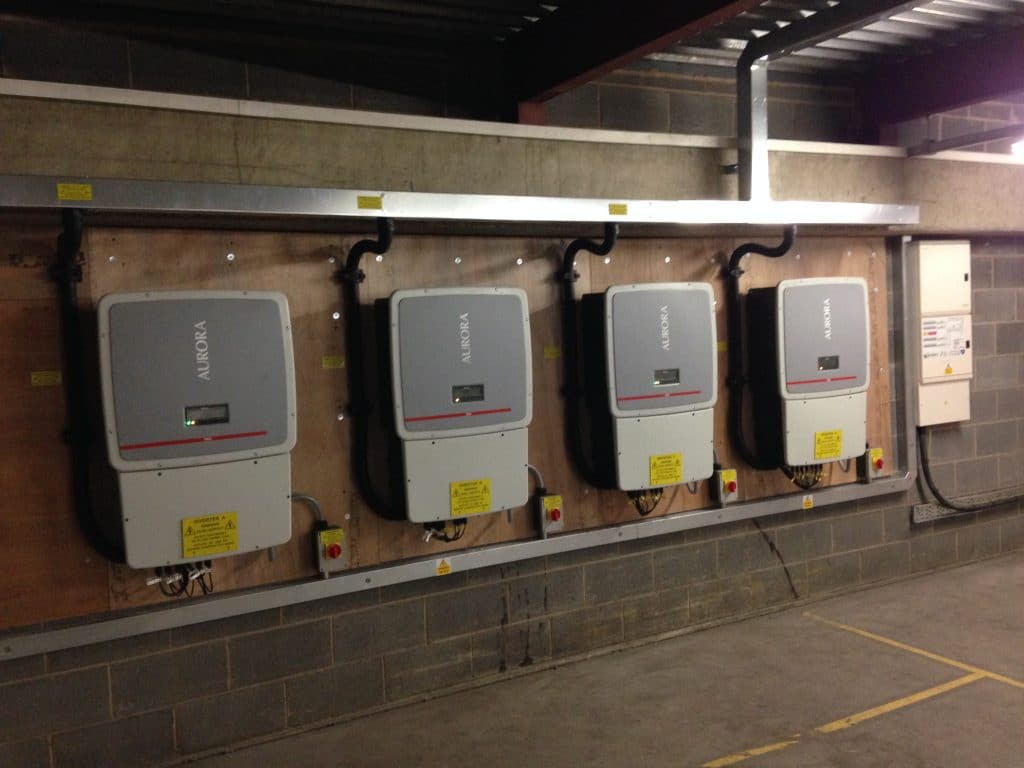
On our standard install — Solis hybrid inverter paired with a Fogstar battery — the battery connects to the DC side of the inverter via the dedicated Solis DC plug. The hybrid inverter handles all the logic: solar to battery, solar to home, battery to home, grid to battery (on a cheap tariff), home to grid (export). One piece of kit, one app, one warranty path.
During the day, surplus solar charges the battery first. Once full, anything extra exports to the grid for SEG income. In the evening, the battery discharges to cover your usage until it's drained — at which point the grid takes over. With Octopus Flux running, the battery can also charge overnight at off-peak rates (around 12p) and discharge during the 4–7pm peak (often 30p+), arbitraging the price difference even without solar.
Compatibility with Existing Solar Systems
If you've already got solar panels and want to add a battery, there are two routes:
- AC-coupled: The battery has its own internal inverter and connects to your home's AC supply. Works with any existing solar setup regardless of inverter brand. Slightly lower efficiency (88–92% round-trip vs ~95% for DC-coupled) but minimal disruption.
- DC-coupled hybrid: Replace your existing string inverter with a Solis hybrid. The battery connects DC-side. More efficient, single piece of kit, but means swapping the inverter. Often the right call if your existing inverter is approaching end-of-life anyway.
For new installs we default to DC-coupled hybrid — Solis hybrid inverter plus Fogstar battery, designed and installed together by our solar installation team. There's a deeper breakdown in our guide to choosing the right solar battery.
Retrofit check: Before recommending a route, we look at the spec plate on your existing inverter, the current string count, and whether the 150% DC headroom rule leaves room for extra panels at the same time. A Solis hybrid takes up to 150% of its rated AC output in DC — so a 6kW inverter handles up to 9kWp of panels.
Why Battery Storage Makes Sense for Solar Users
Solar generation peaks at midday. Most household consumption peaks in the morning before work and the evening when everyone's home. Those two curves rarely overlap, which is why solar-without-storage typically self-consumes only 30–40% of what it generates — the rest is exported for pennies and bought back at full price hours later.
Stop Losing Money on Every Cycle
The export-import spread is the single biggest reason batteries pay off. Smart Export Guarantee rates sit between 3p and 15p per kWh depending on supplier. Peak-rate evening imports run 28–40p+ per kWh. Every kWh you cycle through the grid (export at low, import at high) loses you 13–37p.
A 10kWh Fogstar battery shifts roughly 2,000–3,000kWh annually from export to self-consumption. At an average saving of 20p/kWh, that's £400–£600 per year just from solving the timing mismatch — before any tariff arbitrage.
Insulate Yourself from Grid Price Volatility
UK domestic electricity prices roughly doubled between 2021 and 2023. Battery storage doesn't eliminate that exposure, but it dramatically reduces it — the more of your usage that comes from your own solar (price locked at zero) or from cheap overnight charging (price locked by tariff), the less you care what happens to peak-rate grid prices.
Real Energy Management, Not Marketing Spin
Time-of-use tariffs reward battery owners. Octopus Flux is the main one we recommend: cheap overnight (around 12p), standard daytime, expensive 4–7pm peak (30p+), plus elevated export rates in the peak window. A battery can charge cheap overnight, discharge through peak, and even export during the peak window for premium SEG income.
One caveat worth knowing: Solis hybrid inverters aren't on Octopus Intelligent Flux's auto-scheduling list (which currently covers SolarEdge, Tesla, FoxESS and Alpha). Solis customers schedule manually via the inverter app — ten minutes of setup. For fully automated scheduling on Solis, we recommend Home Assistant + Predbat, an open-source optimiser that handles charge/discharge decisions against the next day's tariff and solar forecast. It's how most of our power-user customers run their systems.
Five Real Benefits of Battery Storage
1. Genuine Energy Independence
Typical UK households without storage export 40–60% of their solar generation purely because of timing mismatch. Add a battery and self-consumption climbs to 70–85%. For a 6kWp system generating around 5,400kWh annually, that's an extra 1,600–2,400kWh of self-generated power going through your house instead of being sold for pennies.
Commercial systems amplify this. A 50kW commercial array with a properly-sized Pylontech stack can hit 60–80% energy independence, drastically reducing exposure to wholesale price spikes and network charges. Big commercial batteries also unlock demand-side management — flattening peak draw, improving power factor, dodging triad charges.
The point isn't a percentage. It's strategic control over a significant operational cost.
2. Power Cut Backup (If You Specify It)
A battery doesn't keep your house running in a power cut unless it's specifically wired to. Standard grid-tied installations shut down for safety the moment the grid drops. To get backup power you need to add either:
- Whole-house backup (~£1,500): An automatic changeover switch sits between the grid supply and your consumer unit. When the grid drops, the ACS isolates the property and the battery powers the whole house up to its continuous power rating.
- Essential circuits only (~£400): A small sub-board powers a chosen handful of circuits — lighting, fridge/freezer, broadband, one or two sockets. Cheaper, simpler, but pre-selected.
Tell us at quote stage which you want. Adding it later means recommissioning and additional labour. For households with vulnerable occupants, medical equipment, or work-from-home setups, the £1,500 ACS option is usually money well spent.
3. Real Bill Savings — Not Marketing Figures
The honest range for a typical East Midlands domestic install (6kWp solar + 16.1kWh Fogstar, no EV, no heat pump): £700–£1,200/year total savings on a household using around 4,200kWh annually at 28p/kWh. That comes from three places:
- Solving the export/import timing mismatch (£400–£600)
- Octopus Flux overnight arbitrage (£150–£400 depending on cycling)
- SEG income from what's left over after self-consumption (£100–£200)
Add an EV and a heat pump and these numbers scale up — a high-usage home with 32kWh Fogstar can save £1,800–£2,500/year because there's simply more grid import for the battery to displace.
Commercial scales further. A 49.68kWp solar array with 51.2kWh Pylontech Force H3 stack — one of our recent installs — hit a 4-year payback at £37,000+VAT all-in, on a site consuming around 40,000kWh/year. That's combined peak shaving, export arbitrage on Octopus Shape Shifters: Export, and self-consumption all stacking up. See our case studies and smart solar investment guide for businesses for the detail.
4. Genuine Environmental Impact
Every kWh you shift from grid import to battery-stored solar avoids roughly 0.1–0.2kg CO₂ emissions at current UK grid intensity. A typical domestic battery displacing 2,000kWh/year of grid imports prevents 200–400kg CO₂ per year, or 2.4–6 tonnes over a 12-year battery life.
Commercial scales up considerably. A 50kW solar array with 100kWh battery storage displacing 20,000kWh/year prevents 2–4 tonnes CO₂ annually — meaningful for SECR and TCFD reporting, and increasingly relevant to procurement decisions.
Battery storage also supports grid decarbonisation by reducing evening peak demand, when fossil generation runs hardest. Spread across enough households, distributed batteries help flatten the demand curve and reduce reliance on peaker plants.
5. Property Value & EPC
UK data is still emerging, but solar-plus-storage properties consistently sell at a modest premium and shift faster than equivalent properties without renewables. The EPC angle is the harder evidence: solar and storage typically lift a property by 1–2 EPC bands. With Minimum Energy Efficiency Standards tightening and several lenders offering green-mortgage rate discounts for higher EPCs, that band shift can be worth thousands at refinance or sale.
For new-build and refurb work, designing in solar and battery storage from the outset is cheaper than retrofitting later and lets the system be sized cleanly against the building's actual load profile.
Is Solar Battery Storage Worth It in the UK?
Honest answer: it depends on three things — your annual kWh usage, your unit rate, and your willingness to engage with a time-of-use tariff. Below a certain threshold, the maths doesn't work and we'll tell you so rather than fit one anyway.
Investment Cost and Payback Period
Our most-quoted East Midlands domestic system: 12 × JA Solar 500W panels (6kWp), Solis S6-EH1P5K-L hybrid inverter, 16.1kWh Fogstar battery. £9,995 all-in, no VAT. Payback range 8–9 years including SEG export. That's a typical 3–4 bed family home with average usage.
Battery-only retrofit costs are lower — a 16.1kWh Fogstar AC-coupled to existing solar is typically £4,500–£6,000 installed, depending on whether the existing inverter needs upgrading and which backup option (if any) you've specified.
Simple payback ignores three things that improve the real return:
- Electricity price inflation: Even a conservative 3% annual increase compounds savings significantly over 12–15 years
- Battery lifetime beyond payback: LFP packs typically deliver 4–7 years of savings beyond the payback point
- Backup power as insurance: Worth assigning a real value to, especially if you've ever lost work or food to an outage
Maximising Returns with Octopus Flux
Without a battery, Smart Export Guarantee is the only payback lever you've got on surplus generation — and it pays whatever flat rate your supplier offers. With a battery you can store surplus and export strategically during the peak window (4–7pm) when premium SEG rates apply on some tariffs.
Add cheap overnight charging into the mix and you've got three income/saving streams running in parallel: solar self-consumption, off-peak charging arbitrage, and peak-window export. Done properly — manually on Solis, or automatically via Home Assistant + Predbat — this can lift annual savings 20–40% above what self-consumption alone would deliver.
For commercial customers, Octopus Shape Shifters: Export tracks wholesale prices half-hourly. Peaks routinely hit 40–60p/kWh in the 4–7pm window. A 50kWh+ battery sized for export arbitrage on this tariff turns the battery from a self-consumption tool into a revenue-generating asset — the differentiator we lean on in commercial bids.
Real Spectrum Example: Typical Domestic Install
System: 6kWp solar array, Solis S6-EH1P5K-L hybrid, 16.1kWh Fogstar battery
Customer: 3–4 bed semi, two adults + two kids, gas heating, no EV (yet)
Annual consumption: 4,200kWh at 28p/kWh average
Annual solar generation: ~5,100kWh
Battery impact: Self-consumption from ~35% (no battery) to ~75%, shifting ~2,000kWh/year from grid import to stored solar
Combined annual saving: £850–£1,000 (solar self-consumption + Octopus Flux arbitrage + SEG)
All-in install price: £9,995 no vat
Payback range: 8–9 years
15-year lifetime savings: £14,000+ (accounting for modest electricity price inflation)
Battery Lifespan and Maintenance
LFP batteries — Fogstar, Pylontech, SigEnergy — typically deliver 4,000–6,000+ full cycles. At one cycle a day that's 12–16+ years of daily use. Most manufacturers warrant 70%+ capacity retention at 10 years. Real-world degradation is gentle on quality LFP packs.
Maintenance is minimal. The battery is a sealed unit. You don't clean it, you don't service it. What does help: an annual visual and electrical check on the wider system. Our solar system health check & servicing plan runs at £495/year and covers DC string voltage/current per array, insulation resistance, inverter fault log + firmware check, AC output verification, SPD test, terminations re-torque and a yield review. One-off solar panel maintenance visits start at £395+VAT.
Home vs Commercial Battery Storage
Same physics, different value drivers. A domestic install is about bill reduction and resilience. A commercial install unlocks revenue streams that don't exist on the residential side.
Domestic Battery Storage
Residential is about simplicity, cost reduction, and optional backup. Typical 10–16.1kWh Fogstar systems integrate cleanly with existing or new solar arrays, run automatically once configured, and deliver tangible monthly bill reductions from day one.
Key advantages:
- £700–£1,200/year savings on a typical 3–4 bed home (more with EV/heat pump)
- Optional whole-house backup (~£1,500) or essential circuits (~£400)
- Set-and-forget operation via the Solis app, or full automation with Predbat
- Improved EPC rating, potential property value uplift
- Real CO₂ reduction (2.4–6 tonnes per system over 12 years)
See home battery storage for our service spec, and our guide to choosing the right battery for the sizing logic.
Commercial Battery Storage
Commercial unlocks a different game. Beyond solar self-consumption, you've got:
- Peak demand reduction: Flattening load curves cuts monthly capacity charges by 20–40%
- Triad avoidance: Discharging through the three highest winter peaks can save £2,000–£10,000+/year
- Export arbitrage: Octopus Shape Shifters: Export pays premium rates in the 4–7pm window, often multiples of flat SEG
- Power factor improvement: Reactive support reduces penalties
- Frequency response and flexibility markets: Larger systems can earn £5,000–£20,000+/year from grid services
- Business continuity: Critical-load backup prevents expensive downtime
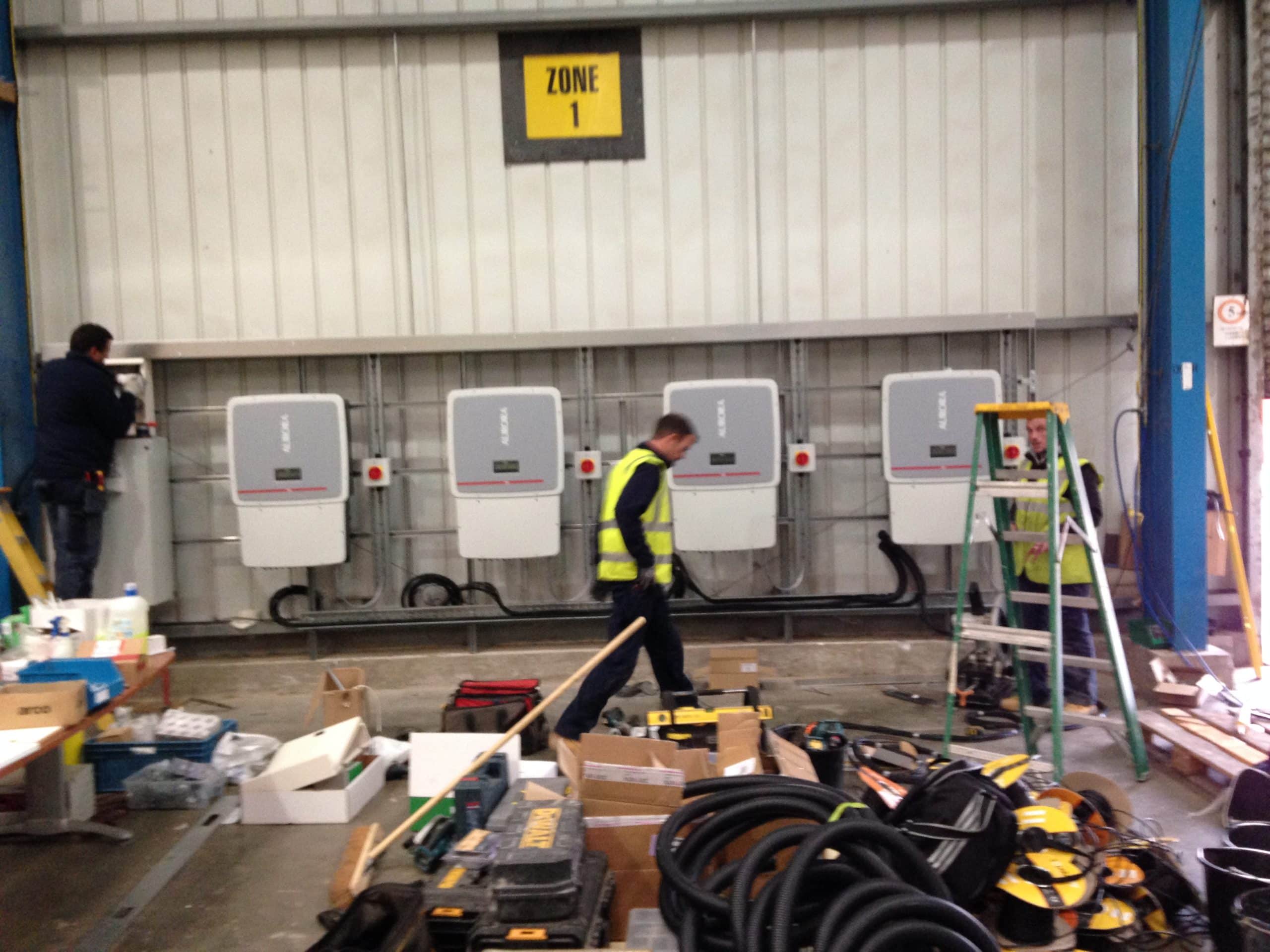
The 49.68kWp solar + 51.2kWh Pylontech Force H3 + Solis S6-EH3P 40kW three-phase install we did recently is the template: £37,000+VAT all-in, 4-year payback, battery sized for export arbitrage rather than just self-consumption. See commercial battery storage & back-up for the full service spec.
| Aspect | Domestic | Commercial |
|---|---|---|
| Typical capacity | 10–32kWh Fogstar | 50–500kWh+ Pylontech / SigEnergy |
| Primary benefit | Bill reduction + optional backup | Demand charge reduction + export arbitrage |
| Investment range | £4,500–£12,000 (battery-only retrofit) or £9,995–£18,000 (full new install) | £30,000–£300,000+ |
| Annual savings | £700–£2,500 | £5,000–£50,000+ |
| Payback range | 8–10 years | 4–7 years |
| Operation | Automatic, Solis app or Predbat | Active energy management, multiple value streams |
| Additional revenue | Limited (Octopus Saving Sessions) | Triad, frequency response, flexibility markets |
Installation & Support by Spectrum Energy Systems
Battery system performance depends on three things: right design, right install, and right ongoing support. We've been doing all three across the East Midlands since 2011 — 10MW+ connected, MCS-accredited, NICEIC Reg. 3182878, RECC members, all underpinned by a QANW Insurance-Backed Guarantee.
How We Design Your System
Sizing isn't a stock formula. We work back from your actual annual kWh figure (off your bill), your unit rate, and your load profile — people in the property, working-from-home patterns, EV/heat pump/hot tub, supply type, whether you want whole-house backup.
From there we model the array size, inverter, and battery as one integrated system. Most domestic quotes land on a Solis hybrid (LV-class for ≤15kW) paired with Fogstar (10kWh / 16.1kWh / 32kWh / 48.3kWh stack). Larger and commercial swap to high-voltage Solis and Pylontech Force H3. Our solar installation team handles the whole process.
What's Included in the All-Inclusive Price
Every Spectrum quote is a single all-in figure. No itemised list, no hidden extras. The price includes:
- Scaffolding
- Nesting bird protection (bird mesh)
- All labour
- DNO application (G98 sub-3.68kW single-phase or G99 larger/three-phase)
- MCS certification (for installs under 50kW)
- Handover paperwork and commissioning documentation for SEG
- 5-year workmanship warranty backed by QANW IBG
There are never any hidden extras with us. The full terms are spelled out on the warranties page and the insurance & accreditations page.
After Install: Monitoring, Health Checks, Maintenance
Live monitoring through the Solis app from day one. Health check & servicing plan available at £495/year. One-off health check £395+VAT. Engineer call-outs are normal working hours only — solar isn't a 999 service.
For commercial installs, we offer broader solar care & maintenance services with SLAs and remote monitoring built in.
Why Choose Spectrum Energy Systems for Battery Storage
- Designing and installing solar across the East Midlands since 2011
- 10MW+ connected to date, domestic and commercial
- MCS-accredited (reinstated 19 April 2026)
- NICEIC Approved Contractor, Reg. 3182878
- RECC member
- QANW Insurance-Backed Guarantee on every install
- £10M Employers' Liability / £5M Public Liability / £1M Professional Indemnity, QBE UK underwritten
- Standard kit list chosen on purpose: Solis hybrid + Fogstar (domestic), Solis + Pylontech (larger / commercial)
- Quotes back within 24 hours, install lead time 3–5 days domestic
- All-inclusive pricing — no hidden extras
Frequently Asked Questions
Making Your Decision
If you've read this far, you've already done more research than most. The honest summary:
- For a typical East Midlands home with average usage and a Solis hybrid inverter, the right answer is almost always a 10kWh or 16.1kWh Fogstar battery. Typical payback 8–10 years on a system that lasts 12–15+.
- For high-usage homes with EV / heat pump, scale up to 32kWh Fogstar — the savings scale up too.
- For commercial, the case is usually stronger thanks to demand charges, triad avoidance, and export arbitrage. Pylontech Force H3 stacks with high-voltage Solis hybrids.
- Decide upfront whether you want whole-house backup (£1,500) or essential-circuits backup (£400) — adding it later is more expensive.
- If you want fully automated tariff scheduling on Solis, plan for Home Assistant + Predbat at handover.
Ready for a Specific Recommendation?
Send us your annual kWh figure and a Google Earth screenshot of your roof. We'll model the right system within 24 hours — Solis hybrid, Fogstar (or Pylontech) battery, honest payback range, all-inclusive price. No pressure, no upsell.
Get Your Feasibility Assessment Contact Our TeamRelated Reading: How to choose the right solar battery · grid-tied vs off-grid systems · EV charging from solar · how long solar lasts · common solar panel problems.
Spectrum service pages: home battery storage · solar installation · smart EV charging · commercial solar · commercial battery storage · warranties · insurance & accreditations · case studies · homeowner resources · business solar guide.