
How to Clean Solar Panels: The Complete UK Guide
In the UK, most pitched-roof domestic panels self-clean to around 95% of new-state output through normal rainfall. A professional clean every 18 to 24 months is enough for most homes. Where cleaning matters more: low-pitch (<15°) roofs, sites near agriculture or trees, flat commercial roofs, and panels under chimneys or extractors. Never high-pressure-wash, never use abrasive cleaners, never climb on the panels. Plain cool water + a soft-bristle water-fed pole from the ground is the gold standard. Budget £80 - £180 for a domestic clean by a window-cleaner with the right kit.
Why this guide is honest
Most "how to clean solar panels" content online comes from cleaning-product sellers. We're a Nottinghamshire-based MCS-accredited installer with 10+ MW of solar fitted across the East Midlands - we see what helps and what damages real customer systems. This guide tells you when cleaning is worth it, when it's overkill, what to use, what to avoid, and when to leave the panels alone.
In This Guide
When solar panel cleaning actually matters
Panel cleaning has been oversold as a routine task. In most UK domestic conditions, modern panels with anti-soiling AR coatings shed dirt with rainfall well enough that a 12-month build-up is barely measurable. Where cleaning does noticeably improve output:
Cleaning genuinely helps when:
- Panel pitch is below 15° (rain doesn't self-rinse)
- Site is near farmland (dust, pollen, harvest soiling)
- Tree cover drops sap, leaves, or bird droppings repeatedly
- Chimneys or extractor outlets nearby coat panels in deposit
- Commercial flat-roof installs (always <10° pitch)
- The system shows a clear summer-vs-prior-year output drop
Cleaning is mostly wasted when:
- Standard pitched UK domestic roof (25-45°)
- No major dust or biological deposit source nearby
- System has been generating in line with PV*SOL forecasts
- Done more often than every 12-18 months
- Done in winter (regrowth before next sunshine peak)
How UK rain handles most of the work
UK panels live in one of the most cleaning-friendly climates in the world. Average annual rainfall (700-1,300mm depending on region) plus relatively low dust levels mean panels rarely accumulate the heavy soiling seen in arid climates. The anti-reflective coating that ships standard on every Tier 1 panel we install (JA Solar, Aiko, Longi) is hydrophobic - designed to shed water and the dust it carries.
Real-world data from our maintenance visits across Nottinghamshire, Derbyshire, Leicestershire and Lincolnshire: typical pitched-roof installs retain 93-97% of new-state output throughout the year. The 3-7% gap closes after a clean and the output bounces back to within 1-2% of installed performance - for a couple of months - until normal soiling resumes.
DIY vs professional cleaning
Professional clean (recommended)
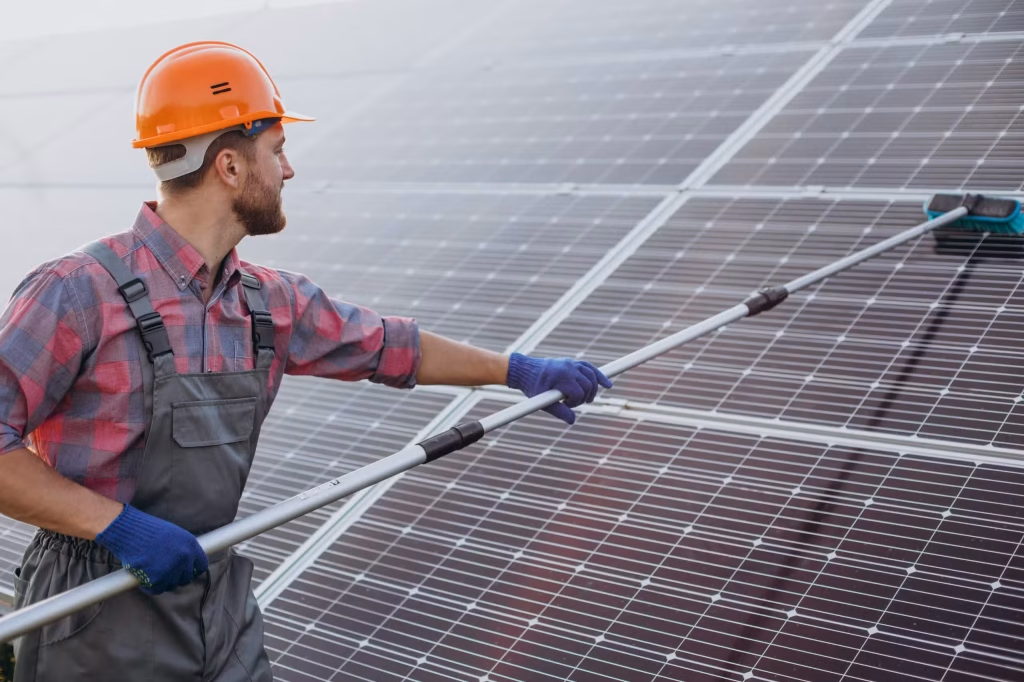
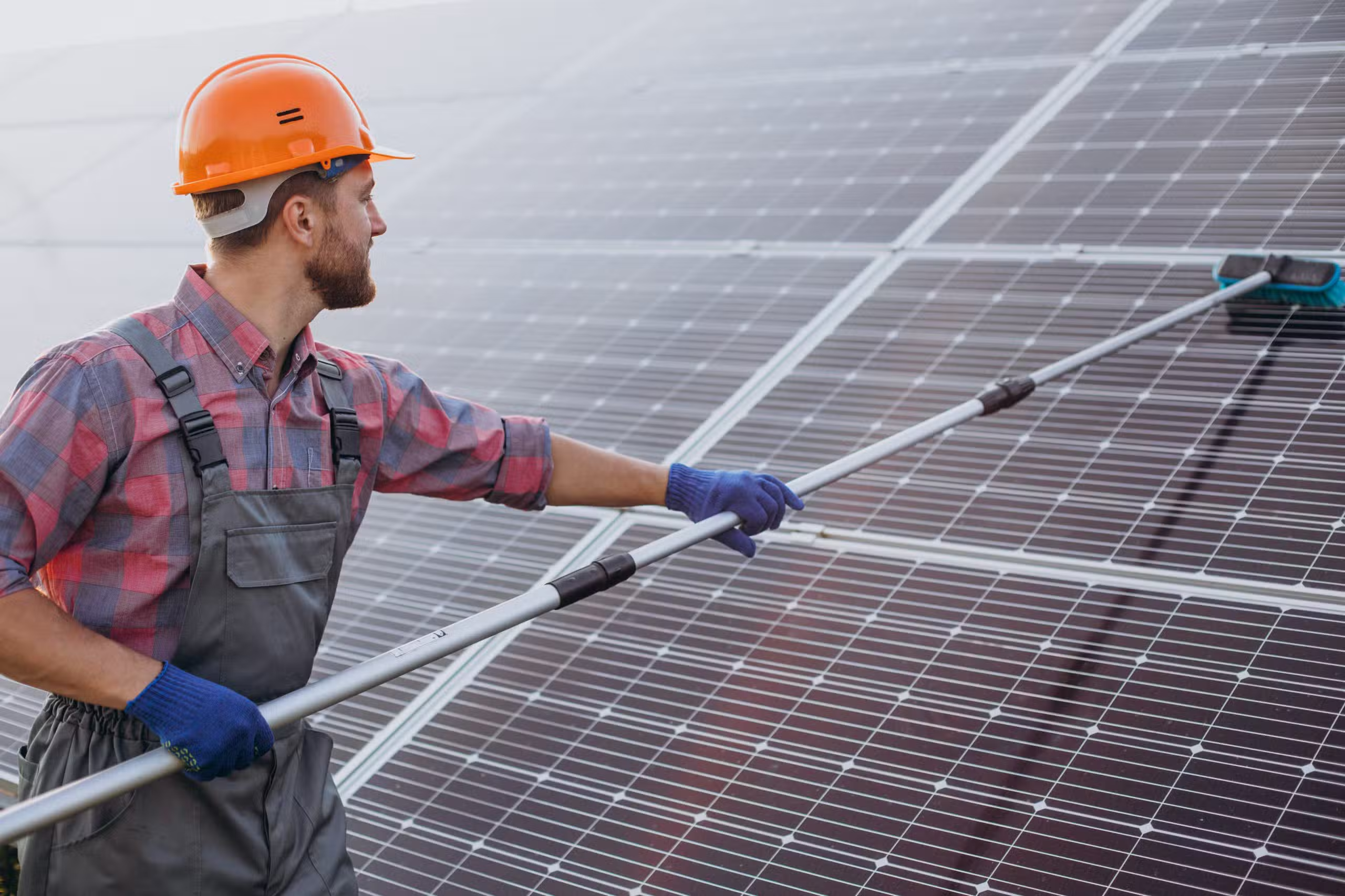
- Window-cleaner with telescopic water-fed pole works from ground level
- Deionised water leaves no residue on the glass
- Soft-bristle brush sized for panel surfaces
- Insured, ladder-safe, faster (typically 30-60 minutes per home)
- £80 - £180 for a typical 4-8 kWp system
DIY clean (only if low risk)
- Only safe from ground level with telescopic pole - never on the roof
- Tap water leaves limescale spots on drying
- Most DIY damage comes from wrong tools (jet washer, abrasive brush)
- Ladder accidents are the most common home injury route
- The 5-10% you might save vs a window-cleaner isn't worth the fall risk
How to clean panels safely (the gold-standard method)
1 Wait for cool, overcast conditions
Cool panels don't suffer thermal shock when wet water hits them. Cool, overcast morning is ideal. Never clean panels in full midday sun - the temperature differential cracks micro-fissures over time.
2 Use a telescopic water-fed pole
Reach panels from ground level with a 6-10m carbon-fibre or fibreglass telescopic pole, fitted with a soft-bristle head. Window-cleaners' standard kit. Never climb on the roof or walk on the panels.
3 Use deionised or filtered water only
Tap water leaves limescale streaks as it dries. Deionised water (or a portable filter pack you can buy from the same supplier as the pole) leaves the glass clean and clear. No detergents, no glass cleaners, no washing-up liquid.
4 Brush with light pressure in linear strokes
Soft bristles, light pressure, top-to-bottom strokes following the panel orientation. Loose dust and biological deposits release easily - if it doesn't come off with light brushing, leave it and let the next rain handle it. Hard scrubbing micro-scratches the AR coating.
5 Rinse and let air-dry
A final clean-water rinse, then leave the panels to air-dry. Don't try to towel-dry - not safe and not necessary.
What never to do (this is where real damage happens)
Never use a high-pressure washer
The seals between cell glass and frame aren't rated for jet pressure. Pressure washers force water past seals, into the laminate, and around junction-box gaskets - leading to delamination or corroded MC4 connectors. The damage often shows up months later as falling output, not immediately.
Never use abrasive cleaners or scouring pads
Scotch-Brite, kitchen scourers, stiff brushes - all permanently scratch the anti-reflective coating. The damage is invisible day-to-day but cuts 2-5% off lifetime output. Once it's done it can't be undone.
Never use chemical cleaners, vinegar, or washing-up liquid
Solvents attack EPDM frame seals. Detergents leave residue that traps soiling and accelerates re-dirtying. Vinegar is mildly acidic - fine on kitchen tiles, not fine on PV cell encapsulants. Plain water handles 99% of UK soiling.
Never climb on the panels themselves
The cells are glass-sandwich laminates rated for snow load, not point loads from boots. Standing on a panel can crack the encapsulated cell, leading to hot-spots, output loss, or fire risk. If you can't reach with a pole, hire a window-cleaner.
Commercial & flat-roof cleaning is a different conversation
For commercial sites - warehouse roofs, retail, agricultural barns, manufacturing units - the cleaning equation changes:
- Flat roofs accumulate soiling faster. No self-rinsing pitch. Biological deposits build up around the panel edges.
- Bird droppings are concentrated. Flat roofs are bird hangouts. Droppings cause permanent hot-spotting if left.
- Larger system, bigger uplift. A 50kWp commercial array losing 6% to soiling is £500 - £800/year on Octopus Business tariffs. Cleaning pays for itself.
- Access infrastructure already there. Site already has rooftop access for HVAC and the panels themselves.
Commercial cleaning runs £1.50 - £3 per panel for sites of 50+ panels, typically annually. Spectrum's commercial maintenance contracts bundle cleaning with quarterly health checks, string-current diagnostics, DC isolator inspection, and inverter firmware updates. See our commercial solar maintenance service for what we cover.
How often should you clean?
| Install type | Recommended interval | Why |
|---|---|---|
| Standard pitched UK domestic (25-45°) | Every 18-24 months | Rain handles most soiling; cleaning lifts output 3-7% short-term |
| Low-pitch (under 15°) | Every 12 months | Less self-rinse; pollen and dust build up faster |
| Tree-shaded / agricultural area | Every 9-12 months | Biological deposits, dust drift |
| Coastal (within 5km of sea) | Every 12 months | Salt deposits accelerate AR coating wear if left |
| Commercial flat roof | Annual minimum, often quarterly | No self-rinse, bird deposit concentration |
| Agricultural barn | Annual, more in harvest months | Dust, straw, pollen |
Best time of year to clean: April - May (just before peak generation months). Avoid winter cleans - you'll have months of grey weather and re-soiling before the panels actually need to be clean again.
UK cost expectations (2026)
A local window-cleaner with a water-fed pole is the right tradesperson for domestic. Specialist "solar panel cleaning" companies advertising at £15 - £25 per panel are usually charging premium prices for the same service. Most local window-cleaning rounds already have the right kit and insurance.
Tools that actually work (and that don't)
What works
- Telescopic water-fed pole (6-10m, carbon fibre or fibreglass)
- Soft-bristle solar-specific brush head
- Deionised water (or a portable DI filter cylinder)
- Microfibre cloth (only at panel edges if hand-cleaning low panels)
- Bird-spike strips (preventative on roof-mount installs near rookeries)
What damages or doesn't help
- High-pressure jet washers - force water past seals
- Scotch-Brite / scouring pads - scratch AR coating
- Glass cleaner, Windex, vinegar - chemical residue
- Washing-up liquid - surfactant residue traps soiling
- Squeegees - tip rubber crumbs onto seals
- Robotic panel-cleaners - commercial-scale only, marketing oversold for domestic
Worried your panels aren't generating what they should?
If output has dropped year-on-year, cleaning is only one of the things to check - we look at inverter health, string currents, shading, DC isolator condition, and panel-level diagnostics. Spectrum's MCS engineers can give you a clear answer. It is all part of our solar panel maintenance and servicing, with a full system health check from £395+VAT for domestic systems. Larger commercial arrays are quoted individually.
Request a feasibility assessmentPre-clean checklist
Before booking the clean
- Check output trend first. If generation is in line with PV*SOL forecasts, cleaning is cosmetic.
- Check the season. Best in April - May; avoid Nov - Feb (re-soiling).
- Verify the cleaner uses water-fed pole + DI water. Pressure-washer = walk away.
- Check insurance. Ladder + roof work needs PL insurance. Window-cleaners typically carry it as standard.
- Tell them not to climb on the panels. Even experienced roofers sometimes do this; it cracks cells.
FAQs
Do solar panels actually need cleaning in the UK?
Less than most people think. UK rainfall does the heavy lifting on most pitched-roof installs - typical residential panels self-clean to ~95% of new-state output through normal weather. A scheduled clean every 18-24 months is enough for most homes. Cleaning matters more on low-pitch installs (<15°), sites near agriculture or trees, flat commercial roofs, and panels close to chimneys or extractors.
How much does professional solar panel cleaning cost in 2026?
Typical UK residential cleaning costs £80 - £180 for a 4-8 kWp system, depending on access and panel count. Commercial flat-roof cleaning runs £1.50 - £3 per panel for sites of 50+ panels. Window-cleaner crews with telescopic water-fed poles deliver the best value for domestic. Specialist solar cleaning companies are worth it on commercial sites where systematic access and safety matters.
Can I clean my own solar panels safely?
From the ground with a telescopic soft-bristle water-fed pole, yes - if you can reach. Never climb on the roof. Never walk on the panels themselves. Use cool water, soft brush, no high-pressure jet, no abrasive cleaners. Most home accidents come from ladder falls trying to do something a window cleaner does safely with the right kit for £80.
What should I never use on solar panels?
No high-pressure washers - the seals around the cell glass aren't designed for jet pressure. No abrasive sponges, scouring pads, or stiff brushes - they micro-scratch the anti-reflective coating and permanently reduce output. No chemical solvents, glass cleaners, washing-up liquid, or vinegar - residue traps soiling and some attack frame seals. No water hotter than 30°C - thermal shock can stress the cells. Plain cool water and a soft brush handles 99% of UK soiling.
Does Spectrum offer a cleaning service?
We don't run a standalone domestic cleaning service - it isn't cost-effective for customers vs a local window-cleaner with the right kit. For commercial installs we cover cleaning as part of our maintenance contracts, alongside inverter health checks, string-current diagnostics, and DC isolator inspection. Domestic customers under our 5-year workmanship warranty get free advice on which local cleaners to use.
Will rain alone keep my panels clean enough?
For a typical UK pitched-roof domestic install at 25-45°, yes - rainfall keeps panels at 93-97% of new-state output throughout the year. A scheduled clean every 18-24 months recovers the remaining 3-7%. The exception is low-pitch (<15°) installs, where rain doesn't self-rinse and you need more frequent cleans.
Do bird droppings actually damage solar panels?
If left for weeks or months in summer, yes. Concentrated droppings on a single cell create a "hot spot"- that one cell is shaded, the surrounding cells push current through it, the temperature rises, and the cell can permanently degrade. Treat heavy droppings as a priority clean rather than waiting for the scheduled visit.
Related reading
- Solar panel maintenance guide
- Problems with solar panels - UK guide
- How to test a solar panel
- How long do solar panels last in the UK?
- How efficient are solar panels in 2026?
Speak to Spectrum Energy Systems
MCS NIC200223. We install, maintain and diagnose solar PV across the East Midlands. One quote, one installer, one warranty. Commercial maintenance contracts include scheduled cleaning, inverter health checks, and string-level diagnostics.
Request a feasibility assessment