Electricity Standing Charge Rates in Every Region
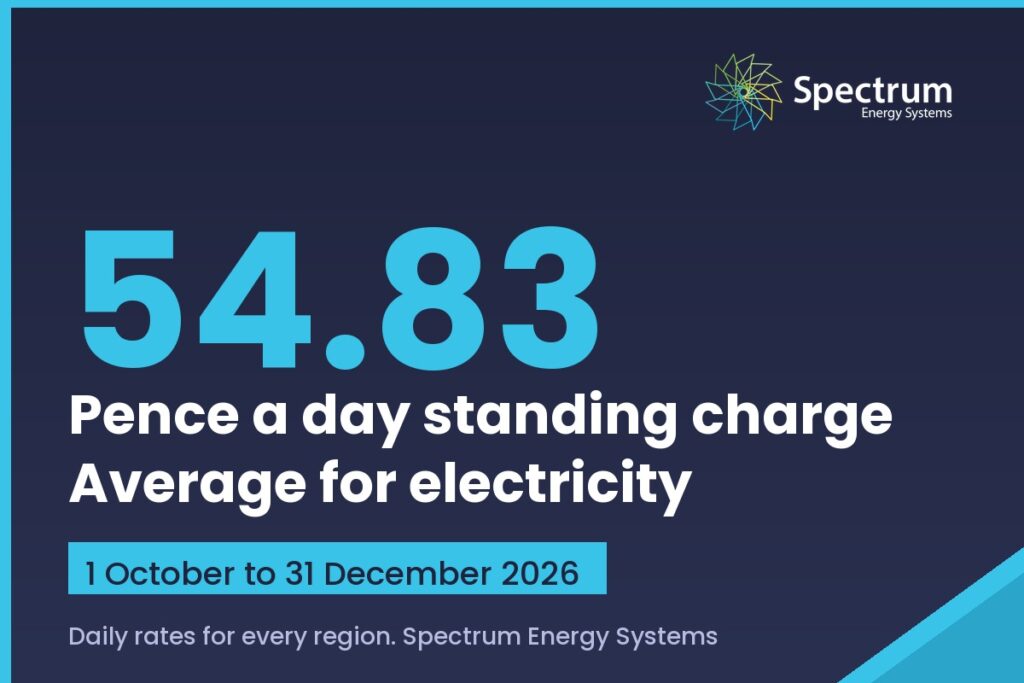
The electricity standing charge is 54.83p a day on average for homes in Great Britain on a standard variable tariff, which is about £200 a year. That is Ofgem's price cap figure for 1 October to 31 December 2026 for Direct Debit and prepayment. By region it runs from 42.92p a day in London to 67.66p in Merseyside and North Wales. Gas has its own standing charge, 29.68p a day on average by Direct Debit.
In this guide
- What a standing charge is
- Standing charges by region
- Why it depends on where you live
- Gas standing charges and the plan to remove them
- Do suppliers charge different standing charges?
- Low and no standing charge tariffs
- Standing charges from January 2027
- The part of the bill you can change
- Finding your own standing charge
- FAQs
What a standing charge is
A standing charge is a fixed amount your supplier adds to the bill for every day you are connected. It is charged for every day, including days when you use no energy at all. Electricity and gas each have their own.
On standard variable tariffs the standing charge is limited by Ofgem's price cap, along with the unit rate. Ofgem says the level depends on where you live, how you pay, which fuel it is and the type of meter you have.
Standing charges by region
Ofgem sets a separate cap for each of 14 regions. These are the daily standing charges for 1 October to 31 December 2026 on single-rate electricity and on gas, lowest electricity charge first. The yearly figure is the Direct Debit charge for 365 days.
| Region | Electricity, Direct Debit or prepayment | Electricity, standard credit | Electricity per year, Direct Debit | Gas, Direct Debit |
|---|---|---|---|---|
| London | 42.92p | 50.51p | £157 | 30.20p |
| North West England | 45.68p | 53.73p | £167 | 29.81p |
| Southern England | 47.81p | 56.41p | £175 | 29.16p |
| East Midlands | 51.45p | 60.05p | £188 | 29.41p |
| East of England | 51.84p | 60.62p | £189 | 29.34p |
| South East England | 52.32p | 61.19p | £191 | 29.26p |
| Northern Scotland | 55.14p | 63.67p | £201 | 29.87p |
| South Wales | 55.41p | 63.93p | £202 | 29.96p |
| South West England | 55.58p | 64.55p | £203 | 29.31p |
| West Midlands | 57.23p | 65.99p | £209 | 29.71p |
| Southern Scotland | 61.41p | 70.19p | £224 | 29.89p |
| North East England | 61.58p | 70.61p | £225 | 29.79p |
| Yorkshire | 61.67p | 70.67p | £225 | 29.77p |
| Merseyside and North Wales | 67.66p | 76.72p | £247 | 30.08p |
| Great Britain average | 54.83p | 63.49p | £200 | 29.68p |
Source: Ofgem, energy price cap unit rates and standing charges, read 19 November 2026. Electricity carries no VAT at present and gas includes VAT at 5%. The yearly column is our own sum. Ofgem's postcode lookup uses longer names for some regions, such as Eastern England and Southern Wales.
In the East Midlands, where we are based, the electricity standing charge is 51.45p a day, about £188 a year. The gap between the lowest and highest region is about £90 a year. Prepayment customers pay the same standing charge as Direct Debit customers in every region. Standard credit, which means paying when the bill arrives, averages 63.49p a day, 8.66p more than Direct Debit.
Why it depends on where you live
Ofgem says the standing charge for a region is worked out from four things: the number of people living there, the region's average energy use, how much energy suppliers have to buy for it and what the network there costs to build and upgrade. This quarter that leaves Merseyside and North Wales paying 67.66p a day for electricity and London 42.92p.
The cap also carries an allowance that keeps the standing charge the same whether you pay by Direct Debit or through a prepayment meter.
Gas standing charges and the plan to remove them
Gas has a standing charge of 29.68p a day on average by Direct Debit, about £108 a year. It varies far less by region than electricity, from 29.16p in Southern England to 30.20p in London.
In the Budget on 28 October 2026 the Government said it has asked Ofgem to abolish gas standing charges, aiming to have it done by the end of 2027 or as soon as possible after. The fixed costs would be collected through the gas unit rate instead. The Treasury's own estimate is that 60% of account-holding households could save around £45 a year on average. The timing has not been confirmed, so the gas standing charge above applies for now.
The same Budget committed to reforming electricity standing charges, with the details to be set out in 2027.
Do suppliers charge different standing charges?
Of the three suppliers we checked, two sit exactly at the cap. British Gas's and EDF's published standard variable rates from 1 October 2026 show the capped electricity standing charge in all 14 regions. Flexible Octopus is a little lower in every region, by between 0.39p and 1.53p a day. In the East Midlands it is 50.204p against the cap of 51.45p.
Fixed tariffs are not covered by the price cap, so look at the daily charge as well as the unit rate when you compare them. The capped unit rates are in our guide to electricity prices per kWh, with full supplier tables for British Gas prices per kWh and the EDF price per kWh.
Low and no standing charge tariffs
Ofgem said in June 2026 that it was launching a one-year pilot of lower standing charge tariffs from that month. It said the tariffs would be offered first to eligible customers of EDF, E.ON, Octopus and British Gas, with a limit on how many people can sign up and each supplier setting its own eligibility rules.
Ofgem's own figures for the pilot: a home that uses both electricity and gas could pay about £150 a year less in standing charges than on the price cap. The saving is split across the two fuels, so a home with electricity only may not get all of it. Ofgem expects suppliers to set higher unit rates on these tariffs, so whether one costs you less depends on how much energy you use. It also notes that a few specialist suppliers already sell prepayment tariffs with a low standing charge or none.
Standing charges from January 2027
On the latest forecast, standing charges hardly move in January and the change is in the unit rates. Cornwall Insight, an energy research firm, forecasts an electricity standing charge of about 56p a day and a gas standing charge of about 31p a day from 1 January 2027, against 54.83p and 29.68p now. The same forecast has the average electricity unit rate at 32.54p, against 26.32p now.
Ofgem is due to announce the real January figures by 25 November 2026. Our article on the energy price increase forecast for January goes through the unit rates.
The part of the bill you can change
The standing charge is the same whatever you use. The units are the part you control. On the typical yearly use the price cap figures are based on, 2,500 kWh, units come to £658 at the average capped rate and the standing charge to about £200, so roughly three quarters of a typical electricity bill is units.
That is where solar panels and a battery do their work: every unit of your own power that you use at home is one you do not buy. On one design we quoted in September 2026, for a home using about 4,850 kWh a year, the simulation expects the panels and battery to cover 77% of the home's use.
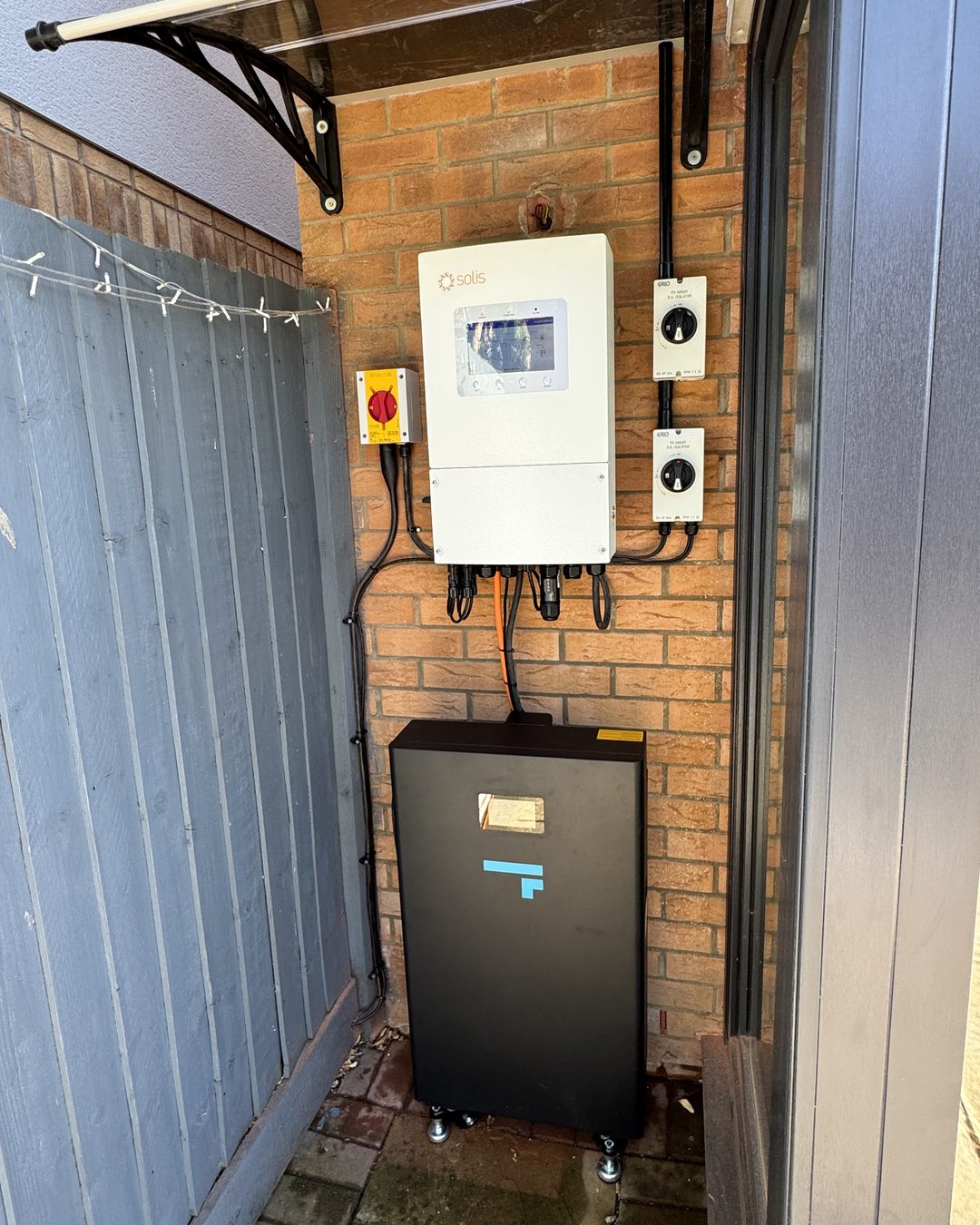
If you already have panels, our guide to reading your electric bill with solar panels covers the standing charge line. The photo is from one of our own jobs: a Solis inverter with a Fogstar battery.
See what your own units would be worth
Tell us your address, your unit rate and your yearly electricity use. We design the system on your roof remotely and send one all-in price, subject to site survey, with the figures behind it. Design and quote takes 1 to 3 days.
Get EstimateFinding your own standing charge
Your bill shows the standing charge as pence per day for each fuel, next to the unit rate. Ofgem's rates page has a postcode lookup that tells you which of the 14 regions you are in. Tell us your unit rate and yearly usage when you enquire and we use your own figures in the design.
FAQs
What is the average electricity standing charge?
It is 54.83p a day under Ofgem's price cap for 1 October to 31 December 2026, for homes in England, Scotland and Wales on a standard variable tariff paying by Direct Debit or prepayment. That is about £200 a year. For homes paying by standard credit the average is 63.49p a day.
Which region has the lowest electricity standing charge?
London, at 42.92p a day, followed by North West England at 45.68p and Southern England at 47.81p. Merseyside and North Wales is the highest at 67.66p. The East Midlands is 51.45p. These are Direct Debit figures for 1 October to 31 December 2026.
Are gas standing charges being scrapped?
That is the Government's plan. In the Budget on 28 October 2026 it said it has asked Ofgem to abolish gas standing charges, aiming for the end of 2027 or as soon as possible after, with the fixed costs moved onto the gas unit rate. The timing has not been confirmed, so for now the gas standing charge still applies. It averages 29.68p a day by Direct Debit.
Can I get a tariff with no standing charge?
Ofgem said in June 2026 that it was launching a one-year lower standing charge pilot from that month, first with eligible customers of EDF, E.ON, Octopus and British Gas. It expects these tariffs to have higher unit rates, so whether one costs less depends on how much energy you use. A few specialist suppliers also sell prepayment tariffs with a low standing charge or none.
Do I pay a standing charge if I use no electricity?
Yes. The standing charge is due for every day you are connected, including days when you use nothing. It is charged for each fuel, so a home with gas and electricity has two.
Is the electricity standing charge going up in January 2027?
Only slightly on the latest forecast. Cornwall Insight forecasts about 56p a day for electricity and about 31p a day for gas from 1 January 2027, against 54.83p and 29.68p now. Ofgem is due to confirm the January figures by 25 November 2026.
Does the standing charge include VAT?
Household electricity has carried no VAT since 1 October 2026, so the electricity standing charges on this page have none. Gas standing charges include VAT at 5%. July to September's average electricity standing charge of 57.19p included 5% VAT, which is why Ofgem says the two periods cannot be compared directly.
Sources
Every external figure on this page comes from one of these, all read on 19 November 2026.
- Ofgem: Energy price cap unit rates and standing charges
- Ofgem: Energy price cap and standing charges explained
- Ofgem: Lower standing charge tariffs, next steps (updated 22 June 2026)
- Ofgem: Changes to energy price cap between 1 October and 31 December 2026 (26 August 2026)
- GOV.UK: Chancellor abolishes standing charges on gas bills to make payments fairer (28 October 2026)
- HM Treasury: Budget 2026 (28 October 2026)
- British Gas: Standard Variable tariff rates effective from 1 October 2026
- EDF: Standard (Variable), Deemed and Welcome prices effective from 1 October 2026
- Octopus Energy: published rates for Flexible Octopus
- Cornwall Insight: Energy Bills Set for Steep Rise in January (18 November 2026)
Related reading
- Electricity prices per kWh
- Energy price increase forecast for January 2027
- How solar panels lower your electricity bills
For the systems themselves, see home solar panel installation and home battery storage.
Spectrum Energy Systems has been fitting solar since 2011 from our base in Bulwell, Nottingham, with our own installation crew. We work across Nottinghamshire, Derbyshire, Leicestershire and Lincolnshire, and further afield.
Get the numbers for your own home
Send us your address and yearly usage and we will design a system on your roof and send one all-in price, subject to site survey, in 1 to 3 days. NICEIC Reg. 3182878 · MCS #NIC200223.
Get Estimate