
How to Charge an Electric Car at a Charging Station
Using a public EV charging station for the first time can feel daunting, but the process is remarkably straightforward once you understand the basics. Whether you're at a motorway services, supermarket car park, or dedicated charging hub, most chargers work the same way.
This guide walks you through the entire process from arrival to departure, covering payment methods, connector types, and what to do if things don't go to plan. After your first successful charge, you'll wonder why you were ever concerned.
In This Guide
Before You Arrive: Essential Preparation
A little preparation makes public charging significantly smoother. Know your car's charging port location (front, rear, left or right side) to park correctly at the charger. Check your vehicle manual or infotainment system to confirm your connector type—most modern EVs use CCS for rapid DC charging and Type 2 for slower AC charging.
Download Zap-Map before your first public charge. This essential app shows real-time charger availability, compatible connectors, current pricing, and user reviews across the UK's 88,000+ public charge points. Whilst network-specific apps (BP Pulse, Ionity, Shell Recharge) offer lower rates for regular users, contactless payment works at most modern chargers without any apps.
Understanding your car's maximum charging speed helps set realistic expectations. A charger advertising 150kW won't deliver that speed if your vehicle only accepts 50kW—the car always determines actual charging rate. Pairing solar panels with smart EV charging at home remains the most economical long-term solution, but public charging provides essential flexibility for longer journeys.
Step-by-Step: Using a Public Charging Station
Position your car with the charging port closest to the charger, ensuring the cable reaches comfortably. Respect bay markings and avoid blocking adjacent spaces.
Look for status indicators: green typically means available, blue indicates charging in progress, red suggests out of order. The display screen shows pricing, power output, and instructions.
Open your car's charging port via the dashboard button, key fob, or by pressing the port cover. Some vehicles unlock automatically when you approach with the key.
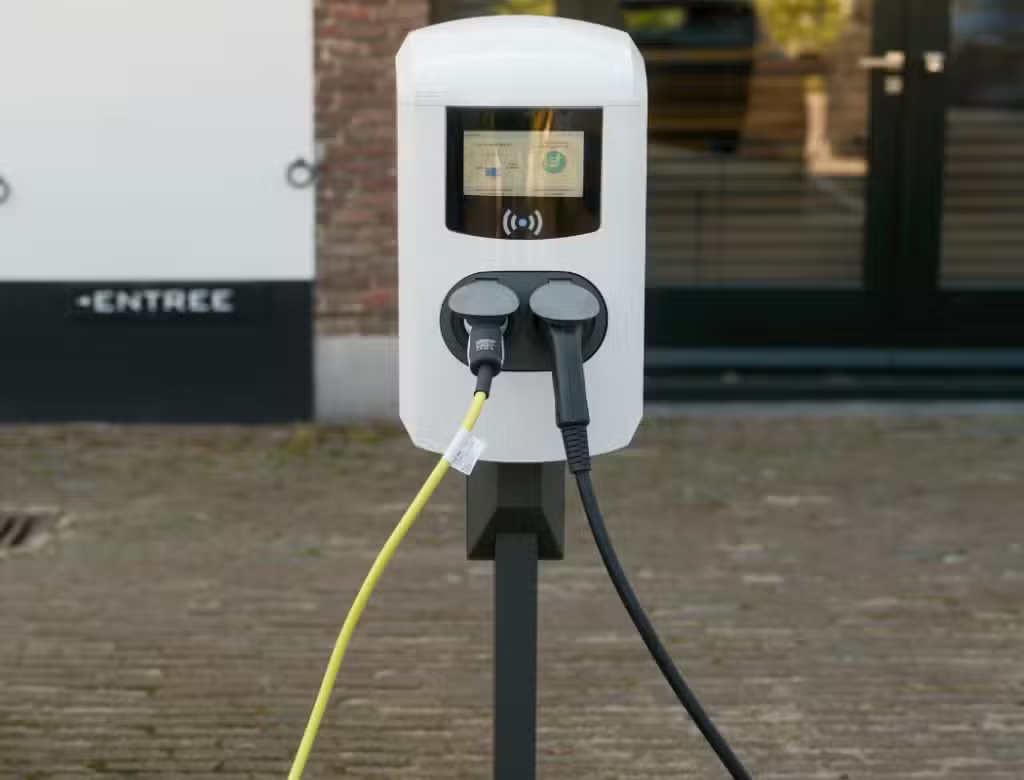
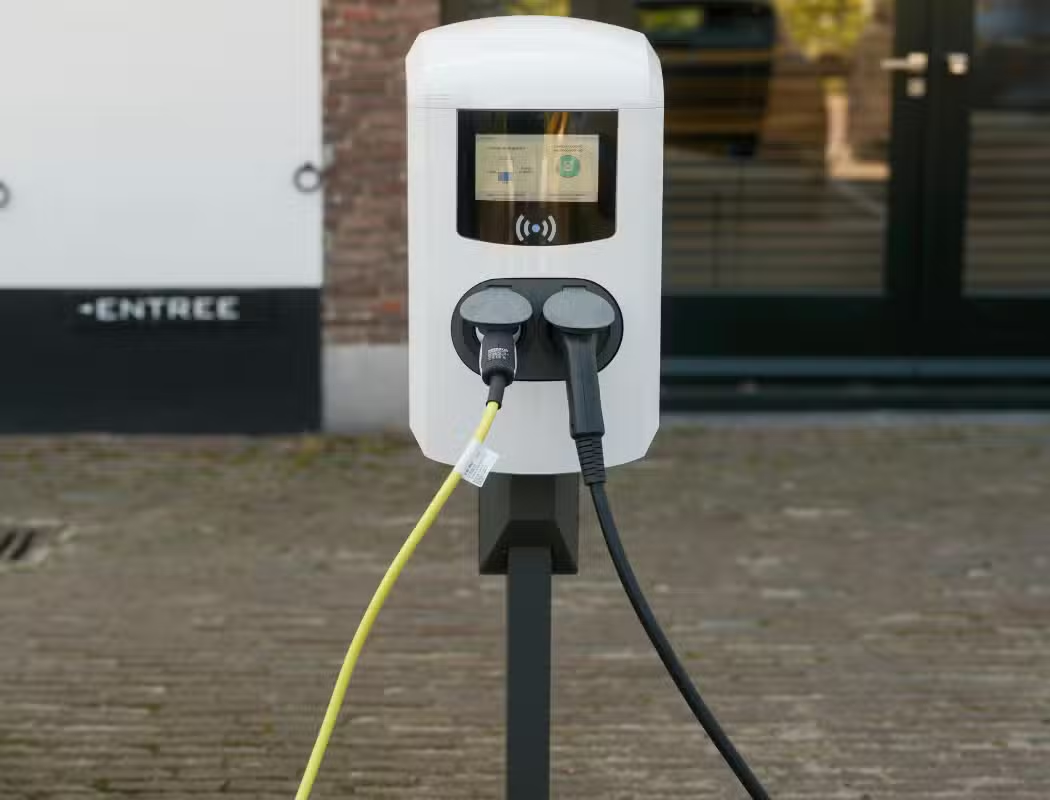
Rapid chargers typically have tethered cables with CCS and CHAdeMO connectors. Choose the one matching your vehicle—CCS is most common for modern EVs. Slower AC chargers may require your own Type 2 cable.
Tap your contactless card on the payment terminal, scan a QR code with your phone, or use a network app. Follow any on-screen prompts—most chargers provide clear step-by-step instructions.
Remove the connector from its holster, align the pins correctly, and push firmly until you hear a click confirming it's locked in place. A green light on the charger typically confirms a secure connection.
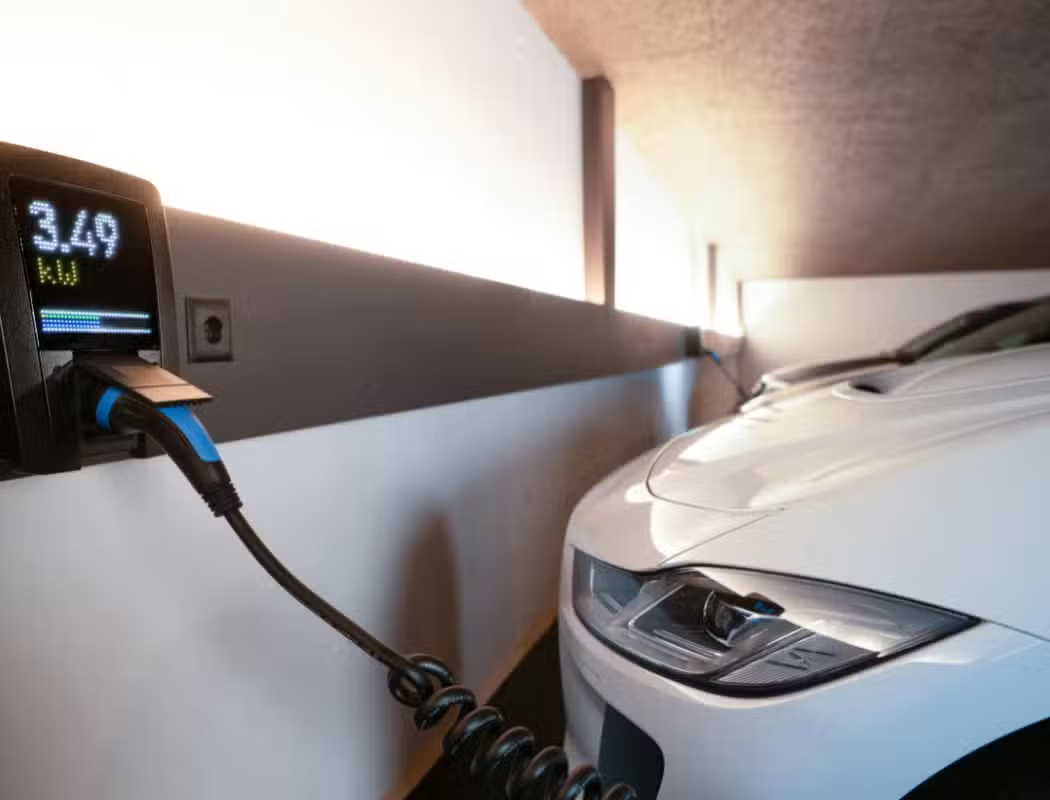
Check your car's dashboard for charging indicators and verify the charger display shows power flowing (kW). Network apps send notifications when charging begins and provide estimated completion times.
When finished, stop the session via app or charger screen, unlock the cable (usually via car or app), remove from your vehicle first, then return to the holster. Check the final cost and move promptly—overstay fees are increasingly common.
Understanding Different Charger Types
The UK's public charging infrastructure includes several charger categories, each suited to different situations. Slow/Fast AC chargers (7-22kW) are common at supermarkets, workplaces, and car parks—ideal for longer stops where you're shopping or working. These typically use untethered connections requiring your own Type 2 cable.
Rapid DC chargers (50-150kW) dominate motorway services and dedicated charging hubs, adding significant range in 20-40 minutes. Ultra-rapid chargers (150kW+) represent the newest infrastructure, capable of adding 100+ miles in under 15 minutes for compatible vehicles. Networks like InstaVolt, Ionity, and GRIDSERVE operate high-power hubs across the UK, with rapid and ultra-rapid charger numbers growing by over 40% in the past year.
Understanding charger types helps when planning journeys that combine solar-powered home charging with strategic public top-ups. Our guide on grid-tied versus off-grid systems explains how home solar integrates with EV ownership.
Payment Methods Explained
| Payment Method | How It Works | Best For |
|---|---|---|
| Contactless Card | Tap debit/credit card to start, tap again to end | First-time users, occasional charging |
| Network Apps | Pre-register payment details, start/stop remotely | Regular users of specific networks |
| Roaming Platforms | Single account accessing multiple networks (Electroverse, Zap-Pay) | Frequent public charging across networks |
| RFID Cards | Tap membership card to authenticate | Subscription users, older chargers |
← Scroll horizontally to view full table →
For most new EV drivers, contactless payment offers the simplest starting point—no apps, no accounts, just tap and charge. As you become more familiar with public charging, network subscriptions can offer significant savings for regular users—check individual network websites for current pricing.
Troubleshooting Common Issues
Charger Won't Start: Ensure your car is in park with the handbrake engaged. Verify your payment method was accepted (check for error messages). Try a different payment method or restart the app. Contact the network's support number displayed on the charger.
Cable Won't Connect: Check you're using the correct connector type for your vehicle. Ensure the charging port is fully unlocked. Inspect both the connector and port for obstructions or damage. Some connectors require firm pressure—push until you hear a definite click.
Charging Slower Than Expected: Your car's acceptance rate, battery temperature, and current charge level all affect speed. Charging slows dramatically above 80% battery—this is normal and why leaving at 80% makes practical sense for rapid charging.
Cable Won't Release: Stop the session completely via app or charger. Unlock your car fully. Check your vehicle's settings for manual cable release options. Your car manual shows the emergency release location—typically near the charging port or in the boot.
Rapid Charging Best Practices
For efficient rapid charging, arrive with 10-20% battery and charge to 80%. Charging speed drops significantly above 80%, making the final portion time-consuming and costly. For long journeys, multiple shorter stops prove more efficient than one extended charge.
Battery preconditioning—warming your battery before arrival—dramatically improves charging speed, especially in winter. Many EVs activate this automatically when you set a charging station as your navigation destination. Cold batteries can charge 50% slower than warm ones, so planning your arrival matters in colder months.
Home charging with solar remains considerably cheaper than public charging. Our home battery storage solutions allow you to store excess solar generation for overnight EV charging, whilst smart home energy systems optimise when your car charges based on electricity tariffs and solar availability.
Charging Station Etiquette
Move promptly when charging completes—many networks now impose idle fees after a grace period, and other drivers may be waiting. At rapid chargers, charging to 100% is generally considered poor etiquette unless absolutely necessary. Leave bays tidy, return cables to holsters properly, and report faulty chargers via apps to help fellow EV drivers.
The EV community is notably helpful. If you're struggling, other drivers at charging hubs often offer assistance—everyone remembers their first public charge.
Frequently Asked Questions
Your First Public Charge is the Hardest
The first time at a public charger involves a learning curve, but the process quickly becomes second nature. Most chargers work similarly regardless of network, and payment is increasingly standardised through contactless options. Within a few sessions, you'll charge as confidently as you once filled with petrol.
Public charging infrastructure continues expanding rapidly—the UK now has more public charging locations than traditional fuel stations, with over 88,000 charge points and growing. Reliability across major networks continues improving, whilst ultra-rapid hubs make longer journeys increasingly practical.
For homeowners, combining solar panel installations with smart EV charging delivers the lowest running costs. Our homeowner's guide to solar panels explains how to maximise self-consumption, whilst solar incentives for UK homeowners detail available financial support.
Ready to Charge Smarter at Home?
Solar panels combined with smart EV charging dramatically reduce your running costs. Our MCS-accredited team designs integrated systems that maximise self-consumption and minimise reliance on expensive public charging.
Get Your Free Solar Quote Explore Home EV ChargingAbout Spectrum Energy Systems: Established in 2011, we're MCS-accredited solar and EV charging installers serving Nottinghamshire, Derbyshire, Leicestershire, Lincolnshire and the wider East Midlands. Our experienced engineers design and install integrated solar, battery, and EV charging solutions for homes and businesses. Learn more about our expertise or explore our homeowner resources. For businesses, discover how commercial EV charging stations can complement commercial solar installations.