
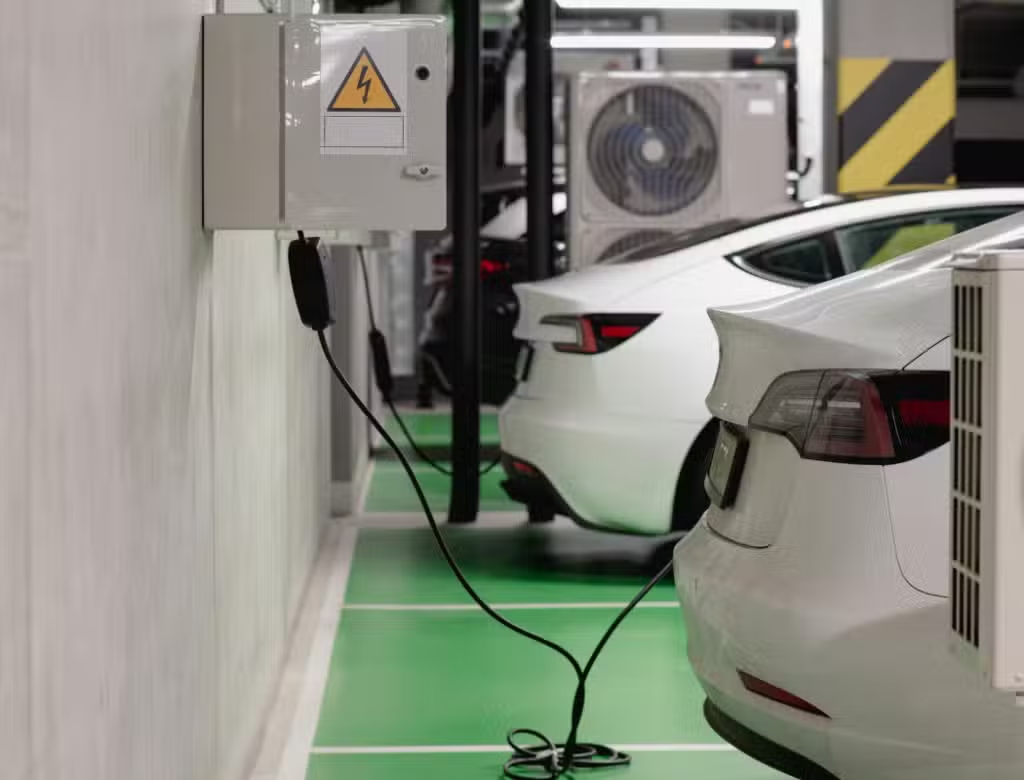
Switching to an electric vehicle raises plenty of questions about charging—how it works, where to do it, and whether it will fit into your daily routine. The good news? EV charging is far simpler than most new drivers expect, and understanding the electric vehicle charging basics transforms uncertainty into confidence.
This comprehensive guide covers everything about EV charging for beginners, explaining how to charge an electric car in the UK—from home charging setup to navigating public networks. Whether you're considering your first EV or have just collected the keys, you'll find the practical knowledge needed to charge with confidence.
What's In This Guide
- Quick Start: The Essentials Every New EV Driver Should Know
- How Electric Car Charging Actually Works
- Types of Electric Car Charging Explained
- Charging Connectors and Cables Explained
- Home EV Charging: Your Primary Charging Solution
- Public Charging Network in the UK
- How Long Does Charging Take?
- Planning Journeys with an Electric Car
- Maximising Battery Life and Efficiency
- What If You Don't Have a Driveway?
- Common Beginner Questions and Concerns
- Your First Month with an EV: Practical Tips
- Frequently Asked Questions
- Conclusion: Charging is Easier Than You Think
Quick Start: The Essentials Every New EV Driver Should Know
Before diving into the details, here are the fundamental points that will immediately help you understand EV charging. These basics cover what 90% of your charging experience will involve.
Five Things Every New EV Owner Should Know
- Home charging handles most needs — the majority of EV owners charge overnight at home, waking up to a full battery daily
- Three charging speeds exist — slow (3kW), fast (7-22kW), and rapid (50kW+), each suited to different situations
- You'll rarely use public chargers — home charging typically covers 80-90% of charging needs for drivers with off-street parking
- EV charging is significantly more efficient than petrol — electric motors convert energy to motion far more efficiently than combustion engines
- It becomes second nature quickly — most new EV drivers feel completely comfortable within the first month
Think of EV charging like charging your mobile phone—you plug in at home overnight and start each day with a full battery. The mental shift from "finding a petrol station" to "charging whilst parked" represents the biggest change in mindset for new EV owners.
How Electric Car Charging Actually Works
The Basic Principle
With electric car charging explained simply, it works exactly like charging any battery-powered device. Electricity flows from the charger into the vehicle's battery pack, where it's stored as chemical energy ready to power the electric motor. The process requires no special knowledge or technical skills—simply connect the cable and charging begins automatically.
Every EV contains an onboard charger that converts AC electricity (from the grid) to DC electricity (stored in the battery). When using rapid chargers, the conversion happens externally, allowing faster charging speeds by bypassing the onboard charger's limitations. Understanding this distinction explains why different charger types deliver different speeds.
Charging vs Refuelling: Key Differences
The transition from petrol pumps to charging points requires adjusting your refuelling mindset. Rather than making dedicated trips to fuel stations, EV charging happens whilst your car sits parked—at home overnight, at work during your shift, or at the supermarket whilst shopping.
This fundamental difference offers significant advantages. You'll never stand in the rain waiting for a pump, rarely make special journeys for fuel, and typically spend less time overall managing your vehicle's energy needs. The exception comes during longer journeys requiring motorway rapid charging stops, though even these typically take just 20-30 minutes.
Explore our smart EV charging solutions to understand how home charging transforms daily vehicle ownership.
Battery Capacity Explained (kWh)
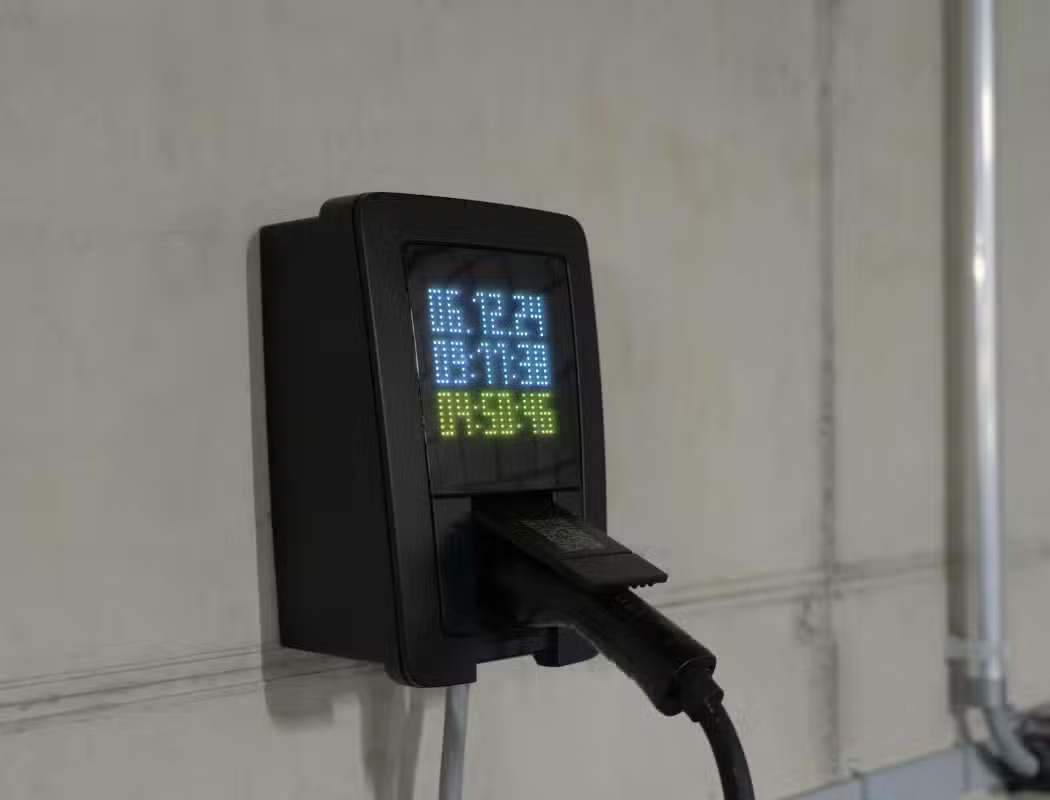
EV batteries measure capacity in kilowatt-hours (kWh), indicating how much energy they store. A larger kWh rating means more range per charge. Typical UK electric cars offer batteries between 40kWh and 100kWh, providing real-world ranges of approximately 150-350 miles depending on driving conditions.
Understanding your battery's capacity helps estimate charging times. A 60kWh battery charging at 7kW takes roughly 8-9 hours (60 ÷ 7 = approximately 8.5 hours). This calculation explains why home charging works perfectly overnight but requires faster chargers for topping up during the day.
Types of Electric Car Charging Explained
UK charging infrastructure offers four main speed categories, each designed for different use cases. Understanding the different EV charging types explained below helps you charge efficiently and conveniently. Note: You may encounter American terminology referring to Level 1, Level 2, and Level 3 charging—these broadly correspond to UK slow (Level 1), fast (Level 2), and rapid/ultra-rapid (Level 3) categories.
Scroll horizontally to view full table
| Charging Type | Power Output | Typical Charge Time | Best For | Where Found |
|---|---|---|---|---|
| Slow | 3kW | 12-24 hours | Emergency backup only | 3-pin domestic sockets |
| Fast | 7-22kW | 4-8 hours | Overnight home charging, workplace | Home wallboxes, car parks, destinations |
| Rapid | 50-100kW | 30-60 minutes (20-80%) | Motorway stops, quick top-ups | Service stations, charging hubs |
| Ultra-Rapid | 150-350kW | 15-30 minutes (20-80%) | Long journeys, minimal wait times | Major routes, Tesla Superchargers, Ionity |
Slow Charging (3kW)
Understanding electric car charger types starts with slow charging, which uses a standard three-pin domestic plug—the "granny cable" included with most EVs. Delivering only 2.3-3kW, a full charge takes 20-36 hours depending on battery size. Whilst functional, this method exists primarily for emergencies rather than regular use.
Domestic sockets aren't designed for the sustained high loads EV charging demands. Extended use can cause overheating, circuit overload, or fire risk in older electrical installations. For regular home charging, a dedicated wallbox charger provides safer, faster, and more efficient charging.
Fast Charging (7kW - 22kW)
Fast charging represents the sweet spot for most daily charging needs. Home wallboxes typically deliver 7kW, fully charging most EVs overnight in 6-10 hours. Workplace and destination chargers often provide 7-22kW, adding substantial range during extended parking periods.
For homes with three-phase electricity supply, 22kW chargers offer even faster home charging—though most UK domestic properties use single-phase, limiting home charging to 7kW. Our expert installation services assess your property's electrical capacity and recommend the optimal charging solution.
Rapid Charging (50kW - 150kW)
Rapid charging for electric cars delivers DC power directly to your battery, bypassing the onboard charger for significantly faster charging. Found at motorway service stations, retail parks, and dedicated charging hubs, these chargers add 100-150 miles of range in 30-45 minutes.
Rapid charging suits long journeys where time matters. However, frequent rapid charging can affect battery longevity if used excessively. Most manufacturers recommend limiting rapid charging to when genuinely needed, relying on slower home charging for daily requirements.
Ultra-Rapid Charging (150kW+)
The newest charging technology, ultra-rapid chargers exceed 150kW—with some reaching 350kW. These chargers can add 200 miles of range in 15-25 minutes, approaching the convenience of traditional refuelling.
Vehicle compatibility determines whether you can access full ultra-rapid speeds. Older EVs and some current models accept maximum charging rates below 100kW, whilst newer vehicles increasingly support 150kW+ charging. Check your vehicle's specifications to understand its maximum charging capability.
Charging Connectors and Cables Explained
Understanding connector types prevents confusion at public chargers. Fortunately, UK charging has largely standardised around two main connector types for AC and DC charging.
Type 2 Connector (AC)
The universal UK and European standard for AC charging. Used for home wallboxes and public slow/fast chargers up to 22kW. All modern EVs include a Type 2 port—your primary charging connection.
CCS Connector (DC)
Combined Charging System—the standard for rapid DC charging in the UK. Adds two DC pins below the Type 2 socket. Most public rapid chargers use CCS, making it essential for long journeys.
CHAdeMO Connector
An older Japanese rapid charging standard used by the Nissan Leaf and some other Asian EVs. Availability is declining as the industry standardises on CCS. Check your vehicle's connector type before relying on CHAdeMO chargers.
Tesla Connector
Tesla historically used proprietary connectors, though newer models include CCS ports. Tesla's Supercharger network is gradually opening to non-Tesla vehicles via app-based access. Adapters exist for older Tesla models needing public CCS chargers.
Tethered vs Untethered Chargers
Public chargers come in two configurations: tethered (cable permanently attached) and untethered (bring your own cable). Most rapid chargers are tethered for convenience, whilst some slower public chargers require your own Type 2 cable. Home wallboxes are available in both configurations—tethered for single-vehicle households, untethered for flexibility with different vehicles.
Your EV includes at least one charging cable suitable for public untethered chargers. Keep this cable in your boot for emergencies, even if home charging uses a tethered wallbox.
Home EV Charging: Your Primary Charging Solution
This home EV charging guide covers everything you need to know about charging at home. For EV owners with off-street parking, home charging transforms vehicle ownership. Plugging in when you arrive home and unplugging when you leave means you'll rarely think about charging—your car simply maintains a full battery automatically.
Why Home Charging Matters Most
Home charging offers the greatest convenience and simplest charging experience. No queuing at fuel stations, no apps to navigate, no waiting—just plug in when you arrive home and unplug when you leave.
The convenience factor proves equally compelling. Smart chargers schedule charging automatically during optimal hours, ensuring your vehicle is ready each morning without any daily effort.
Discover how our smart home energy solutions integrate EV charging with solar panels and battery storage for maximum efficiency.
Home Charge Point Installation
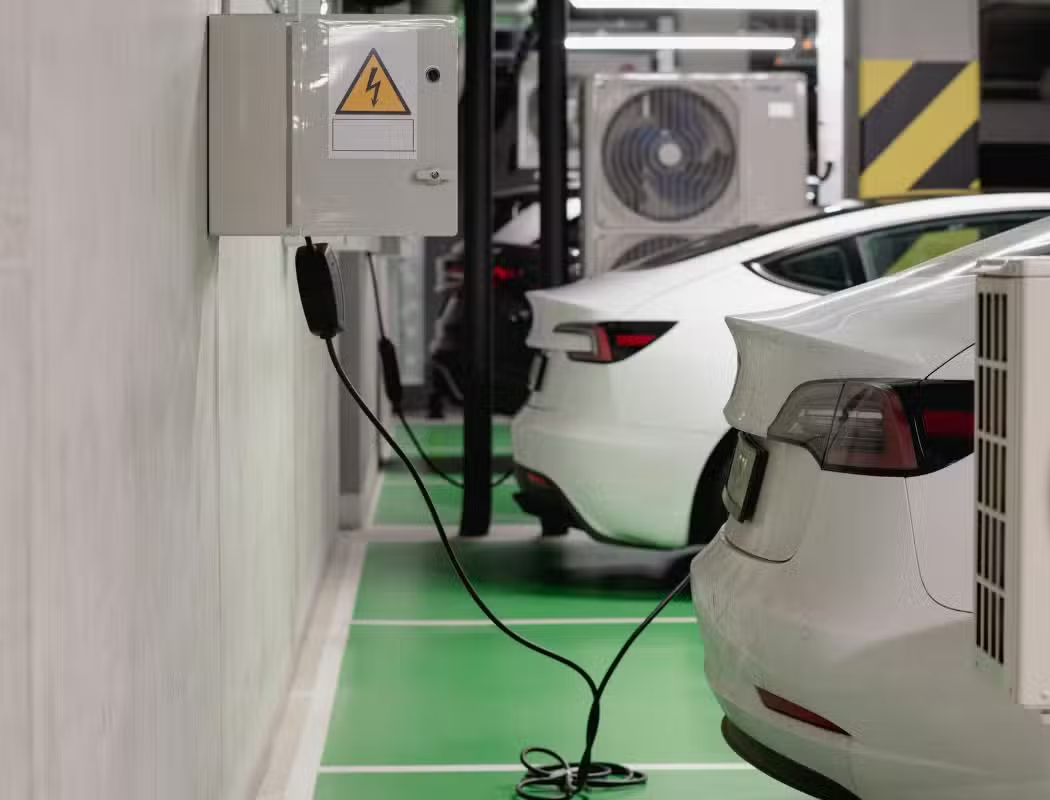
Professional home charger installation requires an MCS-certified or NICEIC-registered installer. The process typically involves a site survey assessing your electrical supply, consumer unit capacity, and optimal charger location, followed by installation usually completed within half a day.
Standard installations mount the charger within a few metres of your consumer unit, minimising cable runs and keeping installation straightforward. Longer cable runs, three-phase upgrades, or complex electrical configurations may require additional work. Our expert installation team provides detailed quotes following site assessment.
Smart Charger Requirements: UK regulations require all new home charge points to be "smart" chargers capable of being remotely controlled, scheduling charging during optimal grid periods, and responding to grid demand signals. This ensures your charger automatically manages charging efficiently whilst supporting grid stability.
Charging from Solar Panels
Combining home solar panels with EV charging creates exceptional synergy. Solar-generated electricity charges your vehicle using clean, renewable energy during daylight hours, maximising your environmental benefit and energy independence.
Smart chargers can prioritise solar surplus—automatically charging when your panels generate more than your home consumes. Adding battery storage enables storing daytime solar generation for evening charging, capturing maximum value from your installation. Our guide to solar-powered EV charging explores this integration in detail.
Public Charging Network in the UK
Whilst home charging handles most daily needs, understanding public EV charging in the UK proves essential for longer journeys and drivers without off-street parking. The UK's public charging infrastructure has expanded significantly, with over 85,000 public charge points now available.
Where to Find Public Chargers
Public chargers appear in increasingly diverse locations. Supermarket car parks often provide convenient charging whilst you shop—Tesco, Lidl, and others offer charging at many stores. Retail parks, leisure centres, hotels, and restaurants increasingly install destination chargers for customer use.
For rapid charging during journeys, motorway service stations provide the highest-speed chargers. BP Pulse, Gridserve, Tesla, and Ionity operate extensive motorway networks. Urban charging hubs offer convenient alternatives away from motorways.
Major Charging Networks
The UK hosts multiple charging networks, each with different coverage and payment methods. Key networks include BP Pulse (widespread coverage, contactless payment), Ionity (ultra-rapid motorway charging), Pod Point (destination and workplace charging), InstaVolt (straightforward contactless payment), and the expanding Tesla Supercharger network.
Most networks accept contactless payment, though some offer subscriptions or membership cards for additional benefits. Downloading a few key apps—Zap-Map for finding chargers, plus your most-used networks—covers most public charging situations.
Using Public Charging Points
Public charging follows a simple process: locate an available charger (apps show real-time availability), authenticate via app, contactless payment, or RFID card, connect the cable to your vehicle, and charging begins automatically. The charger locks the cable during charging, releasing it when you end the session through the app or charger display.
Always check charger status before travelling specifically to charge—apps like Zap-Map show real-time availability and user reports of working/broken chargers. Having backup options prevents frustration if your intended charger is occupied or faulty.
Ready for Home EV Charging?
Professional installation ensures safe, efficient home charging tailored to your property. Our MCS-accredited team handles everything from site survey to commissioning, with optional solar and battery integration for maximum efficiency.
Get Your Free Quote Speak to Our TeamHow Long Does Charging Take?
One of the most common questions from new EV owners is how long to charge an electric car. Charging duration depends on three key factors: electric car charging speed (measured in kW), battery capacity (kWh), and current battery level. Understanding these relationships helps you plan charging stops and manage expectations.
Typical Charging Times by Charger Type
For a typical 60kWh battery starting at 20% charge:
- 3kW slow charging: 16-20 hours to full—suitable only for emergency top-ups
- 7kW home charger: 7-9 hours to full—perfect for overnight charging
- 22kW fast charger: 2.5-3.5 hours to full—ideal for workplace or extended parking
- 50kW rapid charger: 45-60 minutes to 80%—coffee stop during journeys
- 150kW ultra-rapid: 20-30 minutes to 80%—minimal interruption to travel
Understanding the Charging Curve
EV charging slows significantly above 80% battery level. This "charging curve" protects battery longevity—rapid charging generates heat, and batteries charge most efficiently when cooler. Most journey planning assumes charging to 80% at rapid chargers, as the final 20% takes disproportionately longer.
For daily home charging, charging to 100% poses no problems—the slow charging rate doesn't stress the battery. Many EV owners set daily charge limits at 80%, reserving 100% charges for long journey preparation.
Real-World Charging Scenarios
Overnight Home Charging
Plug in at 9pm with 30% battery, wake at 7am with 100% charge. Ten hours of 7kW charging easily handles even large batteries. You'll never notice the charging happening.
Supermarket Stop
Thirty minutes shopping whilst connected to a 7kW charger adds 10-15 miles of range. Not transformative, but useful additional charge during routine errands.
Motorway Rapid Charge
Twenty-five minutes at a 150kW charger adds 150-200 miles—enough to complete most UK journeys. Time for a coffee and comfort break whilst your car charges.
Workplace Charging
Eight hours at a 7kW workplace charger provides a complete charge regardless of morning battery level. Arrive home with more charge than you left with.
Planning Journeys with an Electric Car
Daily Driving: Where Range Anxiety Disappears
The average UK driver covers 15-25 miles daily—well within any modern EV's single-charge capability. Home charging means starting each day with 200+ miles of available range, eliminating any concern about daily commutes, school runs, or local errands.
Electric car range anxiety, that fear of running out of charge, typically fades within the first few weeks of ownership. Daily experience demonstrates that home charging effortlessly covers routine journeys, transforming anxiety into confidence.
Longer Trips and Motorway Journeys
Journeys exceeding your vehicle's range require planned charging stops. Modern EVs with 250+ mile ranges handle most UK journeys on a single charge, whilst longer trips might need one 20-30 minute rapid charging stop.
Plan charging stops before departure. Apps like Zap-Map and A Better Route Planner (ABRP) calculate optimal charging locations based on your vehicle, route, and current battery level. Building one extra stop into your plan provides buffer against charger unavailability or unexpected consumption.
Journey Planning Apps and Tools
Several excellent EV charging apps in the UK simplify journey planning. Zap-Map remains the essential charging station finder UK drivers rely on—showing all charging locations, real-time availability, user reviews, and payment details. A Better Route Planner (ABRP) optimises multi-stop routes, accounting for your specific vehicle's efficiency and charging curve.
Most modern EVs include built-in navigation with charging stop integration. These systems monitor battery level, calculate required charging stops, and pre-condition the battery for optimal charging speed upon arrival.
Maximising Battery Life and Efficiency
Best Charging Practices
Modern EV batteries are remarkably resilient, with sophisticated management systems protecting against damage. However, following best practices helps maintain maximum capacity throughout the battery's life:
- Keep daily charge between 20-80% — this range minimises battery stress during routine use
- Use home charging predominantly — slower charging generates less heat and stress
- Charge to 100% before long journeys — occasional full charges cause no harm and maximise available range
- Avoid leaving at 0% or 100% for extended periods — park at moderate charge levels if leaving the vehicle unused
Regenerative Braking
EVs recover energy during braking and coasting, feeding electricity back into the battery. This regenerative braking can add 10-15% to your effective range whilst reducing brake wear. Many EVs offer one-pedal driving modes where lifting off the accelerator provides sufficient braking for most situations.
Maximising regenerative braking through smooth, anticipatory driving represents one of the most effective ways to extend range—simply by adjusting your driving style.
What If You Don't Have a Driveway?
Around 40% of UK households lack dedicated off-street parking, making home charging challenging. However, several alternatives enable successful EV ownership without a driveway.
On-Street Residential Charging
Many councils are installing on-street charging infrastructure—lamppost chargers, dedicated charge points, and cable channel solutions allowing cables to cross pavements safely. Check your local council's EV charging strategy and whether installations are planned for your area.
Workplace and Destination Charging
For drivers without home charging, workplace chargers become primary charging solutions. An eight-hour workday provides ample time for full charging on a 7kW charger. Supplementary charging at supermarkets, gyms, and retail destinations maintains battery levels between workplace charges.
Employers increasingly install workplace EV charging to attract employees and meet sustainability targets. If your workplace lacks chargers, it's worth requesting installation—many employers welcome such suggestions.
Future Solutions
The UK government has committed to expanding public charging infrastructure significantly, targeting 300,000 public chargers by 2030. On-street residential charging forms a key part of this expansion, making EV ownership increasingly viable for flat-dwellers and terrace house residents.
Common Beginner Questions and Concerns
Your First Month with an EV: Practical Tips
The transition to EV ownership becomes natural surprisingly quickly. Following a structured approach during your first weeks builds confidence and establishes efficient charging habits.
First Month EV Charging Timeline
Establish your home charging routine. Connect each evening, set charging schedules to use off-peak rates, and observe how overnight charging keeps your battery full without any daily effort.
Try a local public charger—perhaps whilst shopping or grabbing coffee. Familiarise yourself with the process before needing it on a journey. Download Zap-Map and check charger locations near your regular destinations.
Plan a journey requiring one charging stop. Use A Better Route Planner to identify optimal charging locations. Experience rapid charging and discover how quickly modern chargers restore range.
Explore how solar panel installation could complement your EV charging, maximising renewable energy use and reducing your environmental impact.
By now, charging feels completely natural. Home charging handles daily needs automatically. Public charging happens occasionally for longer journeys. Range anxiety has disappeared, replaced by appreciation for simpler, more convenient vehicle ownership.
Frequently Asked Questions
Conclusion: Charging is Easier Than You Think
Electric car charging initially appears complicated—new terminology, different speeds, various connectors. Yet within weeks of EV ownership, charging becomes second nature. Home charging handles daily needs effortlessly, public charging covers occasional longer journeys, and the entire process proves simpler than traditional refuelling.
The key insights for new EV drivers: home charging transforms vehicle ownership by eliminating fuel station visits; public charging infrastructure continues expanding rapidly; and the transition to electric delivers lasting benefits in convenience and environmental impact.
Millions of UK drivers have already made this transition successfully. With proper home charging infrastructure and basic familiarity with public networks, you'll join them as a confident EV owner—wondering why you ever worried about charging in the first place.
Maximise Your EV Experience: Combining home EV charging with solar panel installation creates exceptional synergy. Charge your vehicle using clean, renewable energy generated from your own roof. Our smart home energy solutions integrate solar, battery storage, and EV charging for maximum efficiency and energy independence.
Start Your EV Charging Journey
Professional home charger installation ensures safe, efficient charging tailored to your property and driving needs. Our MCS-accredited team handles everything from site survey to commissioning, with optional solar integration for maximum convenience and sustainability.
Get Your Free Quote Contact Our TeamAbout Spectrum Energy Systems: Established in 2011, we're MCS-accredited solar and EV charging installers serving Nottinghamshire, Derbyshire, Leicestershire, Lincolnshire and the wider East Midlands. Our experienced team designs and installs tailored energy solutions for homes and businesses, from home EV chargers to complete solar PV systems with battery storage. Learn more about our expertise or explore our homeowner resources for comprehensive energy guidance. We also provide commercial EV charging solutions for businesses, commercial solar installations, and ongoing maintenance support.